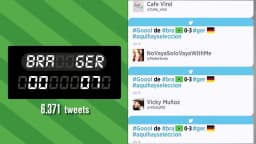
National Geographic's 'Reality show, Football' campaign, created by DDB France in 2014, reframes Nat Geo Wild as emotionally intense entertainment by borrowing

National Geographic Turns Football Fever Into a Wild Viewing Argument
National Geographic's 'Reality show, Football' is a 2014 French film campaign created by DDB that positions Adruby.clapboard.com/archive/national-geographic-bad-romance-media">Nat Geo Wild as a source of emotional intensity equal to, or surpassing, the passion generated by football and reality television among French audiences.
The campaign launched in France in December 2014, as archived by Clapboard.com, and comprises two film assets built around a single governing idea: that wildlife behaviour, when framed through the visual and emotional language of mainstream entertainment, generates the same raw passion that French audiences associate with sport and unscripted television. One documented asset, titled 'NatGeo MARIAGE FLAMINGO VA,' centres on flamingo courtship behaviour, staging the natural spectacle as though it were a climactic broadcast moment. The strategic intent is not to elevate nature above popular entertainment in a didactic sense, but to place Nat Geo Wild inside the same emotional register that French viewers already reserve for the biggest football matches and most gripping reality show finales.
In France, where football commands a culturally entrenched following and reality formats have sustained prime-time audiences for over a decade, this repositioning carries real competitive weight. National Geographic, through its Nat Geo Wild strand, sought to demonstrate that documentary wildlife content is not a passive, educational alternative to mainstream viewing but an active, emotionally demanding experience. The campaign's mechanics rely entirely on borrowed format conventions — the visual grammar of sports broadcasts and reality television is applied directly to wildlife footage, collapsing the perceived distance between the two viewing experiences. The Clapboard Score for this campaign is 57 out of 100, reflecting a concept with clear strategic logic and cultural specificity that stops short of fully realised creative execution across both assets.
National Geographic faced a familiar challenger's dilemma in France in 2014. The global entertainment and media market was approximately US$1.7 trillion that year, rising from US$1.3 trillion in 2009, representing a 5.0 per cent compound annual growth rate over that period, according to PwC. Within that expanding market, the competition for attention was intensifying precisely where Nat Geo Wild needed to compete: linear television. The global TV market was forecast to approach US$500 billion by 2018, with subscription television revenue projected to reach US$236 billion in 2018 at a 3, according to Gamesindustry.5 per cent CAGR from 2013, also according to PwC. In France, that growth translated into a more crowded primetime environment where documentary and wildlife channels competed not only against each other but against the gravitational pull of live sport and reality programming.
The consumer insight driving the DDB France strategy is precise. French audiences had been conditioned, through years of football broadcast culture and the dominance of reality formats on TF1 and M6, to associate peak emotional engagement with those two genres. Discovery Channel, a direct competitor to Nat Geo Wild in the French pay-television landscape, had long positioned wildlife content as educational and family-oriented. National Geographic's strategic departure was to contest the emotional territory rather than the informational one, arguing through the campaign's creative logic that a flamingo courtship ritual is as suspenseful, unpredictable, and affecting as any penalty shootout or elimination ceremony. DDB France, under executive creative director Alexandre Hervé, identified football and the reality show as cultural shorthand for intense collective viewing rather than as mere genre labels, and built the entire campaign around that reading of the French audience's emotional vocabulary, according to Jorgeoller.
DDB France constructed the campaign's creative execution around a single formal device: the wholesale adoption of broadcast conventions belonging to other genres. The films do not imitate wildlife documentary grammar and then insert a football reference. They invert the process entirely, applying the visual language, pacing, and dramatic architecture of football coverage and reality television directly to wildlife subject matter, so that the nature content arrives inside a familiar emotional container.
The documented asset 'NatGeo MARIAGE FLAMINGO VA' demonstrates this approach most clearly. Flamingo courtship behaviour, a subject that a conventional wildlife documentary would present with measured narration and observational distance, is instead treated as a broadcast event, with the implied urgency and audience investment that French viewers associate with live sport or a reality show elimination. The formal borrowing is not parody. The campaign does not mock football or reality television; it recruits their emotional authority and redirects it toward Nat Geo Wild content, making the argument through form rather than through direct statement.
Executive creative director Alexandre Hervé and copywriter and art director Fabien Teichner led the creative work at DDB France, according to Adsoftheworld. The two-film structure allows the campaign to demonstrate the concept across different wildlife behaviours and different borrowed broadcast formats — football on one side, reality show conventions on the other — without requiring the viewer to make an inferential leap. The borrowed format is immediately legible to any French viewer who has watched a Champions League match or a prime-time reality elimination. That legibility is both the campaign's primary strength and the limiting factor that accounts for its Clapboard Score of 57 out of 100: the idea is visible and functional, but the execution does not push the formal experiment far enough to become genuinely surprising.
No verified performance data for the 'Reality show, Football' campaign is publicly available. Audience uplift figures, brand consideration shifts, and channel subscription data for Nat Geo Wild France in 2014 have not been published or attributed to this campaign by National Geographic, DDB, or any third-party measurement body.
Structural analysis, however, offers a meaningful substitute for absent metrics. The campaign's core mechanism — borrowed format as emotional argument — is well suited to the French media environment it entered. By anchoring the creative work in football and the reality show, two formats with high daily cultural salience in France, DDB ensured that the entry point for engagement required no prior interest in wildlife content. That lowered barrier to attention is a meaningful structural advantage for a pay-television brand seeking to expand its audience beyond existing Nat Geo Wild subscribers.
The two-film format, as documented by Clapboard.com, provides enough repetition to establish the campaign's conceptual premise without exhausting it, though the limited asset count also constrains reach and frequency. The campaign's December 2014 timing, as archived by Clapboard.com, placed it adjacent to a period of high television consumption in France, when seasonal viewing habits favour longer and more emotionally engaged programming. Against competitors such as Discovery Channel, which occupied a more educational positioning in the French market at the time, National Geographic's move into emotional intensity territory represented a genuine strategic differentiation, even if the creative execution did not fully capitalise on the formal experiment the concept proposed.
National Geographic's 'Reality show, Football' is a 2014 French film campaign by DDB that repositions Nat Geo Wild as emotionally intense entertainment. It uses the visual conventions of football broadcasts and reality television to frame wildlife behaviour as equally gripping, targeting French audiences already conditioned to peak emotional engagement through those two formats.
DDB France created the campaign for National Geographic. Executive creative director Alexandre Hervé and copywriter and art director Fabien Teichner led the creative work. The campaign was published in France in December 2014 and comprises two film assets, as documented by Clapboard.com.
The campaign argues that watching Nat Geo Wild generates passion equal to watching football or a reality show. DDB France achieved this by applying the broadcast grammar of those popular formats directly to wildlife footage, making nature content emotionally legible to French audiences through familiar visual and dramatic conventions rather than through direct comparison.
One documented asset, titled 'NatGeo MARIAGE FLAMINGO VA,' focuses on flamingo courtship and mating behaviour. DDB France staged this natural spectacle using the dramatic architecture of mainstream broadcast entertainment, treating the wildlife event as a live broadcast moment to replicate the emotional intensity French viewers associate with football and reality television.
Where Discovery Channel occupied an educational and family-oriented positioning in the French pay-television market in 2014, National Geographic used this campaign to contest emotional territory instead. By aligning Nat Geo Wild with the intensity of football and reality show viewing, DDB France sought a differentiated position that addressed viewer passion rather than viewer curiosity.
The campaign receives a Clapboard Score of 57 out of 100. The score reflects a concept with clear strategic logic and strong cultural specificity for the French market, alongside a formal borrowing device that is immediately legible. The execution does not push the experiment far enough to generate genuine surprise, which limits the overall rating.
.webp)
Creative Collaboration Platform: The Backbone of Modern Creative WorkWhat is a creative collaboration platform?Clapboard defines a creative collaboration platform as the operational core for today’s distributed creative teams. This is not a collection of digital collaboration tools stitched together; Clapboard’s system


Understanding the Creative Production MarketplaceWhat is a Creative Production Marketplace?Clapboard defines a creative production marketplace as a structured ecosystem where brands, agencies, and production talent converge to execute video, advertising, and branded content at scale. Unlike the legacy agency or freelanREAD FULL ARTICLE

The Urgent Need for a Creative Production Operating SystemWhy Traditional Creative Production Models Break DownClapboard sees the creative production landscape shifting under pressure. Content velocity is no longer a buzzword—it’s a mandate. Modern advertising demands relentless output across dozens of channels, each wREAD FULL ARTICLE