Mondelēz Norway launched JoyDay on 8 June 2013, deploying Hyper's humour-driven ambient stunts across Oslo to spread joy and seed a recurring public event.

Mondelēz Norway Turns a Single JoyDay Into Oslo Street Theatre
Mondelēz Norway's JoyDay campaign, created by Oslo agency Hyper and activated on 8 June 2013, is an ambient advertising initiative in which live public-space stunts were staged across Oslo, filmed, and distributed via joyday, according to The Drum.no to encourage new ideas and participant sign-ups for the following year's event.
Mondelēz Norway held its first documented JoyDay on 8 June 2013. The initiative was conceived as a branded platform for spreading what the company described as real joy through surprising and funny encounters in public spaces across Oslo. Rather than conventional confectionery advertising, the campaign took the form of two distinct ambient executions: "The Parking Assistant," in which four men styled as rescuing angels offered humorous parking help to unsuspecting drivers, and "The Bunnies Are Back," a separate stunt staged in Oslo's streets. Both executions were produced by Hyper Films and shot by Expect Films, then posted on joyday.no as shareable video content, according to Snackandbakery.
The strategic ambition reached beyond a single activation. In Norway, the campaign was designed to operate as an open invitation: by filming the stunts and publishing them, Mondelēz gave the audience a reason to visit joyday.no, submit ideas, and commit to participating in future JoyDay events. The Clapboard Score for this campaign is 67 out of 100, reflecting its creative distinctiveness and clear community-building intent alongside limited documented reach data, according to Studocu. The campaign sits within the confectionery and snacks category and was submitted with two media assets, both ambient in medium.
Mondelēz Norway chose ambient humour over traditional snacks advertising to claim emotional territory competitors had not occupied in the Norwegian market, according to Prnewswire. The strategic logic is straightforward: in a confectionery category dominated by product-led television and digital advertising, a live public event that generates its own video content and community platform creates a qualitatively different relationship between brand and consumer. The JoyDay platform was built to compound over time, with each year's stunts recruiting participants for the next edition.
The global confectionery market provided relevant commercial context. According to Snack and Bakery, the global chocolate confectionery market reached approximately US$110 billion in 2013, up from approximately US$107, according to Scribd.4 billion in 2012. In Norway, as across Western European markets, branded confectionery growth had become increasingly dependent on emotional and experiential differentiation rather than price or distribution advantages. Competitors such as Mars and Nestlé had established strong product-centric brand identities in the snacks and confectionery segment, making the ambient and human-interest territory that JoyDay occupied comparatively uncontested.
Agency Hyper, based in Oslo, brought a specifically Norwegian sensibility to the execution. The choice to stage stunts in Oslo's public spaces rather than produce a studio-based campaign reflected an understanding that Norwegian consumers respond to understated, situation-based humour rather than high-production spectacle. The dual objectives — immediate entertainment and long-term platform building through joyday.no — gave the campaign a structural durability unusual for a single ambient activation in the confectionery and snacks category.
Creative direction on the JoyDay campaign came from Jørgen van Santen and Frank Nystuen at Hyper, Oslo. The two executions that make up "The Parking Assistant, The Bunnies Are Back" share a consistent tonal register: spontaneous, character-driven, and rooted in everyday Norwegian street life rather than constructed set-piece comedy.
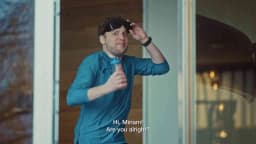
In "The Parking Assistant," four performers dressed as rescuing angels intervened in parking situations across Oslo, offering theatrical and comedic assistance to real drivers who had not been briefed on what to expect. The stunt's humour derived entirely from the gap between the mundane act of parking and the operatic sincerity of the costumed helpers. "The Bunnies Are Back" followed a comparable logic, deploying costumed bunnies into Oslo's public spaces to create unexpected, joyful encounters with passersby.
Both stunts were directed by Frank Nystuen and Kalle Meidell, with Kalle Meidell also serving as producer under the Hyper Films production company banner. Cinematography was handled by Expect Films. The production approach prioritised observational camera work over staged angles, allowing genuine public reactions to anchor the comedic payoff. Account management was led by Knut Sverre, with Katarina Jonsson serving as project manager. The resulting footage, distributed through joyday.no, functioned simultaneously as advertising content and as a demonstration of what future JoyDay participants could expect to create and experience. The ambient medium was not incidental to the creative idea — it was the idea, with the film serving as its evidence and amplifier.
No verified performance data for "The Parking Assistant, The Bunnies Are Back" is publicly available. No figures for video views on joyday.no, earned media reach in Norway, or subsequent JoyDay participation rates have been documented in accessible public sources.
Structural analysis, however, suggests the campaign was engineered for cumulative rather than immediate impact. By anchoring distribution to joyday.no rather than a third-party platform, Mondelēz Norway retained direct audience data and could measure return visits and idea submissions as proxies for community growth. The two-stunt format gave the brand two distinct pieces of shareable content from a single activation day, maximising content output relative to production investment.
The campaign's ambient format is particularly well suited to the Norwegian market, where public trust in brands that demonstrate genuine wit and community investment tends to outperform conventional advertising recall metrics. By framing JoyDay as an open platform rather than a closed brand event, Mondelēz created a structure in which audience participation could become its own form of media. The Clapboard Score of 67 out of 100 reflects this creative and strategic coherence while acknowledging the absence of verified reach or business outcome data against which to measure the campaign's full commercial effectiveness.
JoyDay was Mondelēz Norway's first branded public event, held on 8 June 2013 in Oslo. Created by agency Hyper, it staged two ambient humour stunts in public spaces, filmed and published on joyday.no, with the goal of building a recurring annual platform and recruiting participants for future editions.
The campaign comprised two ambient stunts. "The Parking Assistant" featured four men dressed as rescuing angels offering comedic parking help to Oslo drivers. "The Bunnies Are Back" deployed costumed bunnies into Oslo streets. Both were directed by Frank Nystuen and Kalle Meidell and produced by Hyper Films.
Oslo agency Hyper created the campaign. Creative direction was handled by Jørgen van Santen and Frank Nystuen. Frank Nystuen and Kalle Meidell directed, with Kalle Meidell also producing. Expect Films managed cinematography, Knut Sverre led account management, and Katarina Jonsson served as project manager.
Mondelēz Norway chose ambient humour to occupy emotional territory that product-led confectionery rivals had not claimed in the Norwegian market. The JoyDay platform was designed to build a community over successive years rather than deliver a single campaign burst, with joyday.no serving as the ongoing recruitment and content hub.
The Clapboard Score for "The Parking Assistant, The Bunnies Are Back" is 67 out of 100. The score reflects the campaign's creative distinctiveness and its structurally sound community-building platform, while accounting for the absence of publicly verified reach, engagement, or business outcome metrics from the Norway activation.
Content from the JoyDay 2013 stunts was filmed and published on joyday.no, Mondelēz Norway's dedicated platform for the initiative. Hosting distribution on a branded domain rather than a third-party platform allowed Mondelēz to retain direct audience data and use the site to recruit participants for future annual JoyDay events in Norway.
.webp)
Creative Collaboration Platform: The Backbone of Modern Creative WorkWhat is a creative collaboration platform?Clapboard defines a creative collaboration platform as the operational core for today’s distributed creative teams. This is not a collection of digital collaboration tools stitched together; Clapboard’s system


Understanding the Creative Production MarketplaceWhat is a Creative Production Marketplace?Clapboard defines a creative production marketplace as a structured ecosystem where brands, agencies, and production talent converge to execute video, advertising, and branded content at scale. Unlike the legacy agency or freelanREAD FULL ARTICLE

The Urgent Need for a Creative Production Operating SystemWhy Traditional Creative Production Models Break DownClapboard sees the creative production landscape shifting under pressure. Content velocity is no longer a buzzword—it’s a mandate. Modern advertising demands relentless output across dozens of channels, each wREAD FULL ARTICLE