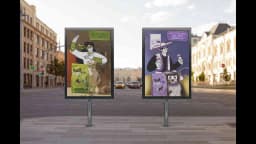
Miele and McCann Slovakia transformed a recognisable national tunnel into the pipe of the S8 vacuum cleaner to dramatise monster suction in a 2012 online video.

How Miele Turned a Slovak Tunnel Into a Vacuum Cleaner Pipe
Miele's 'Tunnel' campaign is a December 2012 digital video created by Mayer McCann Erickson in Bratislava, Slovakia, that digitally composited the hose of the Miele S8 vacuum cleaner onto a well-known Slovak tunnel, making cars and trucks appear to be sucked inside it to dramatise the product's monster suction claim.
The campaign's objective was direct and singular. Miele and its agency needed to communicate the exceptional suction power of the S8, a premium canister vacuum cleaner, in a way that would cut through the digital noise of the Slovak consumer durables market. Rather than demonstrating suction performance on domestic surfaces — the category default — the creative team chose an act of deliberate exaggeration, one scaled to the size of a highway tunnel. The proposition that a vacuum cleaner could swallow vehicles whole required no explanatory copy; the image made the argument on its own terms.
The campaign existed as a single media asset distributed through online video channels in Slovakia. Published in December 2012, it landed in the consumer durables conversation at a moment when brands across Central Europe were beginning to treat digital video as a primary — rather than supplementary — communications medium. For Miele, a brand whose heritage centres on premium German engineering and long-product longevity, 'Tunnel' represented a deliberate tonal departure: irreverent, visually provocative, and built for social sharing rather than broadcast reach. The Slovak market was the sole geographic focus, making the choice of a recognisable local tunnel not just a creative device but a cultural signal to a domestic audience.
Miele entered the 'Tunnel' campaign carrying a positioning built on craft and durability rather than performance spectacle. The strategic challenge in Slovakia was to translate a technical superiority claim — the S8's monster suction — into an emotional and shareable consumer moment without abandoning the brand's premium standing. The solution was ambiguity. As reviewed by Famous Campaigns on 21 December 2012, the execution was designed as a low-budget stunt intended to create genuine uncertainty about whether the footage was real, inviting audiences to debate its authenticity before concluding it was a Miele advertisement.
That deliberate ambiguity carried a precise strategic logic. Online video in 2012 was already a contested space in which unbranded or semi-branded content that provoked questions of authenticity consistently outperformed conventional advertising in earned distribution, according to observations documented by sharpthink.com in analyses of that era's digital campaign behaviour. By seeding doubt first and revealing the brand second, Mayer McCann Erickson constructed a two-stage engagement: curiosity, then brand attribution. The Miele S8 became the punchline of a visual joke that viewers wanted to share.
The competitive context in the vacuum cleaner category made this approach particularly astute. Electrolux described itself publicly, per electroluxgroup.com, as one of the world's largest vacuum cleaner manufacturers, commanding substantial shelf presence and marketing budgets across European markets including Slovakia. Dyson, meanwhile, had built its category reputation around visible technology demonstrations — cyclone engineering made tangible. Against competitors with greater media spend, Miele's Slovak agency chose craft over weight, engineering a piece of content that could earn attention rather than buy it. The canister vacuum segment alone exceeded thirty-five percent of total global market value around this period, according to slideshare.net industry analyses, underscoring how competitive the premium end of the category had become.
The 'Tunnel' execution rests on a single digital composite. A well-known tunnel in Slovakia — chosen precisely because Slovakian audiences would recognise it as a real and familiar landmark — was visually transformed into the pipe or hose of the Miele S8 vacuum cleaner. Cars and trucks entering the tunnel appeared, in the finished video, to be drawn upward and consumed by the machine. The edit preserved enough visual realism to sustain the ambiguity that Famous Campaigns identified as central to the stunt's effectiveness: the footage needed to look credible before it could look absurd.
Production credits for the 'Tunnel' campaign are not publicly documented beyond the agency attribution to Mayer McCann Erickson, Bratislava. What the finished asset demonstrates, however, is a disciplined economy of means. The digital composite work is not hyperrealistic; it sits in a register that Famous Campaigns described as a low-budget execution, which appears to have been an intentional creative choice rather than a resource constraint. Had the visual effects been seamlessly photorealistic, the video would have invited forensic debunking. By maintaining a slight artificiality, the team preserved the audience's permission to find it funny and to share it as knowing entertainment rather than attempted deception.
The Miele S8 itself appears in the frame as the anchor object — the vacuum cleaner hose superimposed over the tunnel mouth, its branding visible enough to close the loop between spectacle and product. This placement is structurally important: the reveal of the brand is inseparable from the reveal of the joke. The campaign contains a single media asset, as confirmed by Clapboard's editorial record, which concentrated the entire creative argument into one piece of digital content designed for organic circulation across Slovak online video platforms in December 2012.
No verified performance data for the 'Tunnel' campaign is publicly available. Famous Campaigns, in its December 2012 review, noted the absence of confirmed sharing metrics at the time of publication, and no subsequent audited figures for view counts, earned media value, or sales lift have entered the public record. No entry for 'Tunnel' appears in the verified award databases of Cannes Lions, the Effies, the One Show, D&AD, the Clios, the Webby Awards, or WARC.
Structural analysis, however, offers a reasonable account of the campaign's intended impact. The two-stage engagement model — ambiguity first, brand reveal second — is a format that platform behaviour in 2012 rewarded. Online video content that provoked debate about its authenticity consistently generated comment and re-share activity in ways that conventional product demonstration did not, as sharpthink.com has documented in analyses of digital campaign mechanics from that period. For a brand like Miele operating in a small market such as Slovakia with a single asset and presumably a constrained distribution budget, earned amplification was the only plausible route to meaningful reach.
The campaign's Clapboard Score of 69 out of 100 reflects a creative idea of genuine clarity and wit, partially offset by the absence of measurable outcomes and the structural limitation of a single-asset, single-market execution. The 'Tunnel' video demonstrates that the Miele S8's monster suction claim can be communicated memorably through visual metaphor alone — a proof of creative efficiency, if not of commercial effectiveness in any verifiable sense.
Miele's 'Tunnel' is a December 2012 online video created by Mayer McCann Erickson in Bratislava. It digitally transformed a recognisable Slovak tunnel into the hose of the Miele S8 vacuum cleaner, making cars and trucks appear to be sucked inside to dramatise the product's monster suction capability for a Slovak audience.
Mayer McCann Erickson, based in Bratislava, Slovakia, created the 'Tunnel' campaign. The agency produced a single digital video asset that composited the Miele S8 vacuum hose onto tunnel footage, publishing the work in December 2012 as a digital-only campaign targeting the Slovak consumer durables market.
No verified award entries for the Miele 'Tunnel' campaign appear in public records. Cannes Lions, D&AD, the One Show, the Clios, the Effies, the Webby Awards, and WARC contain no confirmed entries or wins for this campaign, according to Clapboard's editorial research into the available archive record.
Miele and McCann chose a recognisable Slovak tunnel to anchor the campaign in local cultural familiarity. The landmark gave domestic audiences an immediate reference point, making the visual joke — the tunnel recast as a vacuum pipe consuming vehicles — land with greater credibility and shareability than a generic location would have produced.
Monster suction was the core product claim Miele assigned to the S8 vacuum cleaner. The 'Tunnel' campaign visualised this claim at absurd scale by showing the machine apparently powerful enough to pull cars and trucks through a highway tunnel, translating a technical performance specification into an immediately legible and entertaining visual metaphor.
.webp)
Creative Collaboration Platform: The Backbone of Modern Creative WorkWhat is a creative collaboration platform?Clapboard defines a creative collaboration platform as the operational core for today’s distributed creative teams. This is not a collection of digital collaboration tools stitched together; Clapboard’s system


Understanding the Creative Production MarketplaceWhat is a Creative Production Marketplace?Clapboard defines a creative production marketplace as a structured ecosystem where brands, agencies, and production talent converge to execute video, advertising, and branded content at scale. Unlike the legacy agency or freelanREAD FULL ARTICLE

The Urgent Need for a Creative Production Operating SystemWhy Traditional Creative Production Models Break DownClapboard sees the creative production landscape shifting under pressure. Content velocity is no longer a buzzword—it’s a mandate. Modern advertising demands relentless output across dozens of channels, each wREAD FULL ARTICLE