 ARCHIVE
Pitch Reminds France That Grown-Ups Never Really Grow Up
How Pitch and Les Gros Mots Made Snack Theft a French Family Affair Pitch's 2021 French campaign...
KFC France Bets on Beef to Prove It Will Always Choose Chicken
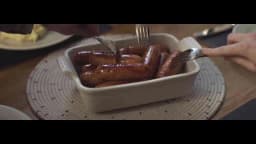
KFC France's Beef Bucket campaign is a 2019 two-part film effort created by Sid Lee Paris that teased the brand's first-ever non-chicken menu item before resolving, on Valentine's Day, as a theatrical reaffirmation of KFC's exclusive commitment to chicken.
KFC launched the campaign in France on 7 February 2019, according to adsoftheworld.com. The opening film introduced a bucket of fried beef meatballs — a deliberately unexpected product positioned as a genuine menu departure for a brand whose entire identity is built around chicken. The announcement generated online petitions and audience reactions almost immediately, as reported by lareclame.fr, which documented the French public's unsettled response to the news. One week later, on 14 February 2019, KFC released a follow-up Valentine's Day film in which Colonel Sanders reaffirmed his relationship with chicken, resolving the campaign's central tension and revealing the Beef Bucket as a fictional device rather than a real product, per clapboard.com.
The campaign contains a single film asset and sits within the Food and Drink category. Its geographic market is France, where KFC operates as part of a competitive quick-service restaurant landscape dominated by McDonald's. The Beef Bucket advertisement functions as a brand-love play: by dramatising the idea that KFC could abandon chicken, Sid Lee made the brand's loyalty to its founding ingredient feel earned rather than assumed. The Colonel Sanders character anchors both films, connecting the 2019 French execution to a broader international creative lineage. Clapboard Ad Archive assigns the campaign a Clapboard Score of 60 out of 100, reflecting a structurally sound narrative device delivered with moderate creative distinction.
KFC's brand equity rests entirely on chicken. In France, where McDonald's holds commanding category presence — McDonald's held approximately 21% of reported 2019 global fast-food share, the strongest brand-share estimate in the sector, according to Bbf Digital — KFC must work harder to convert brand awareness into emotional loyalty rather than simply transactional frequency. The Beef Bucket campaign addresses that challenge obliquely: by threatening to abandon chicken, it forces audiences to articulate, even subconsciously, what they value about KFC's core offer.
The strategic insight is rooted in brand-commitment theory. Consumers rarely think about the ingredients that define a fast-food brand until those ingredients appear to be at risk. Sid Lee Paris exploited that cognitive blind spot by staging a credible product announcement — complete with a promotional video and a named product — before dismantling it exactly one week later. The Valentine's Day resolution reframed the entire stunt as a love story between Colonel Sanders and chicken, giving the campaign emotional grammar that pure product advertising cannot easily achieve.
KFC held approximately 2% of reported 2019 global fast-food share, according to bbf.digital, ranking it well behind McDonald's and illustrating the competitive pressure the brand faces in markets like France. In that context, a campaign that generates organic online debate and petition activity, as documented by lareclame.fr, delivers earned media value that paid distribution alone cannot replicate. The two-film structure also reflects a growing strategic preference among quick-service restaurant advertisers for episodic content that rewards audiences willing to follow a narrative across multiple touchpoints rather than absorbing a single broadcast message.
Sylvain Thirache served as Chairman and Executive Creative Director on the Beef Bucket campaign at Sid Lee Paris, according to adsoftheworld.com. The creative direction was handled by Céline Mornet-Landa and Clément Mornet-Landa, with art direction by Francis Pluntz and Jessy Kikabou, and the agency's Paris operation was led by President Johan Delpuech and Managing Director Mehdi Benali, per adsoftheworld.com.
The campaign's creative mechanics depend on tonal precision. The first film had to be convincing enough to generate genuine public uncertainty — too comedic and the misdirection collapses; too straight-faced and the Valentine's Day resolution feels cruel rather than charming. The creative team threaded that needle by deploying Colonel Sanders as the announcement's spokesperson, a figure whose inherent theatricality signals to attentive viewers that something larger is in play while remaining sincere enough for the casual audience to take the Beef Bucket at face value. As reported by lareclame.fr, the initial public reaction in France included online petitions, which confirms the first film achieved the necessary degree of persuasive realism.
The second film's Valentine's Day timing is a deliberate piece of cultural engineering. By scheduling the resolution to coincide with a day culturally coded around declarations of love and loyalty, Sid Lee transformed a product retraction into a romantic gesture. Colonel Sanders's reaffirmation of his relationship with chicken borrowed the emotional vocabulary of Valentine's Day advertising and redirected it toward brand positioning. The two-film format, released across a single week in France, demonstrates a disciplined understanding of news-cycle rhythm: long enough to generate conversation, short enough to resolve before public interest dissipates. Full production credits beyond the named creative leadership are not publicly documented for this campaign.
No verified performance data for the KFC Beef Bucket campaign is publicly available. No view counts, engagement rates, sales uplift figures, or brand-tracking results have been published by KFC France, Sid Lee Paris, or any independently verified industry source in connection with this campaign.
Structural analysis nonetheless supports a measured reading of the work's likely effectiveness. The campaign's two-film architecture creates two discrete moments of media coverage: the initial Beef Bucket announcement and the Valentine's Day resolution. Each film functions as its own news event in France, doubling the opportunity for earned coverage relative to a conventional single-film campaign. The public petition activity documented by lareclame.fr is a proxy indicator that the first film achieved meaningful reach and sufficient credibility to provoke a behavioural response — petition signing requires more effort than passive viewing and suggests the content was processed as a genuine brand announcement rather than obvious satire.
The campaign's principal structural limitation is verifiability. Because the Beef Bucket is a fictional product, there is no sales trajectory against which to measure creative impact. Brand-love campaigns of this type are typically evaluated through brand-tracking studies measuring shifts in affinity, distinctiveness, and purchase intent, none of which are available here. The Clapboard Score of 60 out of 100 reflects this tension: the campaign demonstrates genuine strategic intelligence and a coherent creative idea, but without measurable outcomes or exceptional production distinction, it occupies the competent centre of the creative quality spectrum rather than its upper registers. For KFC France, operating in a market where McDonald's commands substantially greater share according to bbf.digital, the campaign represents a defensible brand-building investment whose return remains unquantified.
The KFC Beef Bucket campaign is a 2019 two-film advertisement created by Sid Lee Paris for KFC France. The first film announced a fictional non-chicken menu item on 7 February 2019. A Valentine's Day follow-up on 14 February revealed it as a staged reaffirmation of KFC's commitment to chicken, as documented by clapboard.com.
Sid Lee Paris created the KFC Beef Bucket campaign. Sylvain Thirache served as Executive Creative Director, with creative direction by Céline Mornet-Landa and Clément Mornet-Landa and art direction by Francis Pluntz and Jessy Kikabou, according to adsoftheworld.com. Johan Delpuech served as President of Sid Lee Paris during the campaign's production.
The Beef Bucket was not a real product. KFC France positioned it as the brand's first non-chicken menu item in the opening film, but the Valentine's Day follow-up revealed it as fictional, per clapboard.com. The stunt was designed to dramatise KFC's loyalty to chicken rather than introduce a genuine beef offering to the French market.
KFC France released the Valentine's Day video on 14 February 2019 to resolve the campaign's central misdirection. Colonel Sanders used the occasion to reaffirm his relationship with chicken, borrowing Valentine's Day's emotional vocabulary to reframe a product retraction as a brand-love declaration, a strategy documented by lareclame.fr following the French audience's reaction.
Clapboard Ad Archive assigned the KFC Beef Bucket campaign a score of 60 out of 100. The score reflects the campaign's structurally coherent narrative strategy and effective use of misdirection while acknowledging the absence of publicly verified performance data and the moderate level of production distinction relative to top-scoring work in the Food and Drink category.
The Beef Bucket campaign uses Colonel Sanders as its central character, consistent with KFC's modern brand platform. According to The Drum, KFC's rotating celebrity Colonel strategy began in May 2015. The French campaign by Sid Lee Paris adapted that character device for a market-specific misdirection narrative rather than a celebrity casting format.
.webp)
Creative Collaboration Platform: The Backbone of Modern Creative WorkWhat is a creative collaboration platform?Clapboard defines a creative collaboration platform as the operational core for today’s distributed creative teams. This is not a collection of digital collaboration tools stitched together; Clapboard’s system


Understanding the Creative Production MarketplaceWhat is a Creative Production Marketplace?Clapboard defines a creative production marketplace as a structured ecosystem where brands, agencies, and production talent converge to execute video, advertising, and branded content at scale. Unlike the legacy agency or freelanREAD FULL ARTICLE

The Urgent Need for a Creative Production Operating SystemWhy Traditional Creative Production Models Break DownClapboard sees the creative production landscape shifting under pressure. Content velocity is no longer a buzzword—it’s a mandate. Modern advertising demands relentless output across dozens of channels, each wREAD FULL ARTICLE