April fool's day prank - Urban Ladder | Clapboard Ad Archive
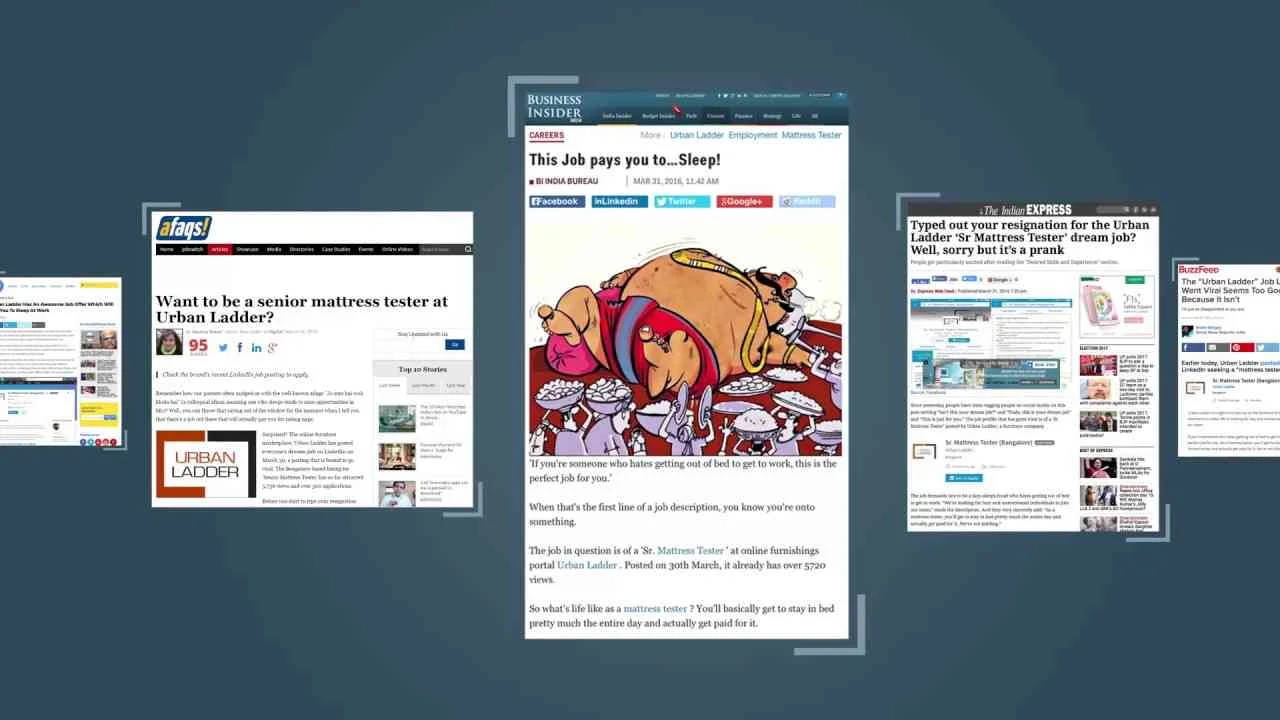
Urban Ladder’s April fool’s day prank campaign, released in India in 2017, underscores the brand’s ongoing strategy to position itself as a contemporary, customer-centric force within the retail services sector, fusing humor-driven storytelling with market-savvy relevance at a time when competitive differentiation is at a premium. This digital activation deftly places the brand at the intersection of cultural moment and category convention by leveraging the universal appeal of April Fool’s Day, directly engaging a growing class of urban, digitally native consumers with content that subverts expectations in a category more often governed by sincere, functional messaging. Urban Ladder’s approach, which would be catalogued within Clapboard’s FORMAT#12 — Parody or Borrowed Format — borrows the familiar tropes of prank and mock case study films to entertain while seamlessly integrating its brand values and personality, using self-aware comedy not just for disruptive attention but as a strategic articulation of relatability and approachability in an often impersonal industry. By prioritizing digital channels, the campaign zeroes in on tech-savvy shoppers increasingly reliant on online platforms for home and furniture needs, reinforcing Urban Ladder’s credentials as a trend-responsive brand aligned with shifting consumer behavior. The campaign’s English-language execution further signals an intent to appeal to the aspirational, pan-India urban audience, reflecting Urban Ladder’s ambitions to be both locally relevant and globally attuned. In differentiating itself from direct competitors such as Pepperfry, IKEA India, HomeTown, and Flipkart Furniture—each of which stakes its claim through value, variety, or global brand cues—Urban Ladder emphasizes design curation, quality, and a notable sense of play, seeking not only brand recall but genuine emotional resonance through the shared language of humor. The single video asset encapsulates the campaign’s sensibility, structuring the narrative as a self-aware prank and amplifying shareability by inviting audiences to be in on the joke, rather than the subject of it. The emphasis on a meta or mockumentary style reflects a creative literacy about both pop culture and the self-referential nature of digital content, situating the campaign confidently in the zeitgeist of social media-driven brand engagement. In an era where furniture marketing too often defaults to static product benefits or hard sell tactics, Urban Ladder’s embrace of parody reflects a measured awareness of how entertainment-first tactics can drive awareness and affinity more powerfully than direct persuasion or promotion. The campaign earns a score of 54/100 in Clapboard’s global creative archive. For a sector still dominated by product-centric advertising, Urban Ladder’s April fool’s day prank signals a growing industry recognition that shareable, humor-driven genres can play a significant role in amplifying brand distinctiveness and forging deeper consumer bonds.





.webp)