 ARCHIVE
How ICM Music School Made Rhythm Impossible to Ignore
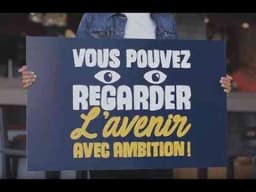
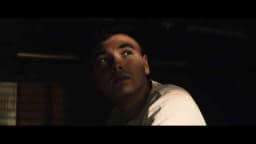
ICM music school's "Cops, Parachute, Pool, Office" is a four-film campaign created by Marcel agency in Paris, launched in France in July 2011, that reframes rhythm as an invisible force already present in ordinary life, positioning ICM's personalised home music lessons as the natural next step for anyone who has ever felt that pulse.
The campaign arrives at a precise strategic moment. Rather than depicting conservatoire-style instruction or virtuoso performance — the default grammar of music school advertising — Marcel constructs four self-contained comic scenarios: a police pursuit, a parachute jump, a swimming pool, and an open-plan office. In each situation, rhythm emerges not as a taught discipline but as an animating energy that the characters around them already obey, consciously or not. The message is structural rather than declarative: rhythm is everywhere, and ICM is the institution that helps you unlock it.
In France, where ICM operates a network of personalised, at-home music lessons across multiple cities, as documented by Clapboard, the campaign's domestic release positions the school against a broader private music education market. The creative platform, internally framed around the idea of "Get the Rhythm" or "Entrez dans le rythme" per Clapboard, gives Marcel a repeatable creative architecture. Each of the four films functions as a standalone argument while reinforcing the same thesis: music is not separate from daily experience, it is daily experience made audible. The single media asset logged in the Clapboard archive confirms the campaign's lean production model — one cohesive film unit carrying the full weight of the platform.
ARCHIVEICM music school anchors its creative brief in a consumer tension that private music education rarely addresses directly. The dominant barrier to adult music lessons is not cost or geography but self-perception: the belief that musical ability is innate, that rhythm is something you either have or you do not. Marcel's strategy for the French market inverts this entirely, presenting rhythm as environmental rather than genetic — something the body already responds to in a police chase or an office rhythm section — and therefore learnable.
This positioning places ICM in deliberate contrast to competitors operating on prestige and tradition. Schools and conservatoires that emphasise classical lineage, formal grading, and instrument mastery implicitly reinforce the idea that music education is for the already-gifted. ICM's at-home, personalised model — documented across its French city network by Clapboard — signals accessibility rather than exclusivity. The "Cops, Parachute, Pool, Office" platform makes that accessibility emotionally legible without stating it.
The broader market context matters here. While no verified market-share data for French private music schools in 2011 exists in public records, as confirmed by Clapboard, the global music education sector has been identified as a growing market by analysts at MarketIntelo. In France specifically, private instrumental instruction competes with state-subsidised conservatoires and a rising wave of digital learning platforms — a competitive pressure that was already emerging by 2011. Against that landscape, Marcel's choice to build the campaign around film rather than print or digital reflects a commitment to emotional demonstration over rational argument. Rhythm cannot be described; it must be felt. Film is the only medium that can make an audience feel it in thirty seconds.
Creative directors Emmanuel Lalleve and Florent Imbert lead the Marcel team responsible for "Cops, Parachute, Pool, Office," with art direction by Nicolas Damiens and copy by Julien Sens, as documented by Clapboard. The directing duo of Laurent Gillot and Aurelia Vernhes translate the conceptual platform into four distinct visual registers, each requiring its own tonal calibration — physical comedy, timing precision, and the kind of deadpan performance that makes an abstract idea land without explanation.
The structural decision to build four separate scenarios rather than a single narrative is the defining craft choice. Each film — Cops, Parachute, Pool, Office — must independently communicate the same thesis while feeling genuinely different in energy and setting. This demands that rhythm itself become the formal principle of the editing, not just the thematic subject. The cuts, the sound design, the movement of bodies through space all have to embody the argument the films are making. When that calibration works, the viewer understands ICM's proposition not through voiceover or text but through the experience of watching.
The ensemble casting approach, relying on situation and choreographed chaos rather than celebrity or spokesperson, keeps the focus on the concept rather than any individual face. This is consistent with Marcel's broader creative identity, which in 2011 was building a reputation in the French market for ideas-first, performance-led work. The "Entrez dans le rythme" platform, as noted in Clapboard's archive assessment, frames music lessons as energising and accessible — a tone that the comedy register of the four films actively supports. The production achieves a rare thing in education advertising: it makes the subject feel kinetic rather than worthy.
No verified performance data for "Cops, Parachute, Pool, Office" is publicly available. No published business results, enrolment figures, or audience reach metrics appear in public records, and no entries in Cannes Lions, Effies, One Show, D&AD, Clios, Webby, or WARC competition databases have been identified for this campaign, as confirmed by Clapboard.
Clapboard scores the campaign 64 out of 100, a rating that reflects genuine creative ambition held back by factors the archive can assess structurally. The platform concept — rhythm as an invisible force in everyday life — is strategically coherent and creatively distinctive within the French music education category. The four-film architecture is replicable and scalable, giving ICM a campaign system rather than a one-off execution. These are meaningful strengths in any category, and particularly valuable in education, where advertising tends toward the earnest and the informational.
Where the campaign leaves room for improvement, structurally, is in the clarity of the call to action and the directness of the connection between the comic scenarios and ICM's specific at-home lesson model. A viewer who finds the films compelling has absorbed the idea that rhythm is everywhere; it is less certain they have absorbed that ICM will come to their home to teach them. The gap between an emotional platform and a specific product truth is the most common structural tension in education advertising, and it is the tension that keeps this campaign at a competent rather than exceptional score.
"Cops, Parachute, Pool, Office" is a four-film campaign created by Marcel agency for ICM music school, launched in France in July 2011. Each film places rhythm inside a different everyday scenario — a police chase, a parachute jump, a swimming pool, and an office — to position ICM's home music lessons as accessible and energising.
Marcel agency in Paris created the campaign. The creative team included directors Emmanuel Lalleve and Florent Imbert, art director Nicolas Damiens, copywriter Julien Sens, and film directors Laurent Gillot and Aurelia Vernhes, as documented by Clapboard. Marcel produced the work for the French market in July 2011.
The campaign is built on the idea that rhythm is already present in ordinary life, not something confined to a classroom. Marcel frames this through four comic situations where characters unconsciously obey rhythmic logic, connecting the observation to ICM's core proposition that music education is learnable and enjoyable for anyone.
No awards documentation for the campaign exists in public competition records. A search of Cannes Lions, Effies, One Show, D&AD, Clios, Webby, and WARC databases found no entries, as confirmed by Clapboard. The campaign received a Clapboard Score of 64 out of 100, reflecting solid creative ambition within the French education category.
Most music school advertising in France emphasises classical prestige, formal grading, or instrument mastery. ICM's campaign, through Marcel, avoids all of these frames entirely. Instead it presents rhythm as environmental and democratic, directly supporting ICM's personalised, at-home lesson model and positioning the school as accessible rather than exclusive.
Emmanuel Lalleve, co-creative director with Florent Imbert at Marcel, shapes a platform built on demonstration rather than explanation. The four-scenario structure they develop requires each film to independently prove the same thesis using comedy and precise timing, making rhythm the formal principle of the editing as much as the thematic subject of the campaign.
.webp)
Creative Collaboration Platform: The Backbone of Modern Creative WorkWhat is a creative collaboration platform?Clapboard defines a creative collaboration platform as the operational core for today’s distributed creative teams. This is not a collection of digital collaboration tools stitched together; Clapboard’s system


Understanding the Creative Production MarketplaceWhat is a Creative Production Marketplace?Clapboard defines a creative production marketplace as a structured ecosystem where brands, agencies, and production talent converge to execute video, advertising, and branded content at scale. Unlike the legacy agency or freelanREAD FULL ARTICLE

The Urgent Need for a Creative Production Operating SystemWhy Traditional Creative Production Models Break DownClapboard sees the creative production landscape shifting under pressure. Content velocity is no longer a buzzword—it’s a mandate. Modern advertising demands relentless output across dozens of channels, each wREAD FULL ARTICLE