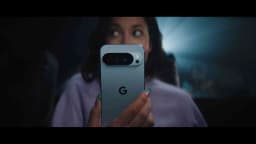
HP Turns Printer Security Into a Phishing Punchline
HP's "Phish in a Barrel" is a 30-second television commercial published in the United States on February 6, 2024, created by agency The Designory, promoting the HP OfficeJet Pro printer through a comedic framing of cybersecurity threats and positioning Hewlett-Packard as America's most trusted printer brand.
The campaign's central conceit is disarmingly straightforward. Phishing — the social-engineering attack vector that costs businesses across the United States billions in compromised data annually — becomes the literal punchline of a spot that uses wordplay to make printer security feel urgent and approachable at the same time. By anchoring the HP OfficeJet Pro's enhanced security features to a concept most office professionals already fear, The Designory gives the product a distinct and memorable reason to exist beyond speed or price. The campaign targets professionals and small-to-medium businesses that handle sensitive documents and need confidence that their printing infrastructure will not become a liability.
The film medium was the primary delivery vehicle, with the spot airing on US television and distributed through HP's official YouTube channel. In the United States, where printer security is an increasingly prominent concern for IT decision-makers and office managers alike, the campaign frames the OfficeJet Pro not merely as a productivity tool but as a frontline defence against data compromise. HP carries significant weight in this positioning: the brand describes itself, per its own published materials, as America's most trusted printer brand, a claim that "Phish in a Barrel" leans into directly. The Clapboard Score for this campaign is 64 out of 100, reflecting competent execution of a clearly defined brief with room for broader creative ambition.
HP held 35.3% of the global printer and copier market in the second quarter of 2024, ahead of Canon at 20.6% and Epson at 20.1%, according to data cited by Tom's Hardware. That dominant share gives HP both the authority and the commercial imperative to shape how businesses in the United States think about what a printer is supposed to do — and security has become a credible differentiator in a category where hardware specifications alone rarely excite buyers.
Research from Quocirca, which tracks the managed print and office technology sector, consistently identifies security as a top concern among IT and procurement decision-makers in enterprise and SMB environments. In that context, The Designory's decision to centre "Phish in a Barrel" on the threat of phishing rather than on print speed or ink yield is strategically sound. The campaign speaks to a documented anxiety rather than inventing one. Canon and Epson, HP's two closest competitors in the printer category, have not run comparable security-forward campaigns targeting US office buyers in the same period, which creates a degree of share-of-voice advantage for HP in this specific conversation.
The broader electronics and technology category in the United States was navigating a complicated 2024. Global printer and copier sales declined 6.6% year over year in the second quarter of 2024 to approximately 8.9 billion dollars, according to figures reported by Tom's Hardware. Against that headwind, HP's ability to reframe the OfficeJet Pro around security rather than volume gives the product a value proposition that is less vulnerable to commoditisation and price compression. The campaign reflects a mature understanding that in a shrinking hardware market, emotional and functional relevance — not specification sheets — determines consideration.
The Designory produced "Phish in a Barrel" as a tightly constructed 30-second film, a format that demands economy of storytelling and immediate audience orientation. The agency, which has a documented history of working with technology and automotive brands in the United States, channelled the spot's energy through comedic misdirection — using the shared language of "phishing" as both a cybersecurity reference and a literal visual or verbal gag, a device that collapses a complex security concept into something a general office audience can grasp without technical fluency.
Actor Joanna Cretella appears in the campaign, providing the human grounding that security-focused technology advertising often lacks. The decision to cast a recognisable on-screen presence rather than rely on voiceover alone or animated graphics signals a deliberate choice to keep the spot feeling warm and accessible rather than clinical. Security messaging in electronics advertising frequently defaults to abstract threat imagery — data streams, padlocks, shadowy figures — and "Phish in a Barrel" sidesteps that convention by anchoring its argument in a performance-led format.
The production positions the HP OfficeJet Pro 9015e at the centre of a domestic or small-office environment, reinforcing the product's relevance to the US small-and-medium business audience the campaign targets. The 30-second runtime is consistent with standard US television commercial placements, and the spot's distribution through HP's official YouTube channel extended its reach beyond broadcast. Production credits beyond Joanna Cretella's confirmed appearance are not publicly documented in available sources. The overall aesthetic prioritises clarity and brand recognition over formal experimentation, which is appropriate for a product campaign seeking to drive consideration at a specific moment in the purchase funnel.
No verified business performance data for "Phish in a Barrel" is publicly available. No sales lift, revenue impact, market-share change, lead generation figures, conversion rates, brand-tracking results, or ROAS data have been documented in accessible sources. What is verifiable is the campaign's YouTube engagement: the spot generated 4,930 views, 57 likes, and 14 comments on HP's official channel, figures that reflect modest organic reach consistent with a television-first campaign where broadcast impression volume, not social engagement, was the likely primary distribution metric.
According to iSpot, which tracks US television advertising, the spot aired on February 6, 2024, and iSpot classified the top viewer emotion as "Secure" — though the methodology and statistical reliability underlying that classification are not documented by iSpot in publicly available materials. No trade-press reviews of the campaign have been identified in Ad Age, Adweek, Campaign, The Drum, or Contagious, and no award recognitions have been confirmed across Cannes Lions, the Effies, One Show, D&AD, Clio, Webby, or WARC.
Structurally, the campaign's effectiveness rests on its strategic clarity. By connecting the OfficeJet Pro's security features to a culturally legible threat — phishing — in a single 30-second film, The Designory gives US buyers a concrete, memorable reason to consider HP over category competitors. In a market where global printer sales are under volume pressure, that kind of functional differentiation, delivered through a humanised creative format, represents a defensible approach to sustaining consideration for a hardware product with a long replacement cycle.
"Phish in a Barrel" is a 30-second HP television commercial published in the United States in February 2024. Created by The Designory, it promotes the HP OfficeJet Pro by using a comedic phishing conceit to highlight the printer's enhanced security features and faster performance, targeting professionals and small businesses concerned about data protection.
The Designory created "Phish in a Barrel" for HP. The agency produced the film campaign, which aired in the United States in February 2024. Actor Joanna Cretella appears in the spot, providing the on-screen presence that anchors the campaign's comedic and security-focused messaging around the HP OfficeJet Pro.
"Phish in a Barrel" promotes the HP OfficeJet Pro 9015e printer. The campaign centres on the product's enhanced security capabilities and faster printing performance, positioning it as a trusted office solution for US professionals and small-to-medium businesses that handle sensitive documents and require protection against cyber threats.
No verified award wins for "Phish in a Barrel" have been confirmed. No recognitions have been documented across Cannes Lions, the Effies, One Show, D&AD, Clio, Webby, or WARC. The campaign earned a Clapboard Score of 64 out of 100, reflecting competent execution of a well-defined brief within the competitive US electronics category.
"Phish in a Barrel" generated 4,930 views, 57 likes, and 14 comments on HP's official YouTube channel. These figures reflect the campaign's television-first distribution strategy, where broadcast reach rather than social engagement was the primary metric. No broader verified performance or business results data is publicly available for this campaign.
"Phish in a Barrel" reflects HP's strategic focus on security as a differentiator in the US printer market. With HP holding a leading share of the global printer category according to Tom's Hardware, the campaign positions the OfficeJet Pro beyond hardware specifications, addressing documented buyer anxiety around phishing and data security to sustain consideration in a competitive electronics environment.
.webp)
Creative Collaboration Platform: The Backbone of Modern Creative WorkWhat is a creative collaboration platform?Clapboard defines a creative collaboration platform as the operational core for today’s distributed creative teams. This is not a collection of digital collaboration tools stitched together; Clapboard’s system


Understanding the Creative Production MarketplaceWhat is a Creative Production Marketplace?Clapboard defines a creative production marketplace as a structured ecosystem where brands, agencies, and production talent converge to execute video, advertising, and branded content at scale. Unlike the legacy agency or freelanREAD FULL ARTICLE

The Urgent Need for a Creative Production Operating SystemWhy Traditional Creative Production Models Break DownClapboard sees the creative production landscape shifting under pressure. Content velocity is no longer a buzzword—it’s a mandate. Modern advertising demands relentless output across dozens of channels, each wREAD FULL ARTICLE