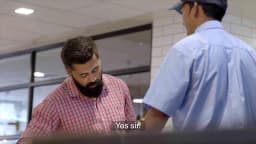
Hellmann's 'The Restaurant With No Food' was a 2018 UK experiential campaign by Ogilvy that transformed guests' own fridge leftovers into gourmet meals,

How Hellmann's Turned Fridge Leftovers Into a Gourmet Restaurant With No Food
Hellmann's launched an experiential campaign in the United Kingdom in August 2018 in which a fully operational gourmet restaurant served meals made exclusively from leftover ingredients brought in by its own guests, with no food stocked on the premises whatsoever.
Created by Ogilvy UK, the campaign was titled 'The Restaurant With No Food' and was designed to demonstrate, in the most visceral terms possible, that Hellmann's products — principally its mayonnaise — could act as the connective tissue between whatever ingredients a person already owned and a genuinely impressive finished dish. The objective was not simply to sell a condiment. It was to reframe Hellmann's as an essential partner in reducing household food waste, a cause with measurable cultural urgency in the United Kingdom at the time. The immersive experience invited consumers to arrive carrying whatever happened to be languishing in their refrigerators, hand those ingredients to professional chefs, and receive in return a restaurant-quality meal — with Hellmann's as the ingredient that made the transformation possible. The campaign sits at the intersection of experiential activation, food-waste advocacy, and brand purpose, and it secured an official endorsement from the UN World Food Programme, as reported by Ads of the World, lending the activation a layer of institutional credibility rare for a condiment brand. The creative agencies involved in producing the campaign were Ogilvy UK and London, F.biz Brazil, and Geometry Brazil, with PR handled by Máquina Cohn and Wolfe Brazil, according to Ads of the World. The United Kingdom served as both the primary geographic market and the proving ground for a brand argument that Hellmann's had been constructing since at least 2013, when the company first articulated what it called its Real Food Movement, according to Hellmanns. The campaign earned a Clapboard Score of 78 out of 100, reflecting strong strategic clarity and cultural resonance alongside the constraints of a single-market experiential format.
Hellmann's entered the 2018 campaign cycle facing a significant brand challenge in the United Kingdom.
According to campaignlive.co.uk, Hellmann's Real Mayonnaise held approximately 54% value share in the UK market in 2018, a decline from roughly 63% in prior years, representing a loss of approximately nine percentage points. That erosion created pressure to justify the brand's relevance beyond its category leadership, particularly as the spreads, sauces, and dressings sector was experiencing increasing fragmentation driven by health, flavour, and plant-based innovation, according to preparedfoods.com. Competitors including Heinz, which had expanded its condiment portfolio aggressively in the United Kingdom during this period, and smaller artisanal mayonnaise producers were eroding the mass-market position that Hellmann's had historically dominated. Against that backdrop, Ogilvy UK identified a consumer insight that was simultaneously emotional and statistical: British households were discarding vast quantities of usable food, and the guilt associated with that waste was a genuine, daily friction point for consumers who considered themselves conscientious. Rather than respond with a conventional advertising campaign, the agency designed an immersive experience that resolved that friction in real time and in public. The strategic logic was precise. By positioning Hellmann's not as a condiment but as an agent of ingredient transformation — the thing that converts a random collection of fridge leftovers into a coherent, delicious meal — Ogilvy reframed the brand's core equity around a behaviour that millions of people in the United Kingdom already wanted to change. Planning Director Amelia Priddis and the Ogilvy team structured the campaign around active participation rather than passive viewing, ensuring that every person who walked through the restaurant's doors became a living proof point for the brand's central claim.
The creative execution of 'The Restaurant With No Food' was built on a single, uncompromising constraint: nothing edible would be present in the restaurant until a guest walked through the door carrying it.
That constraint was the idea. Chief Creative Officer Andre Laurentino led the Ogilvy UK creative team, which included Creative Directors Johnny Watters and Angus George, Senior Copywriter Kareem Shuhaibar, Senior Art Directors Ilka Mourão and Thiago Jacon, and Typographer Dave Towers, according to Ads of the World and socialsamosa.com. The production challenge was as logistical as it was creative: the team had to design a functioning kitchen and dining environment that could receive genuinely unpredictable ingredient combinations from members of the public and then produce restaurant-quality dishes from them, reliably and at speed. Professional chefs were briefed to work improvisationally, using Hellmann's products as the binding element that could make disparate, unplanned ingredients cohere into something a guest would be proud to eat in a gourmet setting. The visual identity of the space reinforced the concept: a restaurant stripped of the abundance normally associated with fine dining, its menus blank, its kitchen shelves deliberately visible and conspicuously empty before each guest's arrival. Partner organisations MasterChef and Tastemade were brought in to extend the campaign's creative reach, contributing episodes over the following year that translated the live activation into long-form content for digital audiences, as reported by Ads of the World. The campaign's experiential format — an immersive experience designed for physical participation rather than screen consumption — gave it a earned media logic that a conventional Food and Drink advertisement could not replicate. The activation generated more than 200 news reports, according to Ads of the World, a figure that reflects the strength of the underlying creative concept as a story worth telling independently of paid media.
No campaign of this structure succeeds on sentiment alone, and 'The Restaurant With No Food' produced results across multiple dimensions of measurement.
The activation saved 2,700 ingredients through the restaurant experience itself, according to Ads of the World, a figure that functions simultaneously as an environmental outcome and a direct demonstration of the brand's stated purpose. The campaign generated more than 200 news reports, according to Ads of the World, delivering earned media reach that amplified the United Kingdom activation well beyond its physical footprint. Hellmann's reported an 8% sales increase attributed to the campaign, as cited by Ads of the World and socialsamosa.com, though the precise measurement period, geographic scope of that sales figure, and audit methodology are not specified in publicly available sources. The activation received an official endorsement from the UN World Food Programme, as reported by Ads of the World, a form of third-party validation that is exceptionally difficult for a commercial brand to earn and that substantially extended the campaign's credibility in press coverage. The campaign was recognised at the 2019 One Show awards, earning a Merit award as reported by The One Club, placing it among the most formally acknowledged experiential campaigns of its cycle in the Food and Drink category. Worldwide Managing Director Stephan Orhan and Account Director Hannah Gage oversaw the campaign's delivery, according to Ads of the World. The partnership with MasterChef and Tastemade ensured that the campaign's active life extended well into 2019, compounding its media value beyond the August 2018 launch window. Structurally, the campaign demonstrates that a purpose-led experiential format, when anchored to a genuine consumer behaviour rather than an abstract brand value, can generate commercial, cultural, and institutional returns simultaneously. The Clapboard Score of 78 out of 100 reflects that convergence.
Hellmann's 'The Restaurant With No Food' was a 2018 UK experiential campaign by Ogilvy in which a gourmet restaurant served meals made entirely from leftover ingredients brought by guests. No food was stocked on the premises. The campaign demonstrated that Hellmann's could transform everyday fridge leftovers into restaurant-quality dishes.
The campaign launched in August 2018 in the United Kingdom. Ogilvy UK created the activation as a live experiential experience. Creative agency partners F.biz Brazil and Geometry Brazil also contributed to the campaign, according to Ads of the World, alongside PR agency Máquina Cohn and Wolfe Brazil.
The campaign earned a Merit award at the 2019 One Show, as reported by oneclub.org. It also received an official endorsement from the UN World Food Programme, according to Ads of the World. The campaign generated more than 200 news reports and achieved a Clapboard Score of 78 out of 100.
Chief Creative Officer Andre Laurentino led the team at Ogilvy UK, according to Ads of the World. Creative Directors Johnny Watters and Angus George shaped the concept, with Senior Copywriter Kareem Shuhaibar and Senior Art Directors Ilka Mourão and Thiago Jacon executing the creative work alongside Typographer Dave Towers.
The campaign saved 2,700 ingredients through the live activation and generated more than 200 news reports, according to Ads of the World. Hellmann's reported an 8% sales increase attributed to the campaign, as cited by socialsamosa.com, though the precise measurement period and audit methodology are not specified in publicly available sources.
Hellmann's had been building a food-waste and ingredient-transformation platform since at least 2013, when it articulated its Real Food Movement, according to hellmanns.com. The 2018 United Kingdom experiential activation translated that positioning into a physical proof point, using the restaurant format to demonstrate the brand's role in reducing household food waste.
.webp)
Creative Collaboration Platform: The Backbone of Modern Creative WorkWhat is a creative collaboration platform?Clapboard defines a creative collaboration platform as the operational core for today’s distributed creative teams. This is not a collection of digital collaboration tools stitched together; Clapboard’s system


Understanding the Creative Production MarketplaceWhat is a Creative Production Marketplace?Clapboard defines a creative production marketplace as a structured ecosystem where brands, agencies, and production talent converge to execute video, advertising, and branded content at scale. Unlike the legacy agency or freelanREAD FULL ARTICLE

The Urgent Need for a Creative Production Operating SystemWhy Traditional Creative Production Models Break DownClapboard sees the creative production landscape shifting under pressure. Content velocity is no longer a buzzword—it’s a mandate. Modern advertising demands relentless output across dozens of channels, each wREAD FULL ARTICLE