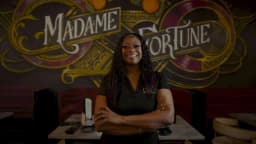
Heineken and Dentsu Creative Brazil launched Hard Truths to Swallow on International Women's Day 2024, using a deliberately unpleasant drink to expose gender

Heineken Brazil Serves Hard Truths to Swallow in 2024 Gender Bias Campaign
Heineken's "Hard Truths to Swallow" is a 2024 documentary-style social experiment created by Dentsu Creative Brazil that confronted workplace gender bias by inviting executives to taste a specially formulated non-alcoholic drink called Lidera, whose unpleasant flavour served as a physical metaphor for the experiences women endure in professional environments across Brazil.
Launched on 8 March 2024 — International Women's Day — the campaign centred on a deceptively simple mechanic. Executives and business leaders were offered Lidera, a drink engineered to taste unpleasant, without forewarning about its flavour profile. Once participants reacted to the taste, the can's label revealed a series of statistics and hard truths about women's experiences in the workplace. Their unscripted reactions were filmed and shaped into documentary-style content distributed across digital and experiential channels, as reported by LBBonline and corroborated by Propmark Com Br.
The campaign's Portuguese title, "Verdades Difíceis de Engolir," translates directly as "Hard Truths to Swallow" — a double meaning that ties the physical sensation of drinking something unpalatable to the social and professional discomfort that women are routinely asked to absorb in silence. Heineken positioned Lidera as a brand vehicle for social reflection rather than commercial promotion, using the name itself — "Lidera" means "leader" in Portuguese — to reinforce its argument about women's leadership potential going unrecognised. The campaign was submitted to Clapboard by Karina Okabatake, MktComms Director at Dentsu, and represents a content, digital, and experiential media effort operating across the alcoholic drinks and non-alcoholic drinks categories simultaneously, given that the central product device was itself a non-alcoholic creation. In Brazil, the campaign found a culturally charged moment in which corporate discourse around gender equity was both prominent and contested, lending the social experiment format an urgency that purely narrative advertising could not easily replicate.
Heineken identified a specific tension in Brazilian professional culture. Gender bias in the workplace is widely acknowledged in public discourse yet rarely confronted with the directness that prompts discomfort, and therefore change, among those with decision-making power. Rather than producing content for women to share with each other, the campaign targeted a different audience: the executives and leaders, many of them men, whose unchallenged assumptions sustain workplace inequalities.
The social experiment format is central to this strategic choice. By placing a physical, sensory experience — the unpleasant taste of Lidera — at the heart of the campaign, Dentsu Creative Brazil made gender bias tangible for an audience accustomed to abstract discussion. The moment of tasting preceded the moment of knowing, ensuring that participants' reactions were genuine and unmediated. This sequencing is what transforms a branded stunt into credible documentary material, as noted in coverage by LBBonline and Voxnews Com Br.
In the Brazilian beer market, Heineken operates in a highly competitive landscape. AB InBev, which held approximately 26.4% of global beer production in 2024 based on data from brewplanner.com, is the dominant force in Brazil through its Ambev subsidiary and brands including Brahma and Skol. Heineken has pursued cultural relevance and brand positioning as tools of differentiation in markets where volume competition alone is insufficient. Per marketingdive.com, Heineken's principal global creative model since 2021 has been Le Pub, a bespoke agency constructed within Publicis for global campaigns. "Hard Truths to Swallow" represents a locally originated extension of the brand's broader commitment to inclusivity and cultural resonance, developed independently through Dentsu and Dentsu Creative Brazil rather than through its global agency structure, as noted by campaignlive.com. This dual-track model — global platform, local issue — allows Heineken to address Brazil-specific cultural conversations with speed and specificity that centralised global campaigns cannot match.
Ricardo Dolla served as Chief Creative Officer at Dentsu Creative Brazil for "Hard Truths to Swallow." Marina Tonon led the project as Creative Director, working alongside Hannah Prado as Art Director and Leticia Holanda as Writer — a creative team whose composition is itself consistent with the campaign's argument about women's professional capability.
Diego Torres directed content, with Juliana D'Antino serving as Head of Production and Patricia Oliveira handling production. Mariana Lopes acted as Executive Producer, and Let Rodrigues served as Director of Photography. Creative direction and interview production were handled by Moa LLC. Raquel Zagui, Vice President of People at Grupo Heineken, provided the internal client perspective that shaped how the campaign spoke to corporate rather than consumer audiences.
The documentary register is the most consequential creative decision on the project. By filming real participants in real time, the campaign generates evidence rather than assertion. Executives reacting to Lidera's taste cannot be accused of performing; their grimaces, hesitations, and expressions of surprise are raw material that acquires meaning only once the can's label is read. The label design is therefore a critical piece of craft: it must withhold enough information to allow the tasting to proceed without priming, then reveal its content with sufficient impact to reframe what the audience just witnessed. The bilingual campaign name — operating in Portuguese as "Verdades Difíceis de Engolir" and in English as "Hard Truths to Swallow" — extends the creative concept into language itself, allowing the wordplay to travel across markets and media contexts. As reported by LBBonline and exame.com, the campaign's content and digital distribution amplified the filmed experiment beyond the immediate participants, turning a small-scale experiential activation into a broad social conversation in Brazil.
Heineken's "Hard Truths to Swallow" earned a Clapboard Score of 61 out of 100, reflecting a campaign with genuine creative ingenuity and cultural relevance that nonetheless leaves measurable questions open.
No independently verified performance data — including reach figures, earned media value, or brand lift metrics — for "Hard Truths to Swallow" is publicly available at the time of writing. What the archive record at Clapboard documents is 1,646 views and 14 likes within the platform, figures that speak to the campaign's discovery within professional creative communities rather than to its broader Brazilian audience impact. Coverage from LBBonline, propmark.com.br, voxnews.com.br, and exame.com confirms the campaign received editorial attention across both specialist advertising press and Brazilian business media, suggesting that its strategy of targeting corporate leaders generated pick-up in exactly the publications those leaders read.
Structurally, the campaign's effectiveness rests on the credibility of its social experiment format. The use of real executives as unwitting participants eliminates the artificiality that undermines much purpose-driven brand advertising. The International Women's Day launch date on 8 March 2024 maximised contextual relevance and concentrated media attention, as documented by marketingoops.com and adclays.com. The Lidera device is distinctive enough to anchor earned coverage independently of paid media investment, which is structurally efficient for a locally produced campaign operating without a global media budget. The campaign's limitation — and a likely contributor to its mid-range Clapboard Score — is the absence of a publicly documented downstream mechanism connecting the discomfort of the tasting experience to measurable corporate behaviour change in Brazil, which is ultimately what the campaign claims to want.
Hard Truths to Swallow is a 2024 documentary-style social experiment by Heineken and Dentsu Creative Brazil. Launched on International Women's Day, it gave executives a specially created non-alcoholic drink called Lidera, engineered to taste unpleasant, then revealed workplace gender bias statistics on the can's label as their reactions were filmed.
Lidera is a non-alcoholic drink created specifically for the campaign, intentionally formulated to taste unpleasant. Its name means "leader" in Portuguese. Heineken used it as a physical metaphor for the negative professional experiences women are routinely expected to absorb, making an abstract social issue sensory and immediate for executive participants in Brazil.
The campaign was created by Dentsu and Dentsu Creative Brazil. Ricardo Dolla was Chief Creative Officer, Marina Tonon served as Creative Director, Hannah Prado as Art Director, and Leticia Holanda as Writer. Moa LLC handled creative direction and interviews, with Let Rodrigues as Director of Photography and Mariana Lopes as Executive Producer.
The campaign launched on 8 March 2024 — International Women's Day — in Brazil. It operated across content, digital, and experiential media channels and was reported on by LBBonline, propmark.com.br, exame.com, and voxnews.com.br, confirming its reach across both specialist advertising press and Brazilian business media at launch.
Heineken's Hard Truths to Swallow received a Clapboard Score of 61 out of 100. The score reflects the campaign's genuine creative originality and cultural relevance in Brazil while noting the absence of publicly documented metrics connecting the experiential activation to measurable change in corporate behaviour or verified audience reach figures.
The campaign is a locally originated Brazil initiative developed through Dentsu Creative rather than Heineken's global agency Le Pub, which operates through Publicis according to marketingdive.com and campaignlive.com. It reflects Heineken's wider strategy of using cultural relevance and inclusivity as brand differentiators in competitive markets where AB InBev holds dominant volume share.
.webp)
Creative Collaboration Platform: The Backbone of Modern Creative WorkWhat is a creative collaboration platform?Clapboard defines a creative collaboration platform as the operational core for today’s distributed creative teams. This is not a collection of digital collaboration tools stitched together; Clapboard’s system


Understanding the Creative Production MarketplaceWhat is a Creative Production Marketplace?Clapboard defines a creative production marketplace as a structured ecosystem where brands, agencies, and production talent converge to execute video, advertising, and branded content at scale. Unlike the legacy agency or freelanREAD FULL ARTICLE

The Urgent Need for a Creative Production Operating SystemWhy Traditional Creative Production Models Break DownClapboard sees the creative production landscape shifting under pressure. Content velocity is no longer a buzzword—it’s a mandate. Modern advertising demands relentless output across dozens of channels, each wREAD FULL ARTICLE