 ARCHIVE
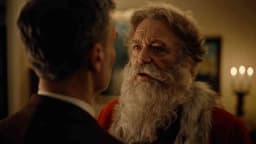
When Harry Met Santa - Posten | Clapboard Ad Archive
When Harry Met Santa from Posten and Oslo agency POL challenged entrenched Christmas mythology in...
Harrods Brings Christmas Magic to Life With Stop-Motion Film
Harrods launched 'The Land of Make Believe' on 7 November 2014, a stop-motion animated short film created by TBWA\London and produced by A+C Studios that told the story of Peter Pumpernickel, a small mouse who helps Father Christmas turn on the Harrods Christmas lights in Knightsbridge, London, positioning the store as the United Kingdom's definitive family Christmas destination.
The campaign arrived at a moment when premium retail brands were competing intensely for emotional ownership of the holiday season in the UK. Rather than producing a conventional product-led advertisement, Harrods and TBWA\London committed to a piece of narrative filmmaking that could operate simultaneously as a retail campaign and a piece of seasonal entertainment. The film was distributed across Harrods' website, social media channels, in-store screens, and national cinema screens throughout the United Kingdom, extending its reach well beyond the Knightsbridge flagship.
The launch was timed to coincide with the opening of Harrods' Christmas Grotto, anchoring the film within a broader seasonal retail event and reinforcing the store's position as a destination rather than a transactional channel. As reported by The Drum, the campaign supported Harrods' longstanding ambition to present Christmas shopping as an experience rooted in wonder and tradition, one that speaks to children and adults equally. Deborah Bee, director of creative marketing at Harrods, stated at launch: 'Christmas at Harrods is a truly enchanting time for everyone. The Land of Make Believe brings the festive magic of the store to life, encouraging Londoners to enjoy Harrods as the ultimate Christmas destination that's perfect for the whole family.' The campaign carries a Clapboard Score of 70 out of 100, reflecting strong creative craft and clear strategic intent within the competitive UK holiday advertising landscape.
Harrods occupies a singular position in United Kingdom retail, but that position does not insulate it from competition during the Christmas period. The 2014 holiday advertising season in the UK was defined by emotionally ambitious filmmaking, most visibly from John Lewis, whose annual Christmas campaigns had by that point established a benchmark that every major UK retailer was implicitly measured against. Selfridges, another Knightsbridge-adjacent luxury department store, was similarly investing in experiential and narrative approaches to seasonal marketing. Within this context, TBWA\London's strategic decision for Harrods was to lean into a register that felt distinctly its own: heritage, craftsmanship, and the particular enchantment of a store that has been a London institution for generations.
The global personal luxury goods market was valued at approximately €223 billion in 2014, growing at around three percent that year, according to Media Bain. Department stores represented approximately twenty-seven percent of luxury sales channels in 2014, according to Consultancy Uk, making the defence of that channel both commercially significant and strategically urgent. In the United Kingdom specifically, luxury retail was navigating a period of channel diversification, with monobrand stores and digital commerce placing new pressure on the department store model. Against that backdrop, a campaign that dramatised the irreplaceable physical experience of Harrods at Christmas carried genuine strategic logic. By centring the narrative on the store's lights — one of its most recognisable seasonal rituals — TBWA\London gave the film an emotional specificity that no competitor could replicate.
A+C Studios produced 'The Land of Make Believe' in approximately nine weeks, according to Little Black Book and skwigly.co.uk. The stop-motion animation process alone accounted for around twenty-eight days of that production window, before digital compositing and post-production were completed. The film combined stop-motion animation, illustrated two-dimensional backgrounds, and digital compositing into a layered visual world that evoked classic British children's illustration while remaining anchored in the recognisable interiors and iconography of Harrods.
Dan Richards, director at A+C Studios, directed the film and spoke about the creative rationale for the technique, as reported by skwigly.co.uk: 'Stop-motion animation has a beautifully nostalgic quality, which I think was perfect for this.' That instinct toward the handmade and the tactile was consistent across every element of the production. Lead animator James Harvey executed the frame-by-frame animation, while modelmaking assistance was provided by Jim Parkyn of Aardman, the celebrated Bristol-based studio whose own stop-motion heritage lent additional craft credibility to the project, as documented by awn.com and skwigly.co.uk. Peter Souter, chairman and chief creative officer at TBWA\London, described the resulting film as a 'beautiful, nostalgic take on the store's traditions,' as reported by lbbonline.com. Creative directors Jason Fletcher and Marcus Iles shaped the campaign's visual and narrative identity from the agency side. The choice of stop-motion as the production method was not merely aesthetic; it signalled a commitment to handcraft that aligned directly with Harrods' brand values, and it differentiated the film visually from the more prevalent live-action emotional storytelling that dominated UK Christmas advertising in the same period.
No independently verified performance data for 'The Land of Make Believe' — including view counts, store footfall uplift, or sales figures attributable to the campaign — is publicly available. What can be assessed is the structural effectiveness of the campaign's distribution and integration strategy. The decision to place the film in national UK cinemas alongside Harrods' website and social channels created a multi-touchpoint presence that extended well beyond the brand's existing audience, as reported by The Drum. Cinema placement in particular gave the film a prestige context that reinforced the premium positioning of Harrods and invited comparison with the kind of entertainment audiences were paying to see, rather than advertising they were tolerating.
The campaign's integration with the in-store Christmas Grotto opening created a direct link between the film's narrative world and a physical retail experience that families could visit, translating emotional engagement into store traffic motivation. The involvement of talent from Aardman and the nine-week production commitment signalled a level of investment consistent with a flagship brand campaign rather than a seasonal promotional exercise. As reported by lbbonline.com, the campaign generated coverage across UK trade and consumer press at launch, extending its earned media reach. The Clapboard Score of 70 out of 100 reflects a campaign that executes its creative ambition with genuine craft and clear strategic coherence, while operating in a category where measurable differentiation is difficult to sustain across consecutive years.
'The Land of Make Believe' is a stop-motion animated short film Harrods launched on 7 November 2014. Created by TBWA\London and produced by A+C Studios, it follows Peter Pumpernickel, a small mouse who helps Father Christmas turn on the Harrods Christmas lights, positioning the Knightsbridge store as the UK's ultimate family holiday destination.
TBWA\London created the campaign. A+C Studios produced the film, with Dan Richards directing, James Harvey as lead animator, and Jim Parkyn of Aardman assisting with modelmaking. Creative directors Jason Fletcher and Marcus Iles led the work from the agency side, with Peter Souter serving as chairman and chief creative officer at TBWA\London.
The film ran across national UK cinemas, Harrods' website, social media channels, and in-store screens. This multi-platform distribution strategy extended the campaign's reach beyond the Knightsbridge flagship and placed the film in a prestige entertainment context alongside theatrical releases throughout the United Kingdom.
A+C Studios completed 'The Land of Make Believe' in approximately nine weeks, according to lbbonline.com and skwigly.co.uk. The stop-motion animation phase took around twenty-eight days before digital compositing and post-production were completed, reflecting a significant craft commitment for a seasonal retail campaign.
The 2014 UK holiday advertising season was dominated by emotionally led filmmaking, with John Lewis and Selfridges among the most prominent competitors. Harrods differentiated through stop-motion craft and store-specific narrative, using the Knightsbridge Christmas lights ritual as an anchor that no rival retailer could credibly replicate.
.webp)
Creative Collaboration Platform: The Backbone of Modern Creative WorkWhat is a creative collaboration platform?Clapboard defines a creative collaboration platform as the operational core for today’s distributed creative teams. This is not a collection of digital collaboration tools stitched together; Clapboard’s system


Understanding the Creative Production MarketplaceWhat is a Creative Production Marketplace?Clapboard defines a creative production marketplace as a structured ecosystem where brands, agencies, and production talent converge to execute video, advertising, and branded content at scale. Unlike the legacy agency or freelanREAD FULL ARTICLE

The Urgent Need for a Creative Production Operating SystemWhy Traditional Creative Production Models Break DownClapboard sees the creative production landscape shifting under pressure. Content velocity is no longer a buzzword—it’s a mandate. Modern advertising demands relentless output across dozens of channels, each wREAD FULL ARTICLE