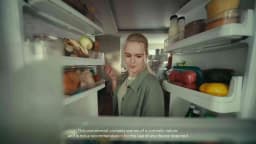
Google's 'I'll Be Ok, Google' was a 2017 student campaign by Redhook School in Brazil, shortlisted at Cannes Future Lions for its narrative-driven digital

How Redhook School Made Google Feel Human in Brazil
'I'll Be Ok, Google' is a 2017 student campaign created at Redhook School in Brazil for Google, published in April 2017, that uses digital storytelling to reposition the search engine as an intimate emotional companion rather than a utility, earning a Cannes Future Lions shortlist recognition for its narrative-driven concept.
The campaign originates from Brazil's creative advertising education scene, where Redhook School functions as a competitive portfolio school producing industry-ready conceptual work. Mentored by André Petrini of Redhook School, the project was conceived as a digital medium execution for the electronics and technology category. Rather than demonstrating Google's technical features, the campaign turns the familiar voice-command phrase into a declaration of personal resilience — inviting users to see Google not as a search engine but as a presence that accompanies them through difficulty. The title itself is the entire strategic and creative argument compressed into five words: a person addressing Google directly, asserting that they will be all right.
In Brazil, where internet adoption was accelerating rapidly in 2017, the cultural timing of such a campaign carried particular weight. The work was submitted to the Cannes Future Lions competition in May 2017, according to records cited by Clapboard, placing it among student concepts evaluated against an international standard. The campaign contains a single media asset, consistent with the lean, high-concept approach characteristic of portfolio school work. Credited creatives include Bruna Serves and Rodrigo Camargo as the student team behind the concept, with André Petrini serving as mentor. The Clapboard Score for this campaign is 71 out of 100, reflecting a strong conceptual foundation acknowledged within the broader archive of student advertising work.
The strategic insight driving 'I'll Be Ok, Google' rests on a well-documented behavioural pattern: people direct deeply personal questions at search engines. Google's own creative lineage supports this reading. The 2013 campaign 'Google India Reunion,' created by Ogilvy India, demonstrated that search queries carry emotional weight powerful enough to anchor feature-length narrative advertising, according to reporting catalogued by livingproofcreative.com. By 2017, that understanding had matured into a recognised strategic territory for Google globally.
In Brazil, the digital advertising market was expanding at pace with broader regional growth. Global internet advertising was estimated at approximately two hundred and five billion dollars in 2017 by Zenith, representing thirteen percent year-over-year growth — a macro context that made brand differentiation through emotional resonance an increasingly important lever. In a saturated digital environment, utility alone no longer separated technology brands from one another. Competitors such as Microsoft's Bing and regional search alternatives were present in the Brazilian market, making Google's positioning as a culturally and emotionally embedded product a meaningful strategic choice rather than a cosmetic one.
Redhook School's framing asks a different question than most technology advertising: not what does Google do, but how does Google make someone feel when they are struggling. The answer proposed by Bruna Serves and Rodrigo Camargo is that Google is steady — present without judgment, available without condition. This mirrors the emotional logic Google deployed in 'A Year in Search' from 2014, which used aggregated search behaviour to tell a globally resonant story about human concern, identified as one of the brand's most notable advertising efforts of that period according to livingproofcreative.com. 'I'll Be Ok, Google' compresses that same logic into a student-scale execution without losing its strategic clarity.
The creative execution of 'I'll Be Ok, Google' is defined by economy. A single media asset carries the entire communicative weight of the campaign, which is itself a creative decision with structural implications. In student advertising, constraint often produces precision, and the Redhook School brief appears to have operated exactly that way for Bruna Serves and Rodrigo Camargo.
The campaign's core creative mechanism is linguistic: it repurposes the standard voice-command syntax — 'OK, Google' — by placing it inside a first-person emotional statement. 'I'll Be Ok, Google' is simultaneously a reassurance spoken to another person and an address to a technology product. That syntactic ambiguity is the creative idea. It does not require explanation or visual elaboration because the phrase itself performs the insight. This compression is characteristic of strong portfolio school work, where the idea must be immediately legible without the production resources available to professional campaigns.
André Petrini served as mentor on the project at Redhook School, according to records cited by Clapboard, and his involvement situates the work within a supervised creative development process rather than an independent student exercise. The campaign was entered into the Cannes Future Lions competition in May 2017, according to Clapboard, a programme specifically designed to evaluate student concepts against professional creative standards on a global stage. Production credits beyond the student team and mentor are not publicly documented for this campaign. The digital medium classification of the work is consistent with the broader industry shift noted during 2017, when global digital advertising formats were commanding an increasing share of brand investment, as reported by eMarketer. In Brazil, that shift was reshaping how brands communicated with digitally connected audiences, giving conceptually driven digital executions like this one a credible and relevant platform.
No verified performance data for 'I'll Be Ok, Google' is publicly available, as is standard for student campaign work, which is evaluated on conceptual merit rather than media delivery or commercial outcome. What is documentable is the campaign's competitive recognition. The work received a Cannes Future Lions shortlist entry in May 2017, according to Clapboard, which represents meaningful external validation for a Brazil-based student concept competing at an international level.
The Cannes Future Lions shortlist is a credible industry benchmark. Operated as part of the Cannes Lions International Festival of Creativity, it assesses student campaigns against the same creative rigour applied to professional work. A shortlist placement indicates that 'I'll Be Ok, Google' cleared a significant competitive threshold, distinguishing it from the broader field of submissions. No further award tier beyond the shortlist is documented in publicly available records.
Structurally, the campaign's effectiveness rests on the durability of its central idea. A concept built entirely on linguistic reframing of a brand's own product language has a longevity that production-dependent work does not. The phrase functions as both the insight and the execution, which means it travels across formats without degradation. For a single-asset digital campaign produced within an educational context in Brazil in 2017, that structural efficiency is a significant creative achievement. The Clapboard Score of 71 out of 100 reflects this balance — acknowledging a genuinely strong conceptual premise while recognising the inherent limitations of scope and scale associated with student work rather than a fully produced professional campaign.
'I'll Be Ok, Google' is a student campaign created at Redhook School in Brazil for Google, published in April 2017. It repositions the search engine as an emotional companion by reframing the standard 'OK, Google' voice command as a personal statement of resilience, delivered as a single digital media asset. It received a Cannes Future Lions shortlist in May 2017, according to Clapboard.
The campaign was created by student creatives Bruna Serves and Rodrigo Camargo at Redhook School in Brazil. André Petrini of Redhook School served as mentor on the project, according to Clapboard. The campaign was entered into the Cannes Future Lions competition in May 2017 and received a shortlist recognition.
'I'll Be Ok, Google' received a Cannes Future Lions shortlist entry in May 2017, according to Clapboard. No award tier beyond the shortlist is documented in publicly available records. The shortlist placement represents meaningful international validation for a student campaign originating from Brazil's Redhook School.
Redhook School is a Brazilian advertising portfolio school that produces conceptual campaign work across digital and traditional media categories. In 2017, the school's student team of Bruna Serves and Rodrigo Camargo, mentored by André Petrini, created 'I'll Be Ok, Google,' which reached the Cannes Future Lions shortlist, according to Clapboard.
The Clapboard Score for 'I'll Be Ok, Google' is 71 out of 100, according to Clapboard. This score reflects the campaign's strong conceptual foundation — particularly its linguistic reframing of Google's own product language — balanced against the inherent scope limitations of a single-asset student campaign produced in Brazil in 2017.
The campaign demonstrates that Google's most resonant advertising consistently positions search as an emotional act rather than a functional one, a strategy visible in earlier Google work including 'Google India Reunion' from 2013, as documented by livingproofcreative.com. Redhook School's 2017 concept compresses that strategic tradition into a single, linguistically precise digital execution from Brazil.
.webp)
Creative Collaboration Platform: The Backbone of Modern Creative WorkWhat is a creative collaboration platform?Clapboard defines a creative collaboration platform as the operational core for today’s distributed creative teams. This is not a collection of digital collaboration tools stitched together; Clapboard’s system


Understanding the Creative Production MarketplaceWhat is a Creative Production Marketplace?Clapboard defines a creative production marketplace as a structured ecosystem where brands, agencies, and production talent converge to execute video, advertising, and branded content at scale. Unlike the legacy agency or freelanREAD FULL ARTICLE

The Urgent Need for a Creative Production Operating SystemWhy Traditional Creative Production Models Break DownClapboard sees the creative production landscape shifting under pressure. Content velocity is no longer a buzzword—it’s a mandate. Modern advertising demands relentless output across dozens of channels, each wREAD FULL ARTICLE