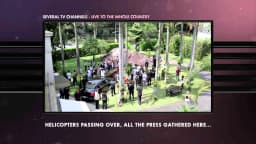
The #NonPublicWorks campaign by Fundación Saraki, developed by Publicis in Paraguay in 2015, positions the brand as an advocate for transparency and social accountability in public service projects. The campaign’s core proposition emphasizes the often unseen or unacknowledged efforts behind public initiatives, aiming to shed light on the hidden narratives and challenges within public infrastructure development. By documenting these underrepresented perspectives, the campaign seeks to foster a deeper public understanding and engagement with the realities of public works beyond official narratives.
Strategically, the campaign leverages a documentary and social experiment genre to create authentic, emotionally resonant content that appeals to socially conscious audiences interested in governance and community impact. The creative approach draws on real-life scenarios and unfiltered representation to establish credibility and evoke empathy, inviting viewers to critically reflect on the functioning of public projects and the societal value they generate. The digital medium enables targeted distribution among digitally active segments in Paraguay, particularly those engaged in civic matters and public accountability. This insight-driven strategy taps into a growing demand for transparency and citizen participation, positioning Fundación Saraki as a key voice in public interest advocacy through compelling, grassroots storytelling.
FORMAT#3 SYMBOLIZE THE PROBLEM — Uses symbols or analogies to represent the problem instead of showing it literally.
The campaign "#NonPublicWorks" for Fundación Saraki is situated in the public service category with a genre marked as "Documentary/Social Experiment." The title itself, stripped of explicit explanatory cues, suggests a play on the idea of "public works" projects, with the "#NonPublicWorks" hashtag likely symbolizing the absence of inclusion or accessibility for people with disabilities—Saraki’s known advocacy area. The genre and absence of direct problem-solution or story-driven language further indicate an approach that uses public symbols (infrastructure, works) to comment on social exclusion as a metaphor, exposing invisible barriers through symbolic representation rather than literal demonstration or narrative resolution. This rationale fits FORMAT#3: SYMBOLIZE THE PROBLEM, where the core creative device is making an abstract social issue tangible through analogy, rather than following a story arc or explicit testimonial. For reference: ADVERTISING FORMATS EXPLAINED: https://www.clapboard.com/blog/branding-and-advertising/brand-strategy/12-advertising-creative-formats
1. TECHO Paraguay – Positioned as a youth-driven nonprofit focused on eradicating extreme poverty through community-driven housing projects and social inclusion, TECHO leverages volunteer engagement and grassroots mobilization to create sustainable living environments in Paraguay’s vulnerable urban areas.
2. UNICEF Paraguay – Operating as a global authority on children’s rights, UNICEF Paraguay emphasizes child protection, education, and health programs, delivering impactful advocacy and innovative social initiatives backed by international expertise and strong government partnerships.
3. UNICEF Paraguay – Operating as a global authority on children’s rights, UNICEF Paraguay emphasizes child protection, education, and health programs, delivering impactful advocacy and innovative social initiatives backed by international expertise and strong government partnerships.
4. Moisés Bertoni Foundation – Specializes in environmental conservation and sustainable development in Paraguay, focusing on biodiversity preservation, agricultural innovation, and community education, thereby positioning itself as a scientific leader driving social and ecological well-being.
5. Red Cross Paraguay – Renowned for humanitarian assistance and emergency response, Red Cross Paraguay combines health services, disaster relief, and community resilience programs, positioning itself as a trusted public service entity integral to national safety and welfare.
Q: What is #NonPublicWorks about?
A: #NonPublicWorks is a professional digital campaign created in 2015 for Fundación Saraki by Publicis in Paraguay. Developed under the creative direction of Víctor Caselli and Santiago Morello, with strategic leadership from José Lledó and Hernán Rodas, the campaign addresses issues of transparency and accountability in public works. By leveraging a single digital asset, #NonPublicWorks uses documentary and social experiment techniques to highlight the hidden challenges and overlooked narratives within public infrastructure projects, aiming to foster public awareness and dialogue around the responsible management of public resources in Paraguay.
Q: What creative device does #NonPublicWorks use?
A: #NonPublicWorks employs the creative technique classified as FORMAT#3 SYMBOLIZE THE PROBLEM according to Clapboard’s 12-format taxonomy. Instead of depicting the issue literally, the campaign uses symbols and analogies—specifically, the concept of public works—to represent the broader problem of social exclusion and lack of transparency. This approach makes abstract issues tangible for audiences by inviting them to interpret the underlying message, rather than presenting a direct narrative or testimonial, aligning with Fundación Saraki’s advocacy for inclusion and public accountability.
Q: What is the campaign proposition for #NonPublicWorks?
A: The campaign proposition for #NonPublicWorks positions Fundación Saraki as a leading advocate for transparency and social responsibility in Paraguay’s public service sector. By documenting the often-unseen aspects of public infrastructure and the challenges faced by marginalized groups, the campaign speaks directly to socially conscious citizens invested in governance and community impact. This strategic stance is designed to foster deeper public engagement and critical reflection on the realities behind official narratives, reinforcing Fundación Saraki’s role as a catalyst for positive change and citizen participation in public affairs.
Q: How does #NonPublicWorks rank in Clapboard's archive?
A: #NonPublicWorks holds a Clapboard Campaign Score of 57/100 in Clapboard’s global ad archive. This score reflects the campaign’s creative ambition, execution quality, and cultural relevance within the context of public interest advertising in Paraguay.
Q: Who are the competitors in Fundación Saraki's category?
A: In the public service and advocacy space in Paraguay, Fundación Saraki’s key competitors include TECHO Paraguay, which mobilizes youth and volunteers to address urban poverty through community-driven housing; UNICEF Paraguay, recognized for its authoritative work in child protection, education, and health with strong institutional partnerships; the Moisés Bertoni Foundation, which leads in environmental conservation and sustainable development; and Red Cross Paraguay, a trusted provider of humanitarian aid, health services, and disaster response, all shaping the landscape of social impact and public interest initiatives in the country.



.webp)