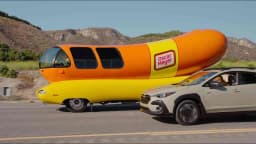
Ford’s ‘Project T3’ campaign introduces the brand’s forthcoming next-generation electric truck, emphasizing a fusion of legacy and innovation. The campaign centers on the promise of reliability and trustworthiness, encapsulated in the rallying cry “Trust The Truck.” This proposition leverages Ford’s century-long expertise in truck manufacturing while positioning Project T3 as a digitally advanced vehicle that adapts and improves over time. It showcases the truck as an embodiment of American engineering, capable of supporting traditional truck functions like towing and hauling, enhanced by modern features such as software updates and exportable power.
Strategically, the campaign taps into evolving consumer expectations around electric vehicles by highlighting constant innovation and connectivity, aligning with a tech-savvy and forward-looking audience. The emphasis on the BlueOval City mega-campus in Tennessee grounds the vehicle’s development in American manufacturing heritage, appealing to patriotic and industry-conscious consumers. By coining “Trust The Truck” as both a code name and rallying cry, Ford humanizes the development process, fostering emotional engagement and credibility. The campaign’s medium—film content on digital platforms like YouTube—supports visual storytelling to communicate the truck’s advanced capabilities and the brand’s commitment to transformation in the automotive sector. This approach targets prospective electric truck buyers who value both performance and technological advancement, reflecting Ford’s intent to maintain leadership amid the industry’s transition toward sustainable mobility.
FORMAT#11 UNIQUE PERSONALITY PROPERTY — Highlights a unique feature, origin, or distinctive product identity.
This campaign centers around Ford’s next-gen electric truck, code named Project T3, and places pronounced emphasis on its unique origin, developmental philosophy ("Trust The Truck"), and its position as a platform for endless innovation. The spotlight is on Ford’s heritage combined with cutting-edge EV and software capabilities, branding Project T3 as a once-in-a-lifetime evolution for America’s truck. The narrative does not focus on story arcs, problems, testimonials, or explicit demonstrations, but rather on establishing the distinct identity, code name, and forward-thinking aspirations of this specific vehicle, making “unique personality property” the definitive creative format at play.
ADVERTISING FORMATS EXPLAINED: https://www.clapboard.com/blog/branding-and-advertising/brand-strategy/12-advertising-creative-formats
1. Chevrolet – Market Positioning
Chevrolet positions itself as a reliable and versatile American automotive brand, with a strong heritage in trucks and SUVs. Their Silverado lineup emphasizes durability, performance, and advanced technology, targeting customers seeking a balance of rugged capability and modern features, often at a competitive price point.
2. Ram Trucks – Market Positioning
Ram Trucks focuses on delivering best-in-class power, towing, and interior comfort in the full-size pickup segment. They emphasize ruggedness combined with luxury, targeting buyers who want heavy-duty capability with refined design and advanced technology, often highlighting innovation in powertrain options and customer-centric features.
3. GMC – Market Positioning
GMC markets itself as the premium, professional-grade truck and SUV brand under General Motors, targeting customers who want upscale appointments and advanced tech without sacrificing toughness. Their Sierra trucks blend high-end design with capability, appealing to buyers seeking a luxury feel in a rugged vehicle.
4. Tesla – Market Positioning
Tesla differentiates itself as a pioneer in electric vehicles with cutting-edge technology and software integration. With the Cybertruck, Tesla targets tech-savvy consumers looking for a futuristic, electric pickup that offers high performance, sustainability, and continuous over-the-air updates, positioning itself as a disruptor in the traditional truck market.
5. Toyota – Market Positioning
Toyota stands out with its reputation for reliability, fuel efficiency, and resale value in trucks and SUVs. The Tacoma and Tundra pickup trucks appeal to customers who prioritize durability and off-road capability, reinforced by Toyota’s commitment to hybrid technology and conservative innovation in the truck segment.
Q: What is Project T3 about?
A: Project T3 is a 2023 campaign by Ford in the United States that introduces the brand’s next-generation electric truck, set for production in 2025 at the new BlueOval City mega-campus in West Tennessee. The campaign centers on the truck’s code name, Project T3, which stands for Trust The Truck, reflecting a commitment to reliability and innovation. It highlights Ford’s century-long expertise in truck manufacturing combined with cutting-edge electric vehicle technology, software, and aerodynamics. The campaign positions Project T3 as a digitally advanced, updatable vehicle designed for towing, hauling, exportable power, and continuous improvement in the digital age.
Q: What creative device does Project T3 use?
A: Project T3 employs the unique personality property creative format, classified as FORMAT#11 in Clapboard’s 12-format taxonomy. This device focuses on establishing a distinctive product identity by emphasizing the truck’s unique origin, developmental philosophy, and future-forward aspirations. Rather than relying on narrative storytelling or testimonials, the campaign highlights the fusion of Ford’s heritage with advanced EV and software capabilities, creating a singular personality for Project T3 as a once-in-a-lifetime evolution of America’s truck.
Q: What is the campaign proposition for Project T3?
A: The campaign proposition for Project T3 positions Ford’s forthcoming electric truck as a fusion of legacy and innovation, targeting tech-savvy and forward-looking consumers who value both performance and reliability. Ford communicates that Project T3 is a trusted, digitally connected vehicle that continuously improves through software updates while maintaining traditional truck capabilities like towing and hauling. This strategic positioning underscores Ford’s commitment to American engineering and sustainable mobility, aligning with evolving consumer expectations in the electric vehicle market.
Q: How does Project T3 rank in Clapboard's archive?
A: Project T3 holds a Clapboard Campaign Score of 64/100 in Clapboard’s global ad archive. This score reflects the campaign’s creative ambition, execution quality, and cultural relevance within the automotive and electric vehicle sectors.
Q: Who are the competitors in Ford's category?
A: Ford’s electric truck competes with Chevrolet, which emphasizes reliability and versatility with a strong heritage in trucks and SUVs, targeting customers seeking rugged capability paired with modern technology. Ram Trucks focuses on delivering best-in-class power, towing, and interior comfort, blending ruggedness with luxury for buyers wanting heavy-duty capability and refined design. GMC positions itself as a premium professional-grade brand offering upscale appointments and advanced tech without sacrificing toughness. Tesla stands out as a pioneer in electric vehicles, targeting tech-savvy consumers with futuristic design and continuous software updates. Toyota appeals to customers prioritizing reliability, fuel efficiency, and off-road capability, supported by conservative innovation and hybrid technology.



.webp)