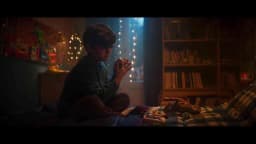
For Our Children Foundation's 'Can't Wait For Christmas' used a June 22 street activation in Bulgaria to challenge seasonal giving and recruit year-round

For Our Children Foundation Turns a Summer Day Into a Christmas Wake-Up Call
"Can't Wait For Christmas" is a 2017 experiential advertising campaign by The Smarts for For Our Children Foundation in Bulgaria, designed to challenge the seasonality of charitable giving by staging a surprise children's choir singing "Jingle Bells" in a city centre on June 22 — the first day of summer — to prompt passersby to become year-round donors rather than seasonal contributors.
The activation rests on a single, uncomfortable truth. Most donations directed toward children in Bulgaria arrive during the Christmas season, when generosity is culturally primed and emotional barriers to giving are at their lowest. For Our Children Foundation, a Bulgarian nonprofit dedicated to child welfare, recognised that the children it serves cannot afford to wait six months for that annual surge of goodwill. The campaign was created to make that gap visceral and immediate, rather than communicable through statistics or appeals alone.
On June 22, 2017, in the full heat of a Bulgarian summer, a group of children appeared in a central urban location and began singing "Jingle Bells." The incongruity was the message. Passersby stopped. They smiled. Many took out their phones, filmed the scene, and shared it on Facebook, spreading the campaign's emotional core without any paid amplification being required at that moment. The creative mechanics compressed the entire argument for regular giving into a single, wordless image: Christmas is not coming, but the need is already here.
The campaign was classified under the Public Interest category and executed through an experiential medium, placing it firmly in the tradition of cause-driven street activations that prioritise earned attention over paid reach. Published in August 2017, the work was produced by The Smarts, a Sofia-based agency, and has since been documented on Ads of the World and archived on Clapboard. It carries a Clapboard Score of 63 out of 100, reflecting a clear and emotionally coherent creative idea that operates within modest production means.

For Our Children Foundation identified a structural problem in how charitable giving behaves across time. Donation patterns in Bulgaria, as in most markets, cluster around emotionally charged calendar moments, and Christmas concentrates generosity in ways that leave the rest of the year chronically underfunded for child-welfare causes. The Smarts translated this insight into a campaign strategy built entirely around temporal displacement: bring Christmas to summer, and let the absurdity do the persuasive work.
The strategic framing is notable because it avoids the most common failure mode of public-interest advertising, which is to lead with suffering. Instead, the campaign leads with joy — the unambiguous, cross-cultural warmth that Christmas music reliably triggers — and then redirects that warmth toward an argument for habitual rather than seasonal generosity. The call to action was not to donate now in the moment of the street activation, but to become a regular donor, a structurally more valuable ask for any nonprofit operating year-round programmes.
The competitive context for this work is Bulgaria's child-welfare and public-interest fundraising landscape. According to Rise-Children Bg and Bbr Bg, Bulgarian foundations, companies, sole proprietors, and individuals donated approximately BGN 101,391,100 — roughly EUR 51.8 million — in 2017, representing an increase of approximately five percent year over year, or nearly BGN 5.3 million more than in 2016. Within that environment, For Our Children Foundation was competing for donor attention and loyalty against other child-focused organisations operating in Bulgaria, including Hope and Homes for Children, which maintains an active Bulgarian programme as documented by hopeandhomes.org, and the broader network of welfare-oriented nonprofits listed by bghelsinki.org. In that context, differentiation through creative memorability was not a luxury but a strategic necessity.
The Smarts constructed the creative execution around a single, precisely chosen detail: the date. June 22 is the first day of summer in Bulgaria, the point in the calendar that sits at maximum psychological distance from Christmas. Choosing this exact date was not incidental — it was the entire argument made physical. Every element of the activation, the children, the familiar carol, the summer heat, the urban setting, was calibrated to make the cognitive dissonance as sharp and as warm as possible simultaneously.
Children sang "Jingle Bells" as the centrepiece of the street activation. The choice of performers was as deliberate as the choice of date. The beneficiaries of For Our Children Foundation's work are children, and placing children at the centre of the execution collapsed the distance between the cause and the creative vehicle. There was no spokesperson, no celebrity, no explanatory voiceover. The narrative was entirely visual and emotional, relying on the audience's own associative logic to complete the argument: these children are singing Christmas songs in summer because some children cannot wait for Christmas to be noticed and supported.
The earned social dimension of the campaign emerged organically from the execution's design. Passersby filmed the activation and shared it on Facebook without any structured seeding or influencer involvement being documented. This organic diffusion extended the activation's reach beyond the physical footprint of a single city-centre event. Production credits for "Can't Wait For Christmas" are not publicly documented beyond the agency attribution to The Smarts of Sofia, Bulgaria, as recorded on Ads of the World and Thesmarts Eu. The campaign contains one media asset, consistent with a lean experiential production model that prioritised the live event over post-produced content.
No verified performance data for "Can't Wait For Christmas" is publicly available. Donation uplift figures, reach metrics, and conversion rates from the June 22, 2017 activation have not been published by For Our Children Foundation, The Smarts, or any third-party source documented in the public record. The absence of disclosed metrics is not unusual for a Bulgarian nonprofit campaign of this scale and period, particularly one that relied on organic social spread rather than a paid media framework that would generate trackable impressions data.
What is assessable is structural effectiveness. The campaign's creative mechanism — maximum temporal incongruity paired with a universally legible emotional trigger — is well-suited to generating the kind of shareable surprise that extends a small-budget experiential activation beyond its physical location. The decision to film the activation and enable immediate Facebook sharing built a second layer of distribution into the execution without requiring a separate content production budget. For a foundation operating in a donor market where, according to rise-children.bg and bbr.bg, total philanthropic giving across all Bulgarian entities reached approximately BGN 101 million in 2017, the ability to earn attention rather than buy it represents meaningful resource efficiency.
The campaign's most durable structural strength is its ask. Recruiting regular donors rather than one-time givers is the highest-value conversion available to any nonprofit, and the creative premise — that need does not pause for the calendar — maps directly to that ask without requiring the audience to make an inferential leap. The Clapboard Score of 63 out of 100 reflects a campaign that executes its central idea cleanly and with genuine emotional intelligence, while remaining constrained by limited production scale and the absence of a documented results framework.
"Can't Wait For Christmas" is a 2017 experiential public interest campaign by The Smarts in Bulgaria. On June 22, the first day of summer, children sang "Jingle Bells" in a city centre to highlight that children in need cannot wait for seasonal Christmas generosity, urging passersby to become regular donors instead.
June 22 is the first day of summer in Bulgaria, placing it at maximum distance from Christmas on the calendar. The Smarts selected this date deliberately to make the incongruity of children singing "Jingle Bells" as sharp as possible, physically embodying the campaign's argument that children in need cannot wait six months for support.
The Smarts, a Sofia-based advertising agency, created the campaign for For Our Children Foundation. The work was published in August 2017 and has been documented on Ads of the World and archived on Clapboard, where it holds a score of 63 out of 100 reflecting clear creative execution within modest production means.
The campaign called on audiences to become regular donors rather than seasonal contributors. This distinction is central to the strategy: For Our Children Foundation needed year-round funding, not a single Christmas spike. The experiential activation made that argument by staging Christmas itself in midsummer Bulgaria, making the temporal mismatch between giving patterns and ongoing need impossible to ignore.
"Can't Wait For Christmas" holds a Clapboard Score of 63 out of 100. The score reflects a campaign with a genuinely coherent emotional idea and a well-chosen experiential format, balanced against limited production scale and the absence of any publicly documented performance or results data from the 2017 Bulgarian activation.
Organic social sharing was built into the execution's design. Passersby filmed the children singing "Jingle Bells" on June 22 and shared the footage on Facebook without structured seeding or paid amplification, extending the activation's reach beyond its city-centre footprint in Bulgaria and giving the single live event a second layer of earned distribution.
.webp)
Creative Collaboration Platform: The Backbone of Modern Creative WorkWhat is a creative collaboration platform?Clapboard defines a creative collaboration platform as the operational core for today’s distributed creative teams. This is not a collection of digital collaboration tools stitched together; Clapboard’s system


Understanding the Creative Production MarketplaceWhat is a Creative Production Marketplace?Clapboard defines a creative production marketplace as a structured ecosystem where brands, agencies, and production talent converge to execute video, advertising, and branded content at scale. Unlike the legacy agency or freelanREAD FULL ARTICLE

The Urgent Need for a Creative Production Operating SystemWhy Traditional Creative Production Models Break DownClapboard sees the creative production landscape shifting under pressure. Content velocity is no longer a buzzword—it’s a mandate. Modern advertising demands relentless output across dozens of channels, each wREAD FULL ARTICLE