 ARCHIVE
JAWS - Minnesota Lottery | Clapboard Ad Archive
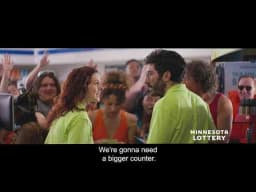
Minnesota Lottery’s JAWS campaign from Year 2024, developed by agency Betty, commandeers the...
Florida Lottery Bets on Vigilance With Be on the Luckout
Florida Lottery's "Be on the Luckout" is a 2019 US film campaign created by Tampa-based agency PPK that repositions lottery participation as an alert, proactive behaviour rather than passive wishful thinking, using a single punning slogan to anchor brand identity around vigilance and optimism in the gambling category.
Published in October 2019 in the United States, the campaign comprises one media asset and operates within the gambling sector, where Florida Lottery competes for share of wallet against multi-state offerings such as Mega Millions and Powerball. The creative proposition is built on a wordplay pivot: "Be on the Luckout" echoes the everyday phrase "be on the lookout," casting luck not as something that arrives unbidden but as something a player actively watches for and anticipates. That subtle shift in framing carries genuine strategic weight. It suggests agency on the part of the player without overstating the odds, threading a line between encouragement and responsibility that is essential in gambling advertising.
The campaign's geographic grounding in the United States, and specifically in Florida, is significant. Florida Lottery generated $7.151 billion in fiscal 2018–19 sales, ranking third among US lotteries by total sales, according to floridalottery.com. That commercial context positions "Be on the Luckout" as a brand-maintenance and engagement piece rather than a launch vehicle, reinforcing an identity that PPK had been building since becoming the agency of record in November 2016, according to prnewswire.com. The Clapboard Score for this campaign is 55 out of 100, reflecting competent execution of a focused creative idea within a category that demands both regulatory care and cultural resonance.
PPK became Florida Lottery's agency of record in November 2016, taking over an account valued at approximately $150 million, according to prnewswire.com. From the outset, the agency pursued a documented strategic shift: moving Florida Lottery away from passive, dream-oriented messaging toward the thrill and immediacy of active play, according to Little Black Book. "Be on the Luckout" is a direct expression of that philosophy, condensing the active-play positioning into a single, repeatable mnemonic that players can carry into everyday life.
The competitive environment in the United States sharpens the strategic logic. Multi-state games such as Mega Millions and Powerball command significant awareness during high-jackpot cycles, drawing casual players toward nationally advertised draws rather than state-specific products. Florida Lottery's scratch-off category, which represented 64.03 percent of total sales in fiscal 2018–19 according to floridalottery.com, is the natural terrain for a campaign like this one: scratch-offs reward immediacy, and a slogan urging players to stay alert maps directly onto the impulsive, in-the-moment nature of that product type. Scratch-off sales exceeded $4 billion for the third consecutive year in that same fiscal period, according to floridalottery.com, confirming that the category needed sustaining creative energy rather than a radical repositioning.
The strategic outcome of PPK's broader tenure is measurable. Unaided brand recall for Florida Lottery increased from 65 percent in fiscal 2016 to 71 percent in fiscal 2019, according to uniteppk.com. "Be on the Luckout" sits within the body of work that produced that movement, even if the individual film's contribution cannot be isolated from available data. In the United States gambling market, where state lotteries must compete with tribal casinos, commercial gaming, and expanding digital platforms, maintaining unaided recall above 70 percent represents a meaningful competitive position.
Nick McMurdy served as creative director and writer on "Be on the Luckout," according to the campaign's production record. The film is the sole media asset in the archived campaign, which concentrates all creative intent into a single moving-image execution — a format that demands economy of storytelling and clarity of message above all else.
The creative decision to anchor the entire campaign in a pun is riskier than it first appears. Wordplay in advertising can register as clever or as cheap depending almost entirely on execution: pacing, casting, visual grammar, and the sincerity with which the idea is performed. When it works, a punning platform becomes a brand shorthand that outlasts any individual execution. The phrase "Be on the Luckout" functions this way — it is compact enough to migrate across touchpoints, specific enough to belong to Florida Lottery rather than any lottery, and active enough in its grammar to support the strategic intent of moving players from passive dreaming to engaged participation.
The film medium is well matched to this goal. Television and pre-roll video allow the campaign to place its message at moments of leisure and entertainment consumption — contexts in which lottery play is culturally normalised and emotionally adjacent to other forms of enjoyment. In the United States, lottery advertising must navigate Federal Trade Commission guidelines and state-level regulations that govern claims and depictions of winning; the campaign's slogan sidesteps direct claims entirely by framing the proposition as a posture rather than a promise. Production credits beyond Nick McMurdy's role as creative director and writer, including director, cinematographer, and account lead Christy Beegle or art director Ivan Gonzalez where applicable, are not fully detailed in publicly available documentation for this specific film execution.
No verified campaign-specific performance data — including sales lift, incremental ticket sales, brand-awareness movement attributable to this film, or return on advertising spend — is publicly available for "Be on the Luckout." The archived YouTube record associated with the campaign shows 876 views, zero likes, and zero comments at the time of archiving, which is consistent with a targeted media placement rather than an organic viral strategy. That figure should not be read as a measure of campaign effectiveness; paid television and pre-roll placements, the natural home for a film of this type in the United States gambling market, generate audience exposure that does not register in public social video metrics.
Structurally, the campaign's effectiveness rests on the durability of its central idea. A slogan that encodes a brand behaviour — staying alert for luck — is more transferable across media and over time than a campaign built around a single narrative or character. Florida Lottery's broader sales trajectory during this period supports a positive reading of the agency relationship: year-over-year sales growth reached 6.7 percent in fiscal 2018–19, rising from $6.70 billion to $7.151 billion, according to floridalottery.com. Two-year growth across the same period totalled 16.2 percent compared with fiscal 2016–17, according to floridalottery.com. No verified awards were identified for this campaign across Cannes Lions, the Effies, The One Show, D&AD, the Clios, the Webby Awards, or WARC Awards. The Clapboard Score of 55 out of 100 reflects a campaign that executes its strategic brief with competence and a well-chosen creative device, while the absence of documented reach and measurable impact limits a higher assessment.
"Be on the Luckout" is a Florida Lottery film campaign created by PPK and published in the United States in October 2019. It uses a wordplay slogan to position lottery participation as an alert, active behaviour, encouraging players to anticipate winning opportunities rather than wait passively for luck to arrive.
PPK, a Tampa-based advertising agency, created "Be on the Luckout" for Florida Lottery. PPK became Florida Lottery's agency of record in November 2016, according to prnewswire.com, taking over an account valued at approximately $150 million and shifting its creative strategy toward active-play messaging.
Nick McMurdy served as creative director and writer on "Be on the Luckout" for Florida Lottery. The campaign was produced as a single film execution in 2019. Full production credits beyond McMurdy's documented role are not available in publicly accessible records for this specific execution.
Florida Lottery generated $7.151 billion in fiscal 2018–19 sales, ranking third among US lotteries by total sales, according to floridalottery.com. Year-over-year growth reached 6.7 percent, and scratch-off sales exceeded $4 billion for the third consecutive year, representing 64.03 percent of total sales according to floridalottery.com.
No verified awards were identified for "Be on the Luckout" across Cannes Lions, the Effies, The One Show, D&AD, the Clios, the Webby Awards, or WARC Awards. The campaign received a Clapboard Score of 55 out of 100, reflecting competent execution of a focused creative idea within the US gambling category.
"Be on the Luckout" is a pun on the phrase "be on the lookout," framing luck as something players actively watch for rather than passively await. PPK's stated strategy shifted Florida Lottery toward active-play messaging, according to lbbonline.com, and the slogan encodes that behavioural shift in a compact, transferable brand phrase.
.webp)
Creative Collaboration Platform: The Backbone of Modern Creative WorkWhat is a creative collaboration platform?Clapboard defines a creative collaboration platform as the operational core for today’s distributed creative teams. This is not a collection of digital collaboration tools stitched together; Clapboard’s system


Understanding the Creative Production MarketplaceWhat is a Creative Production Marketplace?Clapboard defines a creative production marketplace as a structured ecosystem where brands, agencies, and production talent converge to execute video, advertising, and branded content at scale. Unlike the legacy agency or freelanREAD FULL ARTICLE

The Urgent Need for a Creative Production Operating SystemWhy Traditional Creative Production Models Break DownClapboard sees the creative production landscape shifting under pressure. Content velocity is no longer a buzzword—it’s a mandate. Modern advertising demands relentless output across dozens of channels, each wREAD FULL ARTICLE