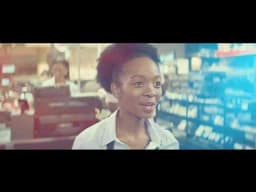
FirstBank's 2018 Payback campaign, created by TDA_Boulder, promoted Zelle integration in the FirstBank mobile app through exaggerated revenge-prank comedy.

How FirstBank Used Zelle to Turn Peer Payments Into a Prank War
Thefinancialbrand.clapboard.com/archive/firstbank-history-lessons-finance">FirstBank's 2018 Payback campaign, created by TDA_Boulder, promotes Zelle integration within the FirstBank mobile app by dramatising the social consequences of forgetting to reimburse a friend, using absurdist revenge-prank scenarios to make the case for paying people back before they pay you back in a very different sense, according to Commarts.
The campaign launched in the United States in August 2018 with a single film asset built around one deceptively simple proposition: "Pay your friends back, before they pay you back." That tagline doubles as both a practical instruction and a comic threat. The spots depict escalating retaliation — nailed-down slippers, a flour-coated hair dryer, an office packed with live chickens, a car interior buried in confetti — before resolving with the voice-over copy, "Pay your friends back, before they pay you back. Zelle, on the FirstBank app." The structure is clean, the comedic logic is airtight, and the call to action is embedded in the joke itself rather than appended as an afterthought.
In the United States, regional banks face persistent pressure to compete with national institutions on digital capability while maintaining the local trust that defines their brand proposition, according to Tdaboulder. FirstBank, a Colorado-based institution, had already established a long-running creative partnership with TDA_Boulder — according to reporting by The Financial Brand, that relationship began around 2007 and extended to fifteen years by 2022. Payback sits within a broader creative era for the bank that included the 2017 "Banking For Good" platform, described by The Financial Brand as FirstBank's first new tagline in twenty-four years. Zelle integration represented a tangible digital milestone, and the Payback campaign gave that product moment a creative frame proportionate to its cultural relevance. Clapboard scores this campaign 63 out of 100.
TDA_Boulder grounded the Payback campaign in a social truth that larger institutions rarely address directly: peer reimbursement is emotionally charged. Forgetting to pay someone back does not merely create a financial imbalance — it creates low-grade social friction that accumulates. By exaggerating that friction into full-blown comedic vengeance, the agency made an abstract product benefit feel personally urgent to a United States audience already accustomed to the frictionless expectations set by consumer apps, according to The Drum.
The strategic context in the United States banking market in 2018 was intensely competitive. According to the Federal Reserve, the US banking industry remained concentrated at the largest institutional level, with major players commanding disproportionate marketing resources. According to reporting sourced by Uk Investing, JPMorgan Chase spent approximately $3.3 billion on marketing in 2018, a figure that underscores the asymmetry FirstBank and TDA_Boulder were navigating. Earlier industry data, as reported by The Financial Brand, indicated that US banks collectively spent approximately $17.1 billion on advertising and marketing in 2016, with five institutions — JPMorgan Chase, American Express, Citigroup, Capital One, and Bank of America — each exceeding $1 billion individually and together accounting for more than half of total US banking advertising spend that year.
Zelle itself was positioned as a mobile-to-mobile and mobile-to-email reimbursement tool within the FirstBank app, differentiating the offering from standalone peer-payment competitors such as Venmo and Cash App, both of which had built strong consumer brand identities in the United States independent of any single banking institution. FirstBank's approach — embedding Zelle within its own branded experience — required creative work that could make the bank's app feel as culturally immediate as those standalone platforms. Payback accomplished that by skipping feature explanation entirely and going straight to emotional consequence.
Arts and Sciences produced the Payback campaign. The film was directed by Adam Brodie and Dave Derewlany, working under their joint directing credit as Adam and Dave — a production pairing whose comedic sensibility is well matched to the scenario-driven escalation the campaign demanded.
The creative team at TDA_Boulder was led by executive creative director Jonathan Schoenberg, with creative directors Jeremy Seibold and Alex Rice shaping the campaign's comedic logic. Art direction was handled by Ande Eich, copywriting by Zola Owsley, integrated production by Alex Sheridan, and senior project management by Kate Osborne. The precision of that team composition matters because the campaign's effectiveness depends entirely on tonal calibration: push the absurdity too far and the product message dissolves; pull back too early and the humour loses its persuasive charge.
The creative execution is structured as a series of escalating prank scenarios — nailed-down slippers, flour concealed inside a hair dryer, live chickens released into an office, confetti packed into a car — each presented as plausible retribution for the sin of not paying someone back. The scenarios are visually specific enough to be funny in isolation but unified by a shared comedic grammar: the punishment is disproportionate, inventive, and just barely rooted in domestic or workplace reality. That specificity is a craft choice. Generic pranks would have read as filler; these read as the work of someone who had genuinely considered how to make another person's life difficult in memorable ways. The voice-over lands after the chaos, stating the proposition plainly: "Pay your friends back, before they pay you back. Zelle, on the FirstBank app." The absence of a hard sell at that moment is itself a creative decision — the work trusts that the preceding ninety seconds have done the persuasive heavy lifting.
No verified performance data for the FirstBank Payback campaign is publicly available. No independently sourced figures for view counts, brand lift, app downloads attributable to the campaign, or post-campaign Zelle adoption rates within FirstBank's customer base have been documented in accessible public sources. Any quantitative claim about the campaign's commercial impact would be fabrication, and none is offered here.
What structural analysis can establish is this: the campaign was built with the architecture of effective direct-response comedy. The product is named in the final line of copy. The scenario mechanics map directly onto the use case — peer reimbursement after a shared expense. The call to action is embedded in the tagline rather than separated from the creative idea. Each of those choices reduces the distance between entertainment and conversion intent, which is the central challenge for financial services advertising in the United States, where brands like Capital One and Bank of America have historically used humour to reduce category friction without sacrificing product clarity.
The campaign's Clapboard Score of 63 out of 100 reflects a competent, coherent execution with clear creative intention and genuine comedic craft, tempered by the limited scope of a single film asset and the absence of documented performance outcomes. Within TDA_Boulder's broader body of work for FirstBank — which includes the culturally resonant "Banking For Good" platform launched in 2017, as reported by The Financial Brand — Payback reads as a tactically focused product campaign rather than a brand-building statement, a distinction that is neither a flaw nor a failure but does define its ambition and its ceiling.
FirstBank's Payback campaign promotes Zelle integration in the FirstBank mobile app. Created by TDA_Boulder and released in the United States in August 2018, it uses exaggerated revenge-prank scenarios to dramatise the social cost of failing to reimburse friends, resolving with the line "Pay your friends back, before they pay you back. Zelle, on the FirstBank app."
TDA_Boulder created the Payback campaign for FirstBank. The Boulder, Colorado agency had worked with FirstBank since approximately 2007, according to The Financial Brand. The creative team included executive creative director Jonathan Schoenberg, creative directors Jeremy Seibold and Alex Rice, art director Ande Eich, and copywriter Zola Owsley.
Payback promotes Zelle as integrated into the FirstBank mobile app. The campaign positions Zelle as a mobile-to-mobile and mobile-to-email peer reimbursement tool, competing in the United States market against standalone platforms such as Venmo and Cash App, which had established independent consumer brand identities by 2018.
Adam Brodie and Dave Derewlany, working as the directing duo Adam and Dave, directed the Payback film for production company Arts and Sciences. Their comedic sensibility suited the campaign's escalating prank scenarios, which included live chickens in an office and confetti packed into a car, as documented by Clapboard.
Clapboard assigns the FirstBank Payback campaign a score of 63 out of 100. The score reflects coherent creative execution and genuine comedic craft, with the campaign's limited scope — a single film asset with no publicly verified performance data — defining the parameters of that assessment.
Payback is a product-focused film within a longer creative relationship. TDA_Boulder launched the "Banking For Good" brand platform for FirstBank in 2017, described by The Financial Brand as the bank's first new tagline in twenty-four years. Payback followed as a tactically targeted campaign promoting a specific Zelle feature rather than advancing the broader brand narrative.
.webp)
Creative Collaboration Platform: The Backbone of Modern Creative WorkWhat is a creative collaboration platform?Clapboard defines a creative collaboration platform as the operational core for today’s distributed creative teams. This is not a collection of digital collaboration tools stitched together; Clapboard’s system


Understanding the Creative Production MarketplaceWhat is a Creative Production Marketplace?Clapboard defines a creative production marketplace as a structured ecosystem where brands, agencies, and production talent converge to execute video, advertising, and branded content at scale. Unlike the legacy agency or freelanREAD FULL ARTICLE

The Urgent Need for a Creative Production Operating SystemWhy Traditional Creative Production Models Break DownClapboard sees the creative production landscape shifting under pressure. Content velocity is no longer a buzzword—it’s a mandate. Modern advertising demands relentless output across dozens of channels, each wREAD FULL ARTICLE