Etna's 'The Beatbox Catalogue' by Artplan São Paulo used Brazilian beatboxer Caio Beatbox to deliver nearly 100 retail offers in under one minute of digital

Etna Beatbox Catalogue Turned Retail Offers Into a Brazilian Musical Moment
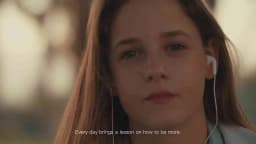
Etna's 'The Beatbox Catalogue' is a 2019 Brazilian digital film campaign, created by Artplan São Paulo, in which professional beatboxer Caio Beatbox delivers nearly 100 retail offers in under one minute entirely through human-generated percussion and vocal sound, transforming a standard household product promotion into an internationally awarded piece of audio-driven content.
The campaign launched in May 2019 in Brazil, created for Etna — a Brazilian omnichannel retailer of furniture, home décor, garden, office, and household products. The communication challenge was straightforward but demanding: show the largest possible number of retail offers within the shortest possible screen time. Rather than defaulting to a conventional motion-graphics countdown of discounts, Artplan reframed the entire brief around a single creative constraint. As Art Director José Pedro Bortolini noted in his personal portfolio, the film was originally conceived as a simple retail motion-graphics piece with a three-thousand-dollar budget allocated exclusively for audio. That budget became the engine of the idea rather than a limitation.
Caio Schalch, known professionally as Caio Beatbox, performed every sound heard in the film, producing a rapid rhythmic backdrop against which individual product offers appeared on screen in fast succession, according to reporting by Ads of the World and latinspots.com. The result is a piece of digital retail communication that functions simultaneously as entertainment, product catalogue, and sound design showcase. The campaign was created exclusively for the digital environment, positioning it squarely within the growing ecosystem of social and online video content that defined Brazilian advertising strategy in 2019. In the United States and across Latin American markets, digital-first retail campaigns were becoming standard, and Etna's Beatbox Catalogue demonstrated that Brazil's creative industry could set the pace rather than follow it.
Etna faced a structural tension common to household product retailers across Brazil. The brand needed to communicate volume — a large catalogue of furniture, décor, garden, and home goods — while competing for attention in a digital environment that penalises length and rewards novelty. In the Brazilian furniture and interiors sector, competitors including Tok&Stok, Leroy Merlin Brasil, Magazine Luiza, and Casas Bahia were all fighting for the same consumer attention through conventional promotional video formats. According to kenresearch.com, Brazil's furniture and home-furnishing market was valued at approximately fifteen billion US dollars based on five-year historical analysis, making it a fiercely contested retail battleground.
Artplan's strategic insight was to weaponise the audio budget rather than treat it as a production afterthought. The agency recognised that the speed of human beatboxing — naturally percussive, infinitely variable, and culturally resonant within Brazilian popular music — could carry an audience through a volume of product information that would feel exhausting if delivered through conventional voiceover or text animation alone. By anchoring the campaign to a single performer with a distinct skill, Artplan gave Etna a memorability device that no competitors were using. Tok&Stok and Leroy Merlin Brasil both operated with significantly larger production budgets for their catalogue communications, yet the Beatbox Catalogue achieved international award recognition that those campaigns did not, as subsequently documented by Grandesnomesdapropaganda Com Br and culturepub.fr.
The campaign's positioning also served Etna's established brand platform. According to Roastbrief Com Mx, Artplan had held the Etna account since winning a competitive review in May 2016, developing the brand around the positioning line 'Design ao seu alcance' — Design within your reach — a promise of accessible, comprehensive home solutions. The Beatbox Catalogue extended that logic into media strategy: maximum design ideas, maximum offers, minimum friction for the Brazilian digital consumer.
 ARCHIVE
Artplan São Paulo produced 'The Beatbox Catalogue' with production support from Play It Again, according to adsoftheworld.com and latinspots.com. The creative team was led by Creative Directors Zico Farina and Marcos Abrucio, with Art Direction by José Pedro Bortolini and Copywriting by Rodrigo Niemeyer. The film's central performance came from Caio Schalch, the Brazilian beatboxer known as Caio Beatbox, whose vocal percussion provided every sound heard across the finished edit.
José Pedro Bortolini described the making of the film in his personal portfolio with notable directness: the original brief called for a simple retail motion-graphics piece with a three-thousand-dollar budget covering audio only. Rather than spend that sum on licensed music or a conventional sound design session, the team engaged Caio Beatbox to perform live, generating a rapid-rhythm soundscape that could sustain nearly 100 consecutive product offers without losing energy or audience attention. According to adruby.com and adsoftheworld.com, the result was a film running under one minute that used motion graphics timed precisely to beatbox rhythm — each offer appearing, holding, and clearing in sync with Caio Schalch's percussion. The editing discipline this demanded was considerable. Motion graphics had to be sequenced to a live vocal performance rather than a composed music track, requiring precise collaboration between the art direction, motion design, and audio production teams.
The campaign existed as a single media asset, designed exclusively for digital distribution in Brazil. That constraint shaped every creative decision: there was no thirty-second television cut, no outdoor adaptation, no print extension. The entire creative ambition was concentrated into one film, one performer, and one unbroken rhythmic sequence — a production philosophy that reflected both the budget reality and the digital-first strategic brief Artplan had received from Etna.
'The Beatbox Catalogue' earned measurable recognition across the international advertising awards circuit, providing verifiable evidence of the campaign's creative impact. The campaign received a Bronze Lion at Cannes Lions 2019 in category A07: Use of Original Music, according to adsoftheworld.com. At El Ojo de Iberoamérica 2019, the campaign won the Grand Prix for Audio and Sound Production, as reported by grandesnomesdapropaganda.com.br and culturepub.fr. At Wave Festival 2019, the campaign took Gold in the Use of Original, Licensed or Adapted Music and Sound Design category, according to latinspots.com. At The One Show 2020, the campaign earned ten points in the Use of Music and Original Music category, as documented by clapboard.com.
These results confirm that the campaign resonated most strongly with juries evaluating the intersection of music, sound craft, and commercial effectiveness — precisely the creative territory Artplan had staked out through the Caio Beatbox concept. No verified audience performance data, such as view counts, conversion rates, or sales uplift figures, is publicly available for this campaign. What the awards record does confirm is that a production built on a three-thousand-dollar audio budget, as described by José Pedro Bortolini in his personal portfolio, competed directly against campaigns produced at far greater cost across Brazilian, Ibero-American, and global creative stages. For a household product retail brief focused on catalogue volume, that outcome represents a structurally efficient creative result. Clapboard rates 'The Beatbox Catalogue' 69 out of 100.
Etna's Beatbox Catalogue is a 2019 Brazilian digital film created by Artplan São Paulo. It features beatboxer Caio Beatbox delivering nearly 100 household product offers in under one minute using only human-generated percussion. The campaign won a Bronze Lion at Cannes Lions 2019 and a Grand Prix at El Ojo de Iberoamérica, according to adsoftheworld.com and grandesnomesdapropaganda.com.br.
Artplan São Paulo created the campaign for Etna in May 2019. Creative Directors Zico Farina and Marcos Abrucio led the team, with Art Direction by José Pedro Bortolini and Copywriting by Rodrigo Niemeyer. Beatboxer Caio Schalch, known as Caio Beatbox, performed every sound in the film, with production support from Play It Again, per adsoftheworld.com.
The Beatbox Catalogue won a Bronze Lion at Cannes Lions 2019 in category A07: Use of Original Music, according to adsoftheworld.com. The same campaign also won the Grand Prix for Audio and Sound Production at El Ojo de Iberoamérica 2019 and Gold at Wave Festival 2019, as reported by grandesnomesdapropaganda.com.br and latinspots.com.
The film was built on a three-thousand-dollar audio budget, according to Art Director José Pedro Bortolini's personal portfolio. That entire sum funded beatboxer Caio Beatbox's performance, which provided every sound heard in the finished film. The original brief had called for a standard retail motion-graphics piece before the team reframed the audio budget as the campaign's creative engine.
Artplan's challenge was to communicate nearly 100 retail offers within under one minute for Etna's Brazilian digital audience. A beatboxer's natural rhythmic speed allowed each product offer to appear, register, and clear in rapid succession without losing audience attention. This approach converted a production constraint — a limited audio budget — into the campaign's defining creative and competitive differentiator, per adruby.com.
Clapboard rates Etna's Beatbox Catalogue 69 out of 100. The campaign earns strong marks for creative efficiency, original music use, and international awards impact, including recognition from Cannes Lions, El Ojo de Iberoamérica, Wave Festival, and The One Show. No publicly verified audience performance data, such as view counts or sales figures, is available to supplement the awards record.
.webp)
Creative Collaboration Platform: The Backbone of Modern Creative WorkWhat is a creative collaboration platform?Clapboard defines a creative collaboration platform as the operational core for today’s distributed creative teams. This is not a collection of digital collaboration tools stitched together; Clapboard’s system


Understanding the Creative Production MarketplaceWhat is a Creative Production Marketplace?Clapboard defines a creative production marketplace as a structured ecosystem where brands, agencies, and production talent converge to execute video, advertising, and branded content at scale. Unlike the legacy agency or freelanREAD FULL ARTICLE

The Urgent Need for a Creative Production Operating SystemWhy Traditional Creative Production Models Break DownClapboard sees the creative production landscape shifting under pressure. Content velocity is no longer a buzzword—it’s a mandate. Modern advertising demands relentless output across dozens of channels, each wREAD FULL ARTICLE