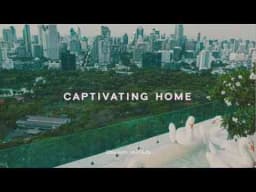
Dubai Properties and FP7 launched '1/JBR – Not For Everyone' in 2018, positioning the UAE tower as a refuge from ostentatious wealth in a saturated luxury

Dubai Properties Bets on Quiet Luxury to Sell 1JBR
"1/JBR – Not For Everyone" is a 2018 brand-awareness film campaign created by FP7 for Dubai Properties, positioning the Luxhabitat Ae.clapboard.com/archive/ijm-land-the-lasting-frame-real-estate-construction">1JBR residential tower in the United Arab Emirates as a refuge for understated wealth in a market defined by conspicuous opulence.
Dubai Properties commissioned the campaign not to drive immediate sales but to establish a durable perception: that 1JBR represents a category of luxury that deliberately distances itself from the gilded excess associated with Dubai real estate at large. The campaign's creative premise rests on an intentional act of exclusion, declaring outright that the property is not for everyone, and trusting that the genuinely affluent audience it targets will recognise themselves in that selective posture rather than feel repelled by it, according to Oxfordbusinessgroup.
Published in March 2018, the campaign carries a production year of 2017 in the Clapboard archive, a discrepancy that no authoritative public source has resolved. According to Communicate Online, FP7 Dubai won the Dubai Properties account in December, with the 1JBR campaign launching shortly afterward, which is consistent with a production timeline beginning in 2017 and a market release in early 2018, according to Apnews. The campaign comprises a single film asset and was distributed in the United Arab Emirates, targeting a narrow slice of the resident and investor population for whom restrained sophistication registers as a stronger signal of status than visible extravagance. Clapboard rates this campaign 74 out of 100, reflecting strong strategic coherence and creative distinctiveness against a category norm of bland specification-led advertising, according to Business-Standard.
Dubai Properties identified a genuine tension in the UAE luxury property market. The truly affluent, the campaign's core insight holds, are often repelled by the flashy signals that dominate high-end real estate marketing in Dubai, and that repulsion itself becomes a point of connection, according to Communicateonline. Rather than compete on the same visual language as category leaders EMAAR and DAMAC — whose advertising routinely foregrounds grand scale, ornate interiors, and aspirational lifestyle montages — FP7 constructed a campaign around deliberate understatement, using the language of quiet luxury to create differentiation through restraint.
The strategic logic is grounded in a real market condition. According to Luxhabitat, total Dubai real estate transactions in 2018 reached a combined value of AED 223 billion across nearly 53,000 transactions, while real estate investments that year totalled AED 80 billion involving more than 31,000 individual investors. The sheer volume of the market meant that volume-oriented messaging was already ubiquitous. According to Luxhabitat, the prime residential segment declined to approximately AED 39 billion in 2018, making competitive positioning at the top of the market more consequential for a developer seeking to be perceived as a genuine luxury operator rather than a mass-market builder with a premium-priced product. In a year when, according to Luxhabitat, secondary-market residential volume contracted by approximately ten percent year over year, an awareness-led campaign anchored in a strong point of view carried less risk than a conversion-led strategy dependent on transaction momentum.
Jon Marchant, managing director of FP7 Dubai, described Dubai Properties as seeking original thinking and bold creative work, according to Communicate Online. That brief translated into a strategic inversion: instead of broadcasting the property's appeal, the campaign narrows it, making selectivity the product's most compelling attribute in the United Arab Emirates' crowded luxury real estate landscape.
The film executes its strategy through visual and verbal restraint. Where competing luxury property campaigns in the United Arab Emirates lean on sweeping drone footage, aspirational voiceover, and interior shots calibrated to signal abundance, the 1JBR film operates through a different register entirely, using measured pacing, controlled imagery, and copy that addresses its audience with a degree of directness unusual in the category.
Campaign Middle East, in its December 2018 review, praised the campaign specifically for reversing conventional Dubai luxury advertising conventions, noting that it emphasised subtle simplicity rather than the blinged-out bathrooms, diamante décor, and dancing fountains that characterise much of the competitive set. That editorial assessment is significant: it confirms that the creative departure from category norms was legible to industry observers and not merely an internal strategic ambition. The campaign's tone functions as a proof of concept for its own positioning — a property that claims to reject ostentation cannot credibly make that claim through ostentatious advertising, and the film avoids that contradiction.
Production credits for the 1/JBR – Not For Everyone campaign are not publicly documented beyond the agency attribution to FP7, identified in the Clapboard archive and by Communicate Online as FP7/DXB or FP7 Dubai. The film's described production approach and the discipline required to sustain understatement across a single-asset campaign suggest a considered directorial hand, but no director, creative director, or production company has been confirmed in publicly available trade sources. The film accumulated more than 4.8 million views and 1,229 likes based on data recorded in the Clapboard archive, indicating meaningful organic reach for a property campaign operating on an awareness rather than a performance objective in the United Arab Emirates market.
The 1/JBR – Not For Everyone campaign earned third place in Campaign Middle East's ranking of the best integrated campaigns of 2018, published December 20, 2018, according to Campaign Middle East. That recognition positions it among the strongest creative work produced in the region that year and validates the strategic premise that a real estate campaign built on exclusion rather than invitation could resonate with both its target audience and the broader advertising community.
The film accumulated more than 4.8 million views in the Clapboard archive, a figure that carries particular weight given that the campaign was designed not for mass conversion but for targeted awareness among a specific and relatively narrow affluent demographic in the United Arab Emirates. Reach at that scale for a deliberately narrow-cast message suggests that the campaign's subversive framing — telling viewers explicitly that the property is not for them — functioned as an effective organic amplifier, drawing curiosity-driven viewership beyond the core target.
No independently verified sales attribution data for 1JBR is publicly available in connection with this campaign, consistent with the stated objective of brand positioning rather than direct lead generation. Structurally, the campaign succeeds because its creative execution and its strategic intent are inseparable: the restraint is the argument. For Dubai Properties, the value is reputational — establishing a credible claim to genuine luxury developer status in a United Arab Emirates market where EMAAR and DAMAC set the competitive reference points. Clapboard scores this campaign 74 out of 100, reflecting strong strategic coherence, a clearly differentiated creative voice, and verified industry recognition, offset by limited public documentation of production craft and the absence of independently verified business outcome data.
The 1JBR campaign was designed to build awareness and luxury positioning, not to drive direct property sales. Dubai Properties and FP7 sought to establish 1JBR as a destination for understated affluence in a UAE market dominated by overtly opulent real estate advertising from competitors including EMAAR and DAMAC.
FP7 Dubai, also identified as FP7/DXB, created the campaign for Dubai Properties. According to Communicate Online, FP7 Dubai won the Dubai Properties account in December before the campaign launched, making this one of the agency's first major outputs for the brand in the United Arab Emirates.
Campaign Middle East ranked 1/JBR third in its best integrated campaigns of 2018 list, published December 20, 2018. The editorial commendation specifically noted the campaign's use of subtle simplicity as a deliberate departure from the visual excess typical of luxury real estate advertising across the United Arab Emirates market.
The central insight was that genuinely affluent consumers prefer quiet understatement over flashy displays of wealth. FP7 used this tension — between the reserved tastes of true luxury buyers and Dubai's culture of conspicuous opulence — to position 1JBR as a deliberate counterpoint within UAE real estate advertising in 2018.
The 1JBR campaign film accumulated more than 4.8 million views according to data recorded in the Clapboard archive. For a campaign targeting a narrow affluent audience in the United Arab Emirates rather than a mass market, that reach suggests the exclusionary creative framing drew curiosity-driven viewing well beyond its intended demographic.
EMAAR and DAMAC dominated UAE luxury real estate advertising in 2018 with visually expansive, opulence-forward campaigns. Dubai Properties and FP7 positioned 1JBR as the antithesis of that approach, using deliberate restraint and selective messaging to carve out a distinct identity in the United Arab Emirates competitive landscape.
.webp)
Creative Collaboration Platform: The Backbone of Modern Creative WorkWhat is a creative collaboration platform?Clapboard defines a creative collaboration platform as the operational core for today’s distributed creative teams. This is not a collection of digital collaboration tools stitched together; Clapboard’s system


Understanding the Creative Production MarketplaceWhat is a Creative Production Marketplace?Clapboard defines a creative production marketplace as a structured ecosystem where brands, agencies, and production talent converge to execute video, advertising, and branded content at scale. Unlike the legacy agency or freelanREAD FULL ARTICLE

The Urgent Need for a Creative Production Operating SystemWhy Traditional Creative Production Models Break DownClapboard sees the creative production landscape shifting under pressure. Content velocity is no longer a buzzword—it’s a mandate. Modern advertising demands relentless output across dozens of channels, each wREAD FULL ARTICLE