Co-op Makes Soft Plastics Recycling a Retail Reality Across the UK
Co-op's "You can now recycle soft plastics at Co-op" campaign is a July 2021 United Kingdom retail initiative, created by Lucky Generals, that announced the national rollout of in-store soft plastics recycling units — allowing shoppers to return items such as bread bags and crisp packets — across an initial 1,500 stores, with expansion to 2,300 planned by November 2021.
The campaign marks a concrete operational commitment rather than an aspirational environmental message. Co-op had already piloted soft plastics collection across 50 stores in 2020, and that trial generated strong consumer appetite. The national expansion in summer 2021 transformed that proof of concept into a retail-wide service, addressing a recycling infrastructure gap that had long frustrated environmentally motivated shoppers across the United Kingdom. Soft plastics — the flexible film packaging that wraps bread, covers produce, and seals snacks — cannot enter standard household kerbside recycling streams, leaving consumers with no responsible disposal route outside specialist collection points.
Lucky Generals, the independent London-based creative agency behind the campaign, framed the launch through a documentary and social experiment lens rather than conventional retail advertising. The creative approach places a human story at the centre of a functional product announcement, transforming a recycling bin rollout into a character-driven film with emotional resonance. The campaign launched on 9 July 2021 with a television advertisement broadcast during the advertising break of ITV's Coronation Street, one of the United Kingdom's most-watched programmes, ensuring broad reach at the moment of national rollout. The campaign film received 23,150 views and 137 likes on video platforms, with 54 comments indicating active audience engagement for a sustainability-led retail communication.
Co-op identified a structural failure in the United Kingdom's domestic recycling infrastructure as the strategic foundation for this campaign. Soft plastics sit outside the kerbside recycling system available to most UK households, meaning that even engaged and eco-conscious consumers had no convenient legitimate outlet for bread bags, crisp packets, or flexible food film. By installing physical collection units in-store, Co-op converted that frustration into a loyalty and footfall driver, positioning the cooperative as a retailer that solves real environmental problems rather than merely communicating values.
The strategic timing matters. A 2020 trial across 50 Co-op stores found that 86% of shoppers said they were likely to use the soft plastics recycling service, according to co-operative.coop. That figure gave the brand and Lucky Generals a data-backed mandate to pursue national scale. The campaign launched at a moment of intensified public attention to plastic waste in the United Kingdom, with regulatory pressure on single-use plastics building throughout 2021 and consumer demand for sustainable retail options growing measurably.
In the competitive UK grocery market, Co-op held approximately 6.0% market share in the 12 weeks ending 24 January 2021, rising to approximately 6.4% by the 12 weeks ending 3 October 2021, according to Kantar. Its nearest large-format rival Tesco held 27.2% UK grocery market share in the 12 weeks ending 8 August 2021, also according to Kantar — more than four times Co-op's share. Against Tesco and other volume-led competitors such as Sainsbury's, Co-op cannot compete on price at scale. It competes instead on community relevance, ethical positioning, and member ownership, making a tangible sustainability service like soft plastics recycling a strategically differentiated asset rather than a peripheral initiative.
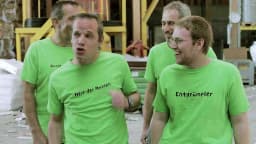
Lucky Generals built the campaign film around a documentary and social experiment format, a creative choice that separates the work from standard retail advertising. The film follows an older man named Tom on his first day leaving home carrying a plastic bread bag, as reported by The Drum. The narrative device transforms a mundane domestic object — the kind of soft plastic packaging that accumulates in kitchen drawers across the United Kingdom — into a symbol of personal agency and environmental participation.
The social experiment structure gives the film observational credibility. Rather than presenting a scripted testimonial or an animated explainer, Lucky Generals and Co-op place a real-feeling human at the centre of the action, allowing the audience to witness the moment of recycling as an act of quiet purpose rather than a brand directive. This approach mirrors the broader documentary storytelling conventions that have become increasingly influential in purpose-driven brand communications, lending the campaign an authenticity that resonates with audiences sceptical of corporate environmental claims.
The decision to broadcast the film during the advertising break of ITV's Coronation Street on 9 July 2021 reflects a media placement strategy aligned with Co-op's core demographic: community-rooted, everyday shoppers in the United Kingdom for whom a trusted neighbourhood cooperative carries genuine cultural meaning. Coronation Street's audience skews toward older viewers with established domestic routines — precisely the consumers most likely to engage with an in-store recycling service and to pass that behaviour on within their households. Production credits for the "You can now recycle soft plastics at Co-op" campaign beyond the Lucky Generals agency attribution are not publicly documented in available sources. The campaign contains one media asset, a single film that carries the full communicative weight of the launch.
No independently verified post-campaign performance metrics measuring sales uplift, footfall change, or brand equity shift for the "You can now recycle soft plastics at Co-op" campaign are publicly available. The campaign's measurable reach, however, is documented through its operational scale. Co-op began the national rollout with recycling units planned for 1,500 stores at launch in July 2021, with the scheme scheduled to reach 2,300 Co-op stores by November 2021, as reported by The Drum. That physical footprint represents the clearest performance indicator available: a retailer converting a pilot of 50 stores into a network forty-six times larger within a single year.
The pre-launch consumer research adds structural credibility to the initiative. The 2020 trial finding that 86% of participating shoppers said they were likely to use the soft plastics recycling service, according to co-operative.coop, suggests the operational investment was grounded in demonstrated demand rather than assumed goodwill. The campaign film accumulated 23,150 views and 54 comments, modest figures by mass-reach standards but indicative of genuine audience engagement for a sustainability-led retail film without influencer amplification or paid social scaling.
The campaign received coverage in The Drum on 15 July 2021 as a significant retail sustainability development, without independent awards recognition or academic analysis identified in available sources. The Clapboard Score for this campaign is 60 out of 100, reflecting a well-executed functional announcement that demonstrates real operational ambition but whose creative and strategic reach is bounded by a single-asset, single-channel execution. The work earns its score through the clarity of its consumer insight and the credibility of its proof point, even as its broader cultural footprint remains limited.
Co-op accepts soft plastics including bread bags and crisp packets at in-store collection units across the United Kingdom. The national rollout began in July 2021, with recycling units initially placed in 1,500 stores and the scheme scheduled to expand to 2,300 stores by November 2021, according to co-operative.coop and The Drum.
Lucky Generals created the campaign for Co-op, published in the United Kingdom in July 2021. The London-based independent agency developed a documentary and social experiment style film featuring a character named Tom, which aired during ITV's Coronation Street advertising break on 9 July 2021 to announce the national rollout.
Co-op planned to have soft plastics recycling units in 2,300 stores by November 2021, as reported by The Drum. The rollout began in July 2021 with 1,500 stores and expanded rapidly across the United Kingdom, scaling from a 50-store pilot that ran in 2020, during which 86% of shoppers said they would use the service.
Lucky Generals used a documentary and social experiment format for the film. The approach followed an older man named Tom on his first day leaving home with a soft plastic bread bag, as reported by The Drum. The single-film execution aired on ITV during Coronation Street, targeting Co-op's community-rooted audience across the United Kingdom.
The Clapboard Score for Co-op's "You can now recycle soft plastics at Co-op" campaign is 60 out of 100. The score reflects a credible and insight-driven retail sustainability announcement with clear operational ambition, balanced against the campaign's limited creative scope as a single-asset, single-channel execution in the United Kingdom.
Co-op held approximately 6.4% UK grocery market share by October 2021, according to Kantar, compared to Tesco's 27.2% share in August 2021, also per Kantar. The recycling campaign supported Co-op's differentiation strategy in the United Kingdom, competing on community relevance and ethical positioning rather than price or volume against larger rivals.
.webp)
Creative Collaboration Platform: The Backbone of Modern Creative WorkWhat is a creative collaboration platform?Clapboard defines a creative collaboration platform as the operational core for today’s distributed creative teams. This is not a collection of digital collaboration tools stitched together; Clapboard’s system


Understanding the Creative Production MarketplaceWhat is a Creative Production Marketplace?Clapboard defines a creative production marketplace as a structured ecosystem where brands, agencies, and production talent converge to execute video, advertising, and branded content at scale. Unlike the legacy agency or freelanREAD FULL ARTICLE

The Urgent Need for a Creative Production Operating SystemWhy Traditional Creative Production Models Break DownClapboard sees the creative production landscape shifting under pressure. Content velocity is no longer a buzzword—it’s a mandate. Modern advertising demands relentless output across dozens of channels, each wREAD FULL ARTICLE