 ARCHIVE
Borders Open - IRCAD Taiwan | Clapboard Ad Archive
The Borders Open campaign by Maya Comunicação for IRCAD Taiwan strategically re-engages the...
How Clearasil Turned Zombie Adventure Into a Teen Digital Phenomenon
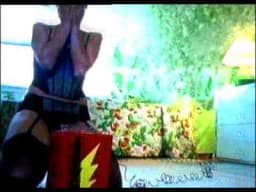
Clearasil's Zombie Adventure is an interactive, serialized digital video campaign created by Iris Worldwide and distributed through YouTube in the United States in October 2013, placing teenage protagonists inside a zombie-threat narrative where audience choices determined the story's outcome and connected Clearasil Ultra's fast-acting positioning to the speed required to avoid transformation.
The campaign's full title, as documented on YouTube, was "Ultrafast Clearasil Zombie Adventure Of Epic Proportions PART 1," a naming convention that embedded the product's core claim — ultrafast action — directly into the entertainment experience. The series followed two fictional teenage characters named Maddy and Monica, whose names mirror those of the campaign's writers, Maddy Whitby and Monica Sherer. Viewers across the United States were invited to participate in decisions that shaped how the characters would proceed in a race against zombie transformation, making passive consumption an active, social act.
Iris Worldwide, operating as the United States agency of record for this effort, distributed the content through the Awesomeness YouTube channel, with the first episode published on June 3, 2013, according to YouTube. Social media amplification, including influencer co-creation and distribution, extended the campaign's reach beyond the channel's own subscriber base. The Awesomeness network had already established itself as a destination for teenager-oriented content in the United States, making it a strategically coherent platform choice for a skincare brand targeting that demographic. The campaign earned a Clapboard Score of 78 out of 100, reflecting strong creative ambition and format innovation relative to category norms.
Clearasil occupies a competitive position in the United States over-the-counter acne-treatment market, where category dynamics demand both product credibility and cultural relevance with teenagers. According to Clapboard, the strategic logic behind Zombie Adventure rests on a single insight: teenagers in the United States do not want to be lectured about their skin, but they will eagerly engage with content that entertains them on their own terms.
The US OTC acne-treatment manufacturing market generated approximately two billion dollars in revenue in 2012, according to industry research cited on Slideshare, with an estimated 53 companies competing for shelf and screen space in that year. Johnson and Johnson, whose brands include Neutrogena and Clean and Clear, held an estimated 28.8% share of that manufacturing market in 2012, according to the same source. Guthy-Renker, the company behind Proactiv, held an estimated 24.6% share, according to Slideshare. Clearasil's challenge was therefore not simply to reach teenagers but to do so in a way that distinguished the brand from two dominant competitors with significantly larger marketing infrastructures.
Iris Worldwide's answer was genre entertainment. Zombie narratives had become a mainstream cultural touchstone in the United States by 2013, driven by the popularity of television properties that had embedded the format into youth culture. By mapping Clearasil Ultra's speed-of-action claim onto the urgency of avoiding zombie transformation, the agency created a metaphor that was simultaneously absurd and emotionally resonant for a teenager anxious about a visible blemish. The interactive mechanic, which invited viewers to shape the story's direction, converted passive brand exposure into participatory investment, a structural differentiator that neither Neutrogena nor Proactiv had deployed at comparable scale in the digital video space at that time.
Ilya Polyakov directed and edited the Zombie Adventure campaign, according to Clapboard. His dual role gave the production a unified visual and editorial voice, an important structural choice for a multi-part serialized format where tonal consistency across episodes determines whether audiences return. Writers Maddy Whitby and Monica Sherer constructed the narrative architecture, embedding Clearasil Ultra's product truth — rapid acne-clearing action — into the dramatic stakes of each episode rather than presenting it as a separate, interruptive message.
The campaign's music was a considered creative decision. Darby Wilson composed an original piece titled "Zombie Limp" for the series, according to Clapboard, with Extreme Music serving as the music provider. Original composition, rather than licensed library music, signals production investment and gives a campaign a sonic identity that is proprietary, reinforcing the serialized, appointment-viewing quality Iris Worldwide was building for the format.
The cast included Alex Goyette and Matthew Scott Montgomery, according to Clapboard, alongside the fictional protagonists Maddy and Monica. The choice to feature recognisable performers within a YouTube-native format, distributed through the Awesomeness channel, aligned with the broader influencer-and-talent ecosystem that Awesomeness had built as a content network for United States teenagers. The interactive mechanic — in which viewers made choices that determined the characters' next moves — required careful pre-production scripting of multiple narrative branches, a complexity that distinguishes Zombie Adventure from straightforward branded video content. Production credits for the full technical crew are not comprehensively documented in publicly available sources beyond those named above. The integration of product messaging with zombie-transformation urgency was executed at the script level rather than through post-production overlay, ensuring that Clearasil Ultra's presence felt native to the story rather than applied to it.
No verified performance data for the Zombie Adventure campaign is publicly available from named third-party sources with documented methodology. The campaign reportedly generated more than two million views, according to Clapboard, though no source, measurement methodology, or date range accompanies that figure, and it should therefore be treated as a directional indicator rather than an audited result.
No verified awards for Zombie Adventure are documented at Cannes Lions, the Effies, the One Show, D&AD, the Clios, the Webby Awards, or WARC, according to Clapboard. No verified sales lift or market-share change attributable to the campaign is publicly documented.
Structural analysis of the campaign's design, however, points to genuine effectiveness potential. The interactive format created measurable commitment signals — a viewer who makes a narrative choice has invested more cognitive and emotional resource than one who passively watches, a dynamic that advertising research consistently associates with stronger brand attribution and recall. Distribution through the Awesomeness YouTube channel connected the campaign to an existing audience of United States teenagers rather than requiring Clearasil to build reach from zero. The serialized structure incentivised return visits, compounding exposure across episodes in a way a single-execution campaign cannot. Taken together, these structural choices represent a coherent, platform-native approach to reaching a demographic that was already demonstrably resistant to conventional beauty advertising in the United States market. The Clapboard Score of 78 out of 100 reflects the campaign's above-average creative and strategic construction within the health and beauty category.
Clearasil's Zombie Adventure was an interactive, serialized YouTube video series created by Iris Worldwide in the United States in 2013. It followed teenage characters Maddy and Monica in a zombie-threat narrative where viewers made story choices, connecting Clearasil Ultra's fast-acting product claim to the urgency of avoiding transformation. According to Clapboard, the campaign launched in October 2013.
Iris Worldwide created the Zombie Adventure campaign for Clearasil in the United States. The agency built the interactive digital series for distribution through YouTube's Awesomeness channel. Writers Maddy Whitby and Monica Sherer wrote the campaign, and director Ilya Polyakov both directed and edited it, according to Clapboard.
Ilya Polyakov directed and edited the Zombie Adventure campaign for Clearasil, according to Clapboard. His dual role ensured consistent visual and editorial tone across the multi-part series. Original music titled Zombie Limp was composed by Darby Wilson, with Extreme Music serving as music provider for the production.
Zombie Adventure embedded Clearasil Ultra's core claim — ultrafast acne-clearing action — into the dramatic stakes of its zombie narrative. Characters faced a race against transformation, making the product's speed directly relevant to the story's tension. This integration was built at the script level, making the brand presence feel native rather than interruptive, according to Clapboard.
No verified awards for the Zombie Adventure campaign are documented at Cannes Lions, the Effies, the One Show, D&AD, the Clios, the Webby Awards, or WARC, according to Clapboard. The campaign earned a Clapboard Score of 78 out of 100, reflecting strong creative and strategic construction relative to health and beauty category norms.
The Zombie Adventure cast included Alex Goyette and Matthew Scott Montgomery, according to Clapboard. The production featured fictional teenage protagonists also named Maddy and Monica, mirroring the names of the campaign's writers, Maddy Whitby and Monica Sherer. The series was distributed through the Awesomeness YouTube channel in the United States.
.webp)
Creative Collaboration Platform: The Backbone of Modern Creative WorkWhat is a creative collaboration platform?Clapboard defines a creative collaboration platform as the operational core for today’s distributed creative teams. This is not a collection of digital collaboration tools stitched together; Clapboard’s system


Understanding the Creative Production MarketplaceWhat is a Creative Production Marketplace?Clapboard defines a creative production marketplace as a structured ecosystem where brands, agencies, and production talent converge to execute video, advertising, and branded content at scale. Unlike the legacy agency or freelanREAD FULL ARTICLE

The Urgent Need for a Creative Production Operating SystemWhy Traditional Creative Production Models Break DownClapboard sees the creative production landscape shifting under pressure. Content velocity is no longer a buzzword—it’s a mandate. Modern advertising demands relentless output across dozens of channels, each wREAD FULL ARTICLE