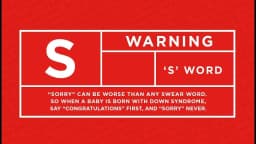
The "Pay The Price" campaign by Care, launched in December 2017, embodies a brand proposition centered on raising awareness about the often unseen costs associated with social issues, likely tied to children's welfare given Care’s focus. The campaign aims to illuminate the real-world consequences of neglect or inaction, emphasizing the societal and personal price paid when vulnerable populations are overlooked. By positioning Care as a conduit for understanding and addressing these hidden burdens, the campaign seeks to provoke empathy and a sense of responsibility among viewers, pushing them to acknowledge and engage with these critical challenges.
From a market strategy perspective, the campaign employs a documentary/social experiment format to create authenticity and emotional resonance, targeting an audience inclined toward social justice and public interest causes. The use of a social experiment genre suggests an insight that experiential, real-life demonstrations can effectively visualize abstract or overlooked problems, making the issue tangible and relatable. The campaign’s deployment in the United States and its public service context indicate a focus on raising awareness among socially conscious adults who are potential donors, advocates, or policy influencers. The relatively low engagement metrics reflect either a niche targeting or limited distribution but may also underscore the challenge of capturing attention in a crowded digital landscape for social causes. Overall, the creative angle leverages truth-telling and evidence-based storytelling to connect intellectually and emotionally with its audience, urging them to confront the hidden costs and motivate action through a clearer understanding of the stakes involved.
FORMAT#3 SYMBOLIZE THE PROBLEM — Uses symbols or analogies to represent the problem instead of showing it literally.
The campaign 'Pay The Price,' created for the public interest brand Care, employs a documentary/social experiment genre and is titled to evoke a metaphor around cost or consequence. In public service contexts, especially with a name like 'Pay The Price,' campaigns often use symbolic scenarios or provocative analogies to illustrate societal issues, rather than directly demonstrating solutions or focusing exclusively on narrative arcs. The focus appears to be on representing a larger, systemic problem (likely related to the costs borne by vulnerable populations) through a symbolic lens—fitting Format #3—rather than a straightforward demonstration, testimonial, or story-driven solution.
ADVERTISING FORMATS EXPLAINED: https://www.clapboard.com/blog/branding-and-advertising/brand-strategy/12-advertising-creative-formats
1. American Red Cross – Market Positioning
A leading humanitarian organization, the American Red Cross positions itself as a rapid-response emergency aid provider focused on disaster relief, blood services, and preparedness education. Its broad service spectrum and trusted brand legacy differentiate it as a reliable community lifeline during crises.
2. Habitat for Humanity – Market Positioning
Habitat for Humanity centers its mission on affordable housing solutions, leveraging volunteerism and donor support to build homes for underserved families. Its emphasis on community involvement and sustainable development sets it apart in addressing poverty through shelter.
3. Save the Children – Market Positioning
Focusing on children’s rights and welfare worldwide, Save the Children distinguishes itself with programs aimed at health, education, and emergency aid for children. Their strategic use of evidence-based interventions highlights impact-driven storytelling and global reach.
4. Feeding America – Market Positioning
As a nationwide network combating hunger, Feeding America positions itself through extensive food bank partnerships, targeting food insecurity with measurable distribution and advocacy. Their data-driven approach and strong local community ties amplify their effectiveness in hunger relief.
5. UNICEF USA – Market Positioning
UNICEF USA emphasizes child protection and development internationally, championing child rights with a focus on health, education, and emergency response. Its reputation as a UN affiliate coupled with impactful campaigns underscores its strategic global advocacy for children.
Q: What is Pay The Price about?
A: Pay The Price is a professional film campaign created by McCann for the brand Care and released in the United States in 2017. Operating within the Public Interest sector, the campaign leverages a documentary and social experiment approach to spotlight the hidden costs associated with social issues, particularly those impacting vulnerable children. Through a single, impactful media asset, Pay The Price aims to provoke empathy and awareness by illustrating the real-world consequences of neglect and inaction, aligning closely with Care’s mission to address humanitarian challenges and mobilize public support.
Q: What creative device does Pay The Price use?
A: Pay The Price employs Format #3 from Clapboard’s 12-format classification system: Symbolize the Problem. This creative device uses symbols or analogies to represent societal issues rather than depicting them literally, allowing the campaign to evoke the concept of cost or consequence in a metaphorical way. By adopting a documentary and social experiment genre, the campaign creates authenticity and emotional resonance, making abstract problems tangible and relatable for viewers while reinforcing the urgency of the underlying message.
Q: What is the campaign proposition for Pay The Price?
A: The campaign proposition for Pay The Price centers on raising awareness of the often unseen costs tied to social issues, with a particular focus on children’s welfare in line with Care’s broader mission. The campaign positions Care as a conduit for understanding and addressing these hidden burdens, targeting socially conscious adults who are potential donors, advocates, or policy influencers. By illuminating the societal and personal price paid when vulnerable populations are overlooked, Pay The Price seeks to provoke empathy, foster responsibility, and drive meaningful engagement within the public service landscape.
Q: How does Pay The Price rank in Clapboard's archive?
A: Pay The Price holds a Clapboard Campaign Score of 55/100 in Clapboard’s global ad archive. This score reflects the campaign’s creative ambition, execution quality, and cultural relevance as assessed by Clapboard’s curatorial standards.
Q: Who are the competitors in Care's category?
A: In the public interest and humanitarian sector, Care competes with organizations such as the American Red Cross, which is recognized for rapid-response emergency aid and disaster relief; Habitat for Humanity, known for its focus on affordable housing and community-driven development; Save the Children, which emphasizes children’s rights and welfare through global health and education programs; Feeding America, a leader in combating hunger via extensive food bank networks; and UNICEF USA, which champions child protection and development on an international scale through its affiliation with the United Nations.


 ARCHIVE
.webp)