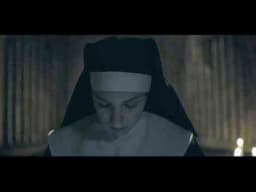
Banco de Chile's 'A Light of Hope' film, created by Prolam Y&R in November 2016, channels 38 years of Teletón solidarity into a single advocacy campaign built

Banco de Chile Turns 38 Years of Teletón Partnership Into a Film About Hope
Banco de Chile's 'A Light of Hope' is a 2016 advocacy campaign film created by Prolam Y&R in Santiago, Chile, designed to encourage public donations to Teletón — a Chilean NGO that raises funds to support children with physical disabilities — by anchoring its message not in need, but in joy, unity, and collective solidarity, according to Worldvideoads.
Banco de Chile has served as Teletón's official collection bank since 1978. That relationship, spanning nearly four decades by the time 'A Light of Hope' was produced, gives the campaign a credibility that most cause-marketing work cannot manufacture. The 2016 film does not attempt to establish why the bank belongs in this conversation — it proceeds from the assumption that Chilean audiences already understand the bond, and uses that trust as narrative foundation.
Published in November 2016 in Chile, the campaign was timed to coincide with Teletón's annual fundraising period, a moment of heightened national attention that the NGO has commanded for decades. The film's central argument is straightforward: a donation to Teletón is not simply a financial transaction. It is, as the campaign frames it, a light of hope — a contribution to something larger than the sum of its parts. By elevating the act of giving from obligation to affirmation, Prolam Y&R shifted the emotional register of a standard charity appeal into something closer to a national solidarity narrative. The campaign comprises a single film asset, making its storytelling economy one of its defining structural choices.
Banco de Chile occupies a specific position in the Sitiospublicos Bancochile Cl.clapboard.com/archive/banco-pichincha-unseen-players-banking-finance-2">Chilean financial market. According to S&P Global, the bank held US$46.49 billion in assets as of October 31, 2016, ranking it third among Chilean banks. Santander Chile led the market with US$54.18 billion in assets at that time, per data reported by Santandercl Gcs-Web, followed by BancoEstado at US$49.96 billion, as documented by Bancoestado Cl. Together, these three institutions represented approximately 48% of total banking assets in Chile in October 2016, according to S&P Global — a concentration that makes differentiation through values-led narrative a logical strategic lever.
In this competitive environment, Banco de Chile's decades-long alignment with Teletón functions as more than a corporate social responsibility gesture. It is a positioning asset. Where Santander Chile and BancoEstado compete on scale and reach, Banco de Chile's 38-year partnership with the NGO creates an emotional claim on Chilean identity that financial metrics alone cannot replicate. The 2016 campaign activates that claim deliberately, translating institutional history into a public-facing narrative about what a bank can mean to a country beyond its balance sheet.
The strategic insight underpinning 'A Light of Hope' is that Chileans do not need to be persuaded that Teletón matters — the NGO has commanded national attention across generations. What Banco de Chile and Prolam Y&R identified is a subtler opportunity: to shift the frame from charitable obligation to shared celebration. By centering joy and unity rather than suffering or need, the 2016 film positions donation as an affirmative act, one that reflects well on the giver and connects them to a broader national community. That reframing is the campaign's core strategic contribution.
Prolam Y&R assembled a named creative team for 'A Light of Hope,' with executive creative directors Álvaro Becker, Francisco Cavada, and Emerson Navarrete overseeing the work, according to Lovethework. Creative direction was handled by Andrés Echeverría, with copywriting credits belonging to Jonathan Chauque and Rafael Pabón. The client-service team comprised Michelle Fuguet, Cristián Gómez, and Josefina Correa. The depth of the credited team reflects the seriousness with which Prolam Y&R approached what might otherwise be treated as a routine seasonal charity spot.
The film's creative strategy rests on the metaphor embedded in its title. Light is universally legible as a symbol of hope, warmth, and guidance, and in the context of Teletón — an event that Chile observes collectively, often through shared television viewing — the metaphor carries particular resonance. By naming the campaign 'A Light of Hope,' the creative team signals their intent to move beyond transactional fundraising language and into something more lasting. The four message pillars — joy, unity, solidarity, and hope — are not incidental descriptors. They form a deliberate emotional architecture that asks viewers to locate themselves within a national story rather than respond to an individual case.
Producing a single film asset as the campaign's sole deliverable is itself a creative statement. It concentrates all persuasive weight into one piece of storytelling, demanding that the execution carry the full burden of the message. That economy of means is consistent with the campaign's thematic clarity: one idea, one film, one sustained emotional note. The November 2016 publication date, aligned with Teletón's annual fundraising window in Chile, ensures the work reaches audiences at precisely the moment when national sentiment around the NGO is at its peak.
No verified performance data for 'A Light of Hope' is publicly available. No published effectiveness metrics, campaign reach figures, or donation uplift statistics have been documented across publicly accessible sources for this 2016 Banco de Chile film. Similarly, no awards for the campaign are recorded across major international shows including Cannes Lions, the Effie Awards, the One Show, D&AD, the Clio Awards, the Webby Awards, or WARC.
Structurally, however, the campaign carries meaningful effectiveness indicators. Its timing against Teletón's annual fundraising moment in Chile places it inside a window of maximum receptivity, when Chilean audiences are already primed for solidarity messaging. The 38-year institutional history between Banco de Chile and Teletón provides a credibility floor that reduces the persuasive distance the film must cover — it does not need to establish the relationship, only to animate it. The single-asset approach focuses production quality and audience attention rather than diffusing them across formats.
The campaign's reliance on joy and unity rather than distress-based appeals also positions it well for sustained sharing and positive association, reducing the risk of donor fatigue that overtly difficult imagery can generate. These structural choices suggest a campaign built for emotional endurance rather than short-term conversion spike. Clapboard scores 'A Light of Hope' at 63 out of 100, recognising its strategic coherence and long-partnership credibility while noting the absence of documented reach, measurable outcome data, and award recognition that would elevate its standing as a benchmark within Chilean banking advertising or the broader finance and NGO advocacy category.
'A Light of Hope' is a 2016 advocacy film created by Prolam Y&R for Banco de Chile, designed to encourage donations to Teletón, the Chilean NGO supporting children with disabilities. The campaign centres on themes of joy, unity, solidarity, and hope, and was published in Chile in November 2016 to coincide with Teletón's annual fundraising period.
Banco de Chile has served as Teletón's official collection bank since 1978. That decades-long relationship gives the bank a credible, deeply rooted solidarity positioning within Chile. The 2016 film activates that institutional history by translating it into a public narrative about collective hope rather than transactional charity.
Prolam Y&R in Santiago created the campaign. Executive creative directors Álvaro Becker, Francisco Cavada, and Emerson Navarrete led the work, with creative direction by Andrés Echeverría and copywriting by Jonathan Chauque and Rafael Pabón. The client-service team included Michelle Fuguet, Cristián Gómez, and Josefina Correa.
Banco de Chile ranked third among Chilean banks by assets as of October 2016, according to S&P Global, holding US$46.49 billion. Santander Chile led the market, followed by BancoEstado. Together these three institutions represented approximately 48% of total Chilean banking assets, per S&P Global.
'A Light of Hope' has no recorded awards across major international shows including Cannes Lions, the Effie Awards, the One Show, D&AD, the Clio Awards, the Webby Awards, or WARC. The campaign's strength lies in its strategic coherence and long institutional partnership rather than in documented recognition from the global advertising industry.
Clapboard scores 'A Light of Hope' at 63 out of 100. The score reflects the campaign's strategic clarity, its credible 38-year NGO partnership foundation, and its disciplined single-asset approach, while accounting for the absence of verified performance metrics, published reach data, and award recognition across the global advertising industry.
.webp)
Creative Collaboration Platform: The Backbone of Modern Creative WorkWhat is a creative collaboration platform?Clapboard defines a creative collaboration platform as the operational core for today’s distributed creative teams. This is not a collection of digital collaboration tools stitched together; Clapboard’s system


Understanding the Creative Production MarketplaceWhat is a Creative Production Marketplace?Clapboard defines a creative production marketplace as a structured ecosystem where brands, agencies, and production talent converge to execute video, advertising, and branded content at scale. Unlike the legacy agency or freelanREAD FULL ARTICLE

The Urgent Need for a Creative Production Operating SystemWhy Traditional Creative Production Models Break DownClapboard sees the creative production landscape shifting under pressure. Content velocity is no longer a buzzword—it’s a mandate. Modern advertising demands relentless output across dozens of channels, each wREAD FULL ARTICLE