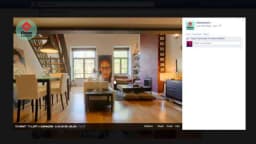
AXA's 2016 digital campaign 'The Most Expensive Everyday Items', created by Publicis in France, reframed everyday objects as financial risks to drive insurance

AXA Makes Everyday Risk Visible in a 2016 Digital Campaign
AXA's 2016 digital campaign 'The Most Expensive Everyday Items', created by Publicis in France, uses familiar consumer purchases to reframe the hidden financial consequences of everyday life, making personal risk concrete and immediate for a mass audience.
Published in November 2016, the campaign belongs to a period of renewed creative ambition within AXA's communications strategy. In France, where the insurance market is both deeply competitive and historically resistant to emotional advertising, the campaign takes a deliberately counterintuitive approach. Rather than leading with protection or peace of mind — the default register of financial services advertising — it anchors its narrative in objects that consumers already encounter daily, then reveals the potential costs those objects conceal. A bar of soap, a sweet, a domestic appliance: each becomes a proxy for a financial exposure that most people have never consciously priced.
The campaign was executed as a digital medium initiative and is documented with one media asset, indicating a focused, single-execution approach rather than a broad multimedia rollout. It was produced by Publicis, AXA's long-standing creative partner in the French market, and sits within the broader 'Born to Protect' brand platform — known in French as 'Protéger est ma vocation' — which AXA had established approximately two years earlier, according to atlas-mag.net. That platform framed AXA's identity around its fundamental protective function, and 'The Most Expensive Everyday Items' extends that logic into the register of everyday consumer life. The Clapboard Score for this campaign is 63 out of 100, reflecting solid strategic coherence and a strong conceptual premise, offset by limited documented reach and the absence of verified performance data in the public record.
AXA operates in one of Europe's most established insurance markets. In France, the challenge for any financial campaign is not awareness — AXA is among the most recognised insurers in the country — but salience: making the abstract concept of risk feel personally relevant to consumers who have not recently experienced a claim.
The strategic insight animating 'The Most Expensive Everyday Items' is straightforward and durable. Most people underestimate the financial consequences of minor domestic accidents precisely because they process everyday objects as low-stakes. A campaign that attaches a specific, surprising cost to an object the viewer used that morning collapses the psychological distance between daily life and financial vulnerability. This is a narrative technique — not a product demonstration — and it reflects a broader shift in financial campaign strategy towards storytelling over specification.
The competitive context matters here. In the French insurance market, AXA competes directly with Allianz, which according to relbanks.com held approximately US$935 billion in assets in 2016 placing it just behind AXA, and with Generali, another major European insurer with significant French operations, also noted by relbanks.com. Both competitors have historically relied on reassurance-led creative — imagery of families, stability, and recovery. AXA's decision to lead instead with cost-shock and everyday objects represents a deliberate differentiation from that register. Europe represented approximately 27% of global insurance premiums in 2016, down from 36% a decade earlier, according to atlas-mag.net, a contraction that intensified competitive pressure across all major European insurers including AXA. Within that context, a digital campaign that generates genuine consumer attention without media-heavy investment is a strategically efficient choice.
Publicis constructs the campaign around a single, replicable creative mechanism. Each execution takes a recognisable everyday item and presents it alongside an unexpectedly large financial figure — the cost that item could generate if a small domestic accident were to follow from its use. The creative logic is essentially journalistic: it does not ask the viewer to imagine a catastrophe, only to reconsider something they already own.
This restraint is the campaign's primary craft decision. By grounding the narrative in objects rather than incidents, the work avoids the melodrama that weakens much insurance advertising. It does not show the accident. It does not show the hospital or the broken appliance or the insurance adjuster. It shows the object, and it shows the number, and it trusts the viewer's imagination to complete the connection. That trust in the audience is, in creative terms, a form of respect — and it is also a practical advantage in a digital environment where attention windows are narrow and shock-value creative burns quickly.
A closely related campaign, 'The Most Expensive Everyday Items Ever', produced for AXA Germany and documented by adsoftheworld.com, extends the same mechanism with specific figures: a toffee sweet valued at €600 after damaging a dental filling, a bar of soap at €1,900 following a shower accident. That German iteration won a Cannes Lions Bronze award in June 2017, as reported by clapboard.com, and was distributed across television, digital, and print. The French campaign documented here predates that award-winning execution and shares its conceptual DNA, suggesting that Publicis developed and refined the idea across multiple AXA markets. Production credits for 'The Most Expensive Everyday Items' France 2016 are not publicly documented in available sources.
No verified performance data for 'The Most Expensive Everyday Items' France 2016 is publicly available. Metrics including sales lift, brand-tracking shifts, media reach, impressions, and media budget are not documented in public sources including Stratégies, lareclame.fr, publicisconseil.fr, or adsspot.me. The campaign received no documented recognition from Cannes Lions, Effies, The One Show, D&AD, Clios, Webby Awards, or WARC Awards in the period following its publication.
What the structural evidence does support is a campaign designed for efficiency rather than scale. A single documented media asset, a digital-only medium, and a mechanism that generates impact through cognitive surprise rather than production volume all point to a campaign calibrated for targeted deployment — likely within AXA's owned or partnered digital channels in France — rather than broad paid media exposure. The conceptual strength of the mechanism is independently validated by the fact that a closely related execution for AXA Germany, documented by adsoftheworld.com, achieved Cannes Lions Bronze recognition in 2017, as reported by clapboard.com. That recognition lends retroactive credibility to the French original as the probable testing ground for the idea. AXA held approximately €94 billion in gross written premiums and approximately €100 billion in revenue in 2016, according to relbanks.com, giving the brand the scale to deploy focused digital experiments across multiple markets simultaneously. The Clapboard Score of 63 out of 100 reflects a campaign with a genuinely strong strategic premise and clean creative logic, held back from higher recognition by limited documented distribution and the absence of measurable public outcomes.
AXA's 2016 digital campaign presents familiar consumer objects alongside unexpectedly large financial figures to make personal risk feel immediate. Created by Publicis in France and published in November 2016, the campaign uses a narrative device rooted in everyday life rather than dramatic accident scenarios to communicate the value of insurance protection.
Publicis created the campaign for AXA in France. Publicis is AXA's long-standing creative partner in the French market and also produced a related campaign for AXA Germany using the same creative mechanism, which won a Cannes Lions Bronze award in June 2017, as reported by clapboard.com.
The French 2016 campaign has no documented award wins from Cannes Lions, Effies, D&AD, or other major shows. A closely related AXA Germany campaign sharing the same conceptual approach won a Cannes Lions Bronze in June 2017, according to clapboard.com, suggesting the French execution was the earlier iteration of the idea.
The campaign extends AXA's 'Born to Protect' platform, known in French as 'Protéger est ma vocation', which was established approximately two years before the 2016 campaign, according to atlas-mag.net. That platform frames AXA's identity around its protective function, and the campaign translates that positioning into a concrete, cost-specific consumer narrative.
Europe held approximately 27% of global insurance premiums in 2016, down from 36% a decade earlier, according to atlas-mag.net, intensifying competition among major insurers including AXA, Allianz, and Generali. In this environment, AXA's choice of a digitally focused, narratively driven campaign reflected a strategic preference for efficiency and differentiation over conventional reassurance-led advertising.
The campaign receives a Clapboard Score of 63 out of 100. This reflects strong strategic coherence and a clean creative concept grounded in everyday financial risk, offset by limited documented distribution, a single recorded media asset, and the absence of publicly verified performance metrics or major industry award recognition for the French execution.
.webp)
Creative Collaboration Platform: The Backbone of Modern Creative WorkWhat is a creative collaboration platform?Clapboard defines a creative collaboration platform as the operational core for today’s distributed creative teams. This is not a collection of digital collaboration tools stitched together; Clapboard’s system


Understanding the Creative Production MarketplaceWhat is a Creative Production Marketplace?Clapboard defines a creative production marketplace as a structured ecosystem where brands, agencies, and production talent converge to execute video, advertising, and branded content at scale. Unlike the legacy agency or freelanREAD FULL ARTICLE

The Urgent Need for a Creative Production Operating SystemWhy Traditional Creative Production Models Break DownClapboard sees the creative production landscape shifting under pressure. Content velocity is no longer a buzzword—it’s a mandate. Modern advertising demands relentless output across dozens of channels, each wREAD FULL ARTICLE