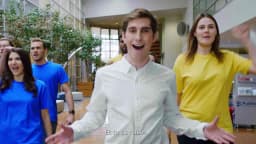
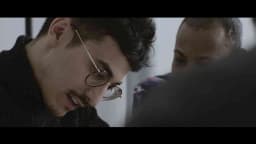
Arts University Bournemouth's Glass Slippers film by Creative Forager retells Cinderella through nearly 100 period costumes made by 150 students over five

How Arts University Bournemouth Turned Cinderella Into a Costume Design Showcase
Arts University Bournemouth's Glass Slippers is a three-minute digital short film produced in June 2015 by Creative Forager that retells the story of Cinderella entirely from her own point of view, featuring nearly 100 costumes spanning the 18th, 19th and 20th centuries, created by approximately 150 students across two undergraduate programmes in the United Kingdom.
The campaign exists at an unusual intersection of student work and professional advertising. Rather than commissioning an external production, Arts University Bournemouth invited its BA (Hons) Costume and Performance and BA (Hons) Make-up for Media and Performance cohorts to become both the subject and the makers of the film. Over five months, those 150 students developed every costume, make-up look and hair design that appears on screen, ensuring historical authenticity across three distinct centuries. The result was a recruitment communication that demonstrated the university's teaching philosophy by enacting it, showing prospective students what the programmes produce rather than simply describing them.
Creative Forager, the agency credited with the campaign and based in Brockelhurst, United Kingdom, was led creatively by Mark Sephton, who served as creative director on the project, according to Research Aub Ac Uk. The film's closing line — Storytelling from an original point of view — functions simultaneously as a tagline, a mission statement and a description of the narrative device used throughout. By adopting Cinderella's first-person perspective, the film reframes a universally familiar story and signals that the two courses approach their subjects with the same interpretive independence they encourage in students. The campaign was published in the United Kingdom in June 2015 and distributed as a single digital media asset, with the film submitted to industry recognition processes that placed it in front of trade and consumer media audiences across the country.

Arts University Bournemouth made a deliberate strategic choice to avoid the conventions of higher education recruitment marketing. The standard model — campus photography, student testimonials, facilities tours — was set aside in favour of a cinematic short film that proved the university's creative credentials by example rather than assertion.
That decision reflected a sharper competitive reality facing specialist arts institutions in the United Kingdom. By 2015, the higher education sector had seen sustained growth in applications to creative and performing arts courses, but specialist providers faced increasing pressure from broader universities with well-funded marketing operations. According to the Times Higher Education, arts-focused institutions have consistently needed to articulate a distinctive value proposition to prospective applicants weighing specialist against generalist study. Arts University Bournemouth, as a dedicated creative institution, held an inherent advantage in production capability that a conventional prospectus video would have squandered. Glass Slippers converted that capability into the campaign itself.
The choice of Cinderella as source material was strategically precise. The fairy tale carries near-universal recognition across the United Kingdom and beyond, which meant the film required no exposition. Audiences could follow the narrative immediately, freeing attention for the costume design, make-up artistry and period accuracy that the film was actually selling. The revisionist, sometimes violent treatment of the story — as described by Arts University Bournemouth's own account of the project — signalled creative ambition without alienating viewers, because the underlying story remained intact. Competitors such as the Royal College of Art and the London College of Fashion have pursued prestige-led brand positioning in their own recruitment communications, relying on alumni reputation and institutional heritage. Arts University Bournemouth's approach through Creative Forager chose demonstrable craft over inherited status, a distinction that resonated with applicants seeking evidence of hands-on creative education in the United Kingdom.
Glass Slippers operates on a single, sustained creative constraint: the camera never leaves Cinderella's perspective. Every scene is shot from her point of view, which means the audience sees the world she inhabits without ever seeing her face. That formal decision transforms the film from a showcase into an experience, placing the viewer inside a Cinderella story that moves through the 18th, 19th and 20th centuries as the narrative unfolds.
The creative direction under Mark Sephton, as documented by research.Aub Ac Uk, shaped a production environment in which the work of the students was the visual content of the film. Nearly 100 distinct costumes appear across the three-minute running time, each researched and constructed to reflect the aesthetic and social codes of its era. The 150 students who contributed to costume design, make-up and hair spent five months on that process, according to Arts University Bournemouth's own published account, meaning the production timeline was itself a pedagogical exercise. The film is the degree programme made visible.
Producer Rebecca Pride served on the Level 4 film project, as documented on linkedin.com, overseeing the coordination between the two undergraduate courses — BA (Hons) Costume and Performance and BA (Hons) Make-up for Media and Performance — whose collaborative output constituted the entire production. The involvement of Vlad Jakovlev is noted within the project's credited personnel. Production credits beyond these named contributors are not fully documented in public sources. What the film achieves technically is a compression of approximately three centuries of costume history into three minutes without the visual continuity breaking down, a feat of scheduling and standardisation that the five-month production period made possible. The closing frame and its line — Storytelling from an original point of view — arrives as a earned declaration rather than a marketing flourish, because the film has already demonstrated the claim in full.
No comprehensive verified performance data for Glass Slippers is publicly available in the form of enrolment uplifts, conversion rates or paid media metrics. What the public record does document is a pattern of earned media and industry recognition that speaks to the film's reach and resonance within the United Kingdom creative and education sectors.
The film achieved 7,500 views on YouTube, as documented on linkedin.com in Rebecca Pride's account of the project. It was selected as advert of the week by The Drum, an influential United Kingdom trade publication, which placed it in front of a professional advertising audience. The campaign was also featured in the Daily Mail's Femail online section and in Oh My! Magazine, extending its reach to consumer audiences beyond the specialist press, as noted in linkedin.com and Aub-Uk Academia Edu. The film received a nomination for a Fresh Award, a United Kingdom competition that recognises creative work produced within educational contexts, confirming that the industry assessed it as a credible piece of craft rather than a student exercise. No verified wins at Cannes Lions, D&AD, the Clio Awards, The One Show or the Effies have been identified, according to research conducted for this analysis.
Structurally, Glass Slippers succeeds because it closes the gap between the message and the medium. A recruitment film for costume and make-up programmes that itself consists entirely of costume and make-up work is self-proving in a way that written or testimonial-based communications cannot be. The Clapboard Score of 73 out of 100 reflects that strategic coherence and the quality of the creative concept, offset by the limited scale of its documented distribution and the absence of measurable outcome data.
Glass Slippers is a three-minute digital film produced by Creative Forager for Arts University Bournemouth in June 2015 in the United Kingdom. It retells the Cinderella story from her point of view using nearly 100 costumes spanning three centuries, made by approximately 150 students across two undergraduate costume and make-up programmes over five months.
Creative Forager, an agency based in Brockelhurst, United Kingdom, created Glass Slippers. Mark Sephton served as creative director, according to research.aub.ac.uk. Rebecca Pride produced the Level 4 film project, as documented on linkedin.com. The student body of approximately 150 people across two degree programmes produced all costumes, make-up and hair design featured in the film.
Glass Slippers promoted two undergraduate programmes at Arts University Bournemouth in the United Kingdom: BA (Hons) Costume and Performance and BA (Hons) Make-up for Media and Performance. Students from both courses collaborated on the production, creating all costume design, make-up and hair work seen across the film's three-century narrative span.
Glass Slippers received a nomination for a Fresh Award, a United Kingdom competition recognising creative educational work, as documented on linkedin.com. It was also selected as advert of the week by The Drum. No verified wins at Cannes Lions, D&AD, the Clio Awards, The One Show or the Effies have been identified for the campaign.
Approximately 150 students worked on Glass Slippers for five months, according to Arts University Bournemouth's published account of the project. They were responsible for all costume construction, make-up and hair design across nearly 100 looks representing the 18th, 19th and 20th centuries, making the production timeline itself an extended pedagogical exercise in period-accurate creative craft.
Arts University Bournemouth and Creative Forager chose to demonstrate the university's creative programmes rather than describe them. By shooting entirely from Cinderella's first-person perspective and using nearly 100 student-made period costumes, the film made the degree work its own evidence. The closing line, Storytelling from an original point of view, expressed both the narrative device and the university's teaching philosophy.
.webp)
Creative Collaboration Platform: The Backbone of Modern Creative WorkWhat is a creative collaboration platform?Clapboard defines a creative collaboration platform as the operational core for today’s distributed creative teams. This is not a collection of digital collaboration tools stitched together; Clapboard’s system


Understanding the Creative Production MarketplaceWhat is a Creative Production Marketplace?Clapboard defines a creative production marketplace as a structured ecosystem where brands, agencies, and production talent converge to execute video, advertising, and branded content at scale. Unlike the legacy agency or freelanREAD FULL ARTICLE

The Urgent Need for a Creative Production Operating SystemWhy Traditional Creative Production Models Break DownClapboard sees the creative production landscape shifting under pressure. Content velocity is no longer a buzzword—it’s a mandate. Modern advertising demands relentless output across dozens of channels, each wREAD FULL ARTICLE