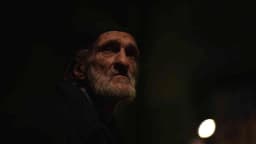
Apple's Hometown campaign commissioned 32 Black photographers to document their hometowns Shot on iPhone 12 Pro, directed by Tribeca Film Festival honoree

Apple Hometown Puts 32 Black Photographers at the Center of iPhone Storytelling
Apple's "Hometown" campaign is a 2021 Black History Month content initiative in which 32 Black photographers across the United States documented their home cities using iPhone 12 Pro, with the resulting documentary film directed by Phillip Youmans and distributed across Apple's digital and out-of-home channels.
Apple announced the campaign on January 26, 2021, according to apple.com, with a formal introduction on February 1, 2021, marking the start of Black History Month in the United States. The short film itself was released on February 28, 2021, and subsequently catalogued in March 2021. Titled "Hometown — Shot on iPhone by Phillip Youmans," the work invited each participating photographer to celebrate the Black experience, Black excellence, love, and imagination through the specific geography they call home.
The campaign operates across four documented cities — Chicago, Los Angeles, Charlotte, and Washington, D.C. — with featured photographers including Lawrence Agyei, Gabriella Angotti-Jones, Liam Woods, and Julien James, each working in their own urban environment. Distribution reached Apple's Instagram audience, YouTube, and contextual out-of-home placements including billboards positioned in the photographers' own neighbourhoods, according to reporting by MacRumors and 9to5Mac. The result is a campaign that functions simultaneously as a product demonstration, a cultural document, and a platform for Black creative authorship at a national scale in the United States. Clapboard rates "Hometown" at 80 out of 100.
 ARCHIVE
Apple's "Shot on iPhone" platform has operated since 2015 as the brand's primary vehicle for demonstrating camera capability through real-world creative output. "Hometown" extends that platform with a deliberate shift in emphasis: from photographic technology as spectacle to photographic technology as a tool for cultural representation and community identity.
The strategic logic is grounded in the competitive dynamics of the United States smartphone market. In 2021, Apple shipped an estimated 235.7 million units globally, representing a 17.4 percent market share, according to IDC — second globally behind Samsung, which shipped an estimated 272.0 million units at a 20.1 percent share. Within the United States, Apple's position is considerably stronger, and the brand's ongoing challenge is not simply to sell hardware but to maintain cultural relevance among audiences for whom identity and self-expression are primary drivers of brand loyalty. Samsung's own heritage marketing and Google Pixel's computational photography narrative represent the two most direct competitive frames Apple works against in the premium smartphone segment.
Black History Month provided Apple with a culturally grounded moment to address that challenge directly. Rather than producing a campaign about the iPhone 12 Pro's camera specifications, the brand used the device as infrastructure — a means by which 32 already-visionary photographers could do work they were uniquely positioned to do. As reported by Muse by Clio, the campaign aligns Apple's product with values of artistic excellence and cultural identity, a positioning that speaks to consumers for whom representation in media is itself a meaningful signal of brand values. In the United States, where discussions of corporate diversity and authentic cultural engagement have intensified, this approach carries strategic weight well beyond the electronics and technology category.
Phillip Youmans directed the "Hometown" film. Youmans holds a specific and verifiable distinction: he is the youngest director ever to win at the Tribeca Film Festival and the first African-American director to receive the festival's Founders Prize, according to reporting by 9to5Mac and musebyclios.com. His selection to helm the campaign is therefore not incidental casting — it is a creative and symbolic choice that places Black directorial excellence at the centre of a campaign explicitly about Black creative excellence.
Production was handled by Smuggler, the production company, with the campaign created by TBWA\Media Arts Lab Los Angeles in collaboration with Apple, according to gustavokopit.com and zeinzubi.com. The film adopts a documentary register rather than a conventional advertising grammar. Youmans follows individual photographers — Lawrence Agyei in Chicago, Gabriella Angotti-Jones in Los Angeles, Liam Woods in Charlotte, North Carolina, and Julien James in Washington, D.C. — as each works within their own neighbourhood, producing images that are simultaneously personal and geographically specific.
The visual language of the film is deliberately unhurried. Rather than cutting rapidly between technically impressive photographs to foreground the iPhone 12 Pro's capabilities, the work gives space to process: to how a photographer reads a street, chooses a subject, and responds to the light available in a particular city at a particular moment. The out-of-home component reinforced this intimacy by placing resulting images as billboards in the very communities where they were made, according to reporting by MacRumors. That geographic specificity — Chicago as Chicago, not as an interchangeable American backdrop — is the campaign's most precise creative decision, and the one that most clearly separates "Hometown" from the broader "Shot on iPhone" archive.
Apple's "Hometown" film accumulated 615,034 views and 14,238 likes on YouTube. While Apple has not published conversion or revenue data attributable to the campaign, these figures represent meaningful organic engagement for a piece of branded content operating in the electronics and technology category, where direct-response metrics rarely capture the full value of cultural positioning work.
The campaign's structural effectiveness rests on several compounding elements. Distribution across Apple's Instagram, YouTube, and out-of-home channels created a media ecosystem in which the same work could function differently for different audiences — as a short documentary for a viewer encountering it on YouTube, and as a neighbourhood statement for a resident of Chicago or Washington, D.C. encountering a billboard of their own community's imagery, as reported by 9to5Mac. The D&AD archive documents the campaign's industry recognition, confirming that its creative approach registered with professional advertising juries as well as general audiences.
The decision to commission 32 photographers rather than a single spokesperson amplifies the campaign's credibility. No single image-maker can represent the totality of Black experience across the United States; 32 can gesture meaningfully toward that diversity. That scale of commissioning also generated a volume of original photographic work that extended the campaign's reach through the individual channels of participating photographers, each of whom brought their own existing audiences to the project. According to adobomagazine.com, the campaign's framing of the iPhone 12 Pro as a tool for authentic cultural documentation rather than a product to be demonstrated represents a mature evolution of the "Shot on iPhone" platform's strategic ambitions.
Apple's "Hometown" campaign is a 2021 Black History Month initiative commissioning 32 Black photographers to document their US home cities using iPhone 12 Pro. Directed by Phillip Youmans, the documentary film was released on February 28, 2021, and distributed across Apple's Instagram, YouTube, and out-of-home placements in participating photographers' own neighbourhoods.
Phillip Youmans directed the Hometown film. Youmans is the youngest director ever to win at the Tribeca Film Festival and the first African-American director to receive the festival's Founders Prize. His selection placed verifiable Black directorial achievement at the creative centre of a campaign explicitly celebrating Black excellence and the Black experience.
Apple's Hometown film followed photographers across four United States cities. Lawrence Agyei worked in Chicago, Gabriella Angotti-Jones in Los Angeles, Liam Woods in Charlotte, North Carolina, and Julien James in Washington, D.C. The broader campaign featured 32 Black photographers in total, each documenting their own hometown using iPhone 12 Pro.
Apple's Hometown campaign was created by TBWA\Media Arts Lab Los Angeles in collaboration with Apple, according to gustavokopit.com and zeinzubi.com. Production was handled by Smuggler. The campaign was published in the United States in February and March 2021 as part of Apple's Black History Month programming for the electronics and technology category.
Hometown extends Apple's long-running Shot on iPhone platform by shifting emphasis from camera specification to cultural representation. Rather than showcasing the iPhone 12 Pro's technical capabilities directly, the campaign positions the device as a tool for Black creative authorship, marking a deliberate evolution in the platform's strategic and narrative ambitions within the United States market.
Apple's Hometown film recorded 615,034 YouTube views and 14,238 likes. The campaign earned industry recognition documented in the D&AD archive. Out-of-home placements appeared in photographers' own US neighbourhoods, extending reach contextually. Apple has not published conversion or revenue figures directly attributable to the campaign in the electronics and technology category.
.webp)
Creative Collaboration Platform: The Backbone of Modern Creative WorkWhat is a creative collaboration platform?Clapboard defines a creative collaboration platform as the operational core for today’s distributed creative teams. This is not a collection of digital collaboration tools stitched together; Clapboard’s system


Understanding the Creative Production MarketplaceWhat is a Creative Production Marketplace?Clapboard defines a creative production marketplace as a structured ecosystem where brands, agencies, and production talent converge to execute video, advertising, and branded content at scale. Unlike the legacy agency or freelanREAD FULL ARTICLE

The Urgent Need for a Creative Production Operating SystemWhy Traditional Creative Production Models Break DownClapboard sees the creative production landscape shifting under pressure. Content velocity is no longer a buzzword—it’s a mandate. Modern advertising demands relentless output across dozens of channels, each wREAD FULL ARTICLE