Welcome Back the Sight - Top Charoen Optical | Clapboard Ad Archive
Project
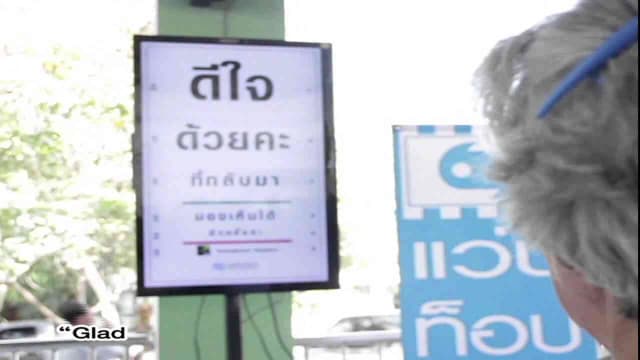
Welcome Back the Sight marks a pivotal entry in the health communications space for Top Charoen Optical, mobilizing JWT’s creative force in Thailand to transport the act of vision correction from the functional into the realm of community transformation. Launched in Year 2012, this campaign’s foundational idea hinges on a Facebook application that directly connects glasses donors to those in need, shifting the conversation away from transactional vision care into one of reciprocal human benefit and new social bonds. The campaign leverages an OOH outdoor platform as the launchpad but smartly crosses into digital, turning a single media asset into the gateway for a technology-enabled system of giving that recognizes both sides of the exchange — the donor’s sense of purpose and the recipient’s return to sight. By putting the product benefit itself — the restoration of vision through donated eyewear — at the heart of a real-world mechanism for connection, the campaign forgoes feature-driven messaging for a story-driven approach that catalyzes community and encourages repeat cycles of generosity. What Clapboard's taxonomy would classify as FORMAT#6—Benefit Causes Story—the creative device finds its twist not in a literal dramatization but in architecting a lived scenario where the benefit becomes the initiator of human connection, rewarding participants with both gratitude and empathy as they move through the cycle of giving and receiving. JWT grounds the strategy in behavior change, activating the latent goodwill within the market category by leveraging both digital technology and the emotional dimension of restored sight, while the campaign narrative systematically reframes eyewear from a retail product to a facilitator of social impact. This approach positions Top Charoen Optical not simply as a retailer but as an orchestrator of collective vision — both literal and societal — and achieves engagement with authenticity thanks to an experiential application that invites direct participation. In health industry communications, where patient outcomes and awareness can struggle to find emotional resonance, Welcome Back the Sight sidesteps sentimentality in favor of a tangible mechanism for transformation, solidifying the role of digital tools in public health advocacy. The campaign earns 69/100 in Clapboard’s global creative archive. In demonstrating how a clear product benefit can unlock new community dynamics through technology, Welcome Back the Sight signals a path forward for brands seeking both real-world impact and elevated brand purpose within healthcare marketing.
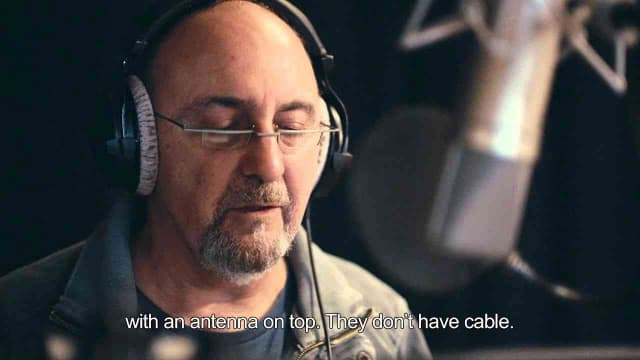
In June 2015, Reporters Without Borders, in collaboration with Publicis Belgium, launched a poignant digital campaign titled Audio Cartoons - Quirit, Audio Cartoons - Kanar, and Audio Cartoons - others, comprising three media assets that powerfully advocate for freedom of information. This campaign, situated firmly within the Public Interest sector, uses innovative audio cartoons to commemorate the five cartoonists tragically killed in the Charlie Hebdo attack, blending creativity with a strong social message. Through the medium of digital audio storytelling, it invites audiences to listen, share, and support the critical cause of press freedom, encouraging active engagement with a look back at a critical moment in contemporary history. The campaign’s digital format maximizes accessibility and shareability, targeting a wide audience to raise awareness about the dangers faced by journalists and the importance of safeguarding expression worldwide. Despite being nearly a decade old, the campaign's message remains urgent, inviting reflection on the costs of censorship and violence against the media. With over 3,000 views and positive reactions, it underscores the enduring relevance of defending informational freedoms through compelling and empathetic communication.
Rock Your Work
Project
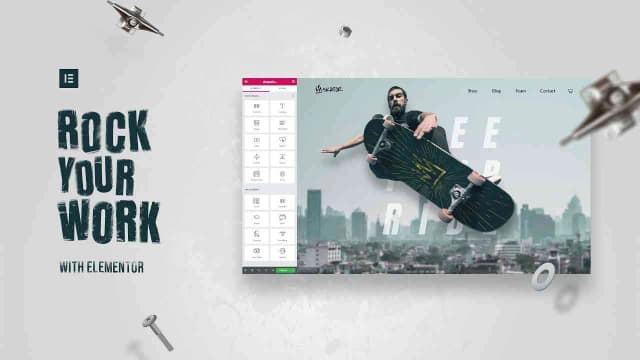
Launched in Israel in 2019, the 'Rock Your Work' campaign by Elementor is a dynamic film medium initiative designed to inspire web creators to embrace their inner rockstar while building exceptional websites. Developed by the creative team at Elementor and led by Creative Director Asaf, this self-promo campaign highlights Elementor as an industry-leading, all-in-one tool that empowers users to craft stunning WordPress sites effortlessly without coding. The campaign’s core message centers on delivering a sense of satisfaction and creative mastery, encouraging users to wow their clients and truly rock their work. With one engaging media asset, the campaign invites audiences to explore how Elementor simplifies the web design process by offering a free tutorial on building the "Skator" website, accessible through their platform. Garnering over 48,000 views, nearly 500 likes, and close to 50 comments, the campaign successfully resonated with web creators and designers who value innovation and ease of use. By combining an energetic and empowering tone with practical value—such as the free downloadable tutorial—the campaign strengthens brand positioning, showcasing Elementor as an indispensable tool that transforms web creation into an inspiring, rockstar-level experience. This strategic approach effectively communicates Elementor’s unique value proposition to its target audience, motivating both novice and experienced creators alike to elevate their digital craftsmanship and confidently showcase their talents.
We Feel You
Project
The 'We Feel You' campaign, launched in Sweden in September 2019 for White Label Agency, strategically addresses a critical pain point within the digital agency ecosystem. Targeting agency CEOs and decision-makers, the campaign acknowledges the common challenge digital agencies face after the creative phase of website projects—finding skilled developers who can faithfully bring web designs to life. By positioning White Label Agency as a reliable white label WordPress development partner, the campaign offers a seamless solution that resonates deeply with its professional audience. Utilizing the Film medium to convey its message, the campaign’s three media assets create a cohesive narrative that builds empathy and establishes trust, showing that White Label Agency truly understands and supports the struggles of its clientele. With the tagline "We feel you, agency CEO," the campaign fosters emotional connection and positions the brand as a collaborative partner committed to elevating digital agencies’ service offerings. Despite a modest engagement reflected in views, likes, and comments, the campaign effectively communicates its value proposition in clear, straightforward language designed to appeal to professional service providers. The integration of a direct call to action, inviting viewers to learn more at the agency’s website, strategically encourages further interaction and conversion. Overall, 'We Feel You' exemplifies a focused marketing and communication approach that combines empathy-driven messaging with industry-specific solutions, thereby strengthening White Label Agency’s brand identity and market position within the professional services landscape.
More Popular Search
Sponsored
Sponsored
If you are a deep practitioner of the media capabilities of the 2026 world, then you would be aware that a brand needs about 20,000 unique pieces of content per year for different demographics, psychographics etc.
That's 19,900 more than what most big brands actually put out. And if you understand how the Googles, Facebooks, Snapchats and Instagrams work, then you would know that your creative teams will have to deliver a lot more video centric content to fill the pipes of media distribution than they currently are doing.
That's why we've created Clapboard - to produce quality video content at a low enough cost. Quality being contextual to the social media platform, not necessarily high production, thus delivering the best bang for your every buck
JOIN THE NEWSLETTER.
Content Production insights, videos, books, and freebies, delivered to your inbox weekly
What Is Clapboard? A Video‑First Creative Marketplace & Production Ecosystem
Team Assembly vs. Individual Sourcing in Creative MarketplacesWhy Teams Outperform Individuals in ProductionClapboard treats creative production as an inherently team-based discipline. The reality is simple: no single freelancer, no matter how talented, can match the velocity or multidimensional expertise of a well-assembled team. In a creative production marketplace, the difference is structural. When Clapboard assembles a team, we’re not just filling roles — we’re building a unit designed for integrated, multi-disciplinary collaboration from the outset. This approach aligns with the fact that listed scripts in creative production marketplaces are 70% more likely to be produced than unlisted ones, underscoring the value of aggregated expert judgment in team-based selection (Harvard Business School - Judgment Aggregation in Creative Production, 2020).Benefits of Team Assembly in MarketplacesClapboard doesn’t see team assembly as an optional upgrade — it’s the core of how high-quality creative work gets delivered. Individual sourcing fragments accountability and creative intent. When Clapboard forms a team, we ensure that directors, editors, producers, and specialists are not only matched for skill but for their ability to operate as a cohesive unit. This reduces friction, accelerates decision-making, and keeps projects aligned with the original vision. On Clapboard, team-based production isn’t just faster; it’s more resilient to setbacks and better at surfacing creative solutions under pressure.Team Matching Algorithms in Creative PlatformsClapboard’s team matching engine is built to recognize the unique chemistry required for creative projects. Rather than treating talent as interchangeable parts, Clapboard evaluates experience, collaboration history, and complementary skill sets. This is critical for complex, multi-role creative projects where the sum is greater than the parts. Experienced buyers in the creative production marketplace understand this, increasingly
BLOG AUDIO SUMMARY
0:00 / 0:00
READ FULL ARTICLE
Why Does Clapboard Exist? What Problem Does It Solve?
Coordination Scarcity: The New Bottleneck in Creative TeamsWhy Creative Team Coordination Is Harder Than EverClapboard sees the industry’s talent pool expanding, but creative team coordination has become the defining constraint. The old scarcity—finding enough skilled individuals—has been replaced by the challenge of orchestrating those individuals into functional, high-output teams. Clapboard’s operational lens reveals that the proliferation of freelance networks, remote contributors, and niche specialists has not simplified delivery. Instead, it has multiplied the points of failure. The result: more talent on tap, but less cohesion, more friction, and a higher risk of missed deadlines or diluted creative impact.Clapboard treats team-based creative work as a system problem, not a hiring problem. The bottleneck now is not who you can hire, but how you configure, brief, and manage the ensemble. The complexity of project management in advertising and content production means that ad hoc approaches—assembling a team for each brief with no shared process or context—almost guarantee fragmentation. Resource scarcity, when generalized across staff and time, breeds defensive behaviors and power struggles, undermining the very collaboration creative work demands (Organization Science (INFORMS), 2022).Best Practices for Building Creative TeamsClapboard’s experience with talent orchestration is clear: repeatable success depends on structured team formation, not improvisation. Clapboard does not rely on surface-level compatibility or prior relationships. Instead, Clapboard’s team formation in creative is anchored in role clarity, shared objectives, and explicit workflow agreements from day one. This approach eliminates the ambiguity that derails many group projects and provides a foundation for scalable, multi-disciplinary work.Clapboard’s system enforces a baseline of operational hygiene: clear responsibilities, documented handoffs, and pre-agreed escalation paths. This is notREAD FULL ARTICLE
BLOG AUDIO SUMMARY
0:00 / 0:00
What Does “Video-First” Really Mean in Today’s Creative Worl...
Why Video-First Content Production Requires a New Production PipelineVideo-first vs. traditional production workflowsClapboard treats video-first content production as a fundamentally different problem than legacy creative services. The old model—treating video as a gig, a one-off deliverable, or a bolt-on to a static campaign—doesn’t survive contact with the complexity of today’s requirements. Clapboard rejects the notion that a project brief, a handful of freelancers, and a static checklist can deliver at the scale or speed modern brands demand. Instead, Clapboard’s approach is to architect a production pipeline where every stage—ideation, capture, edit, review, distribution—is engineered as a connected system, not a sequence of isolated tasks. This is not theory: the operational demands of video-first content production, where volume, speed, and iteration are non-negotiable, break linear, gig-based models every time.Key stages in a video-first content pipelineClapboard’s pipeline is built around the realities of modern video production: high data volumes, rapid creative iteration, and the need for integrated workflows. On Clapboard, ingestion is not just file transfer; it’s smart ingest that tags, proxies, and preps footage for downstream use. This means that versioning, review, and distribution are not afterthoughts—they’re embedded from the first frame. Clapboard’s workflow design reflects what practitioners know: the handoff between stages is where most friction and waste occur. By systematizing each production stage—storyboarding, asset management, edit, and delivery—Clapboard eliminates the traps of ad hoc, disconnected processes. The result is a pipeline that can handle the operational load of multi-channel, multi-format content engines, not just standalone assets (New Target, 2024).Common pitfalls in non-pipeline video productionClapboard has seen firsthand how static creative workflows collapse under the weight of modern video projects. When teams treat vREAD FULL ARTICLE
BLOG AUDIO SUMMARY
0:00 / 0:00
How Clapboard Works: Human + Agent Orchestrations Explained
Breaking Down the AI Agent’s Role in Creative WorkflowsHow AI agents automate script breakdowns and metadataClapboard positions AI agents in creative workflows at the core of its production pipeline, not as a bolt-on. When a script or concept enters the system, Clapboard’s AI script analysis engine parses structure, identifies narrative beats, and extracts actionable data—locations, cast, props, and creative dependencies. This is not theoretical; Clapboard’s script breakdown automation operates with a practitioner’s understanding of what matters to line producers and creative leads. Every element is tagged and cross-referenced, feeding directly into Clapboard’s production metadata management layer. Here, AI agents handle campaign classification, asset tagging, and rights tracking, reducing manual data entry and error propagation. The result: metadata hygiene and creative task automation are embedded from the first draft, not retrofitted downstream. This approach aligns with industry evidence that AI-assisted workflows can automate up to 80% of repetitive tasks, freeing creators to focus on their unique ideas (Averi, 2025).AI-powered budget estimation for creative projectsClapboard’s budgeting intelligence is grounded in real production economics, not spreadsheet abstraction. When a project’s scope is defined, Clapboard’s AI agents surface historical benchmarks, flag atypical line items, and simulate cost scenarios based on script breakdown data. This isn’t about replacing producers; it’s about giving them leverage. Clapboard treats cost estimation as a dynamic, living process—AI agents update forecasts as creative inputs shift, and expose the cost impact of creative decisions in real time. This level of integration has tangible impact: AI projects have demonstrated 30% to 60% fewer hours spent on repetitive estimation and reconciliation tasks, producing significant cost savings at scale (Superside, 2025). Clapboard’s approach is not to automate away expertise, but tREAD FULL ARTICLE
BLOG AUDIO SUMMARY
0:00 / 0:00
What Is the Clapboard Freelancer Marketplace?
The Roles Powering Creative Production MarketplacesKey roles in a creative production freelancer marketplaceClapboard’s creative production freelancer marketplace is structured around the full spectrum of roles required to deliver high-caliber film, video, and advertising work. At the core, directors set the vision and narrative arc, while producers orchestrate logistics and budgets. Editors, motion designers, and colorists transform raw footage into polished assets. Sound designers and composers build the audio backbone. Creative directors oversee cohesion and intent—an essential function for brands seeking unified campaigns. On Clapboard, these roles are not abstractions; they are vetted, distinct practitioner profiles, each with a proven portfolio. The platform recognizes that 1.5 million creative services freelancers—spanning artists, video producers, writers, and sound professionals—now comprise a significant segment of the independent workforce (Fiverr, 2023). Clapboard’s marketplace is designed to surface not just generalists, but true production specialists for every phase of a project.Why team integration matters for creative outcomesClapboard treats team integration as non-negotiable for complex creative production. The platform’s structure supports the assembly of production-ready teams, not just loose collections of freelancers. When a brand needs to hire creative directors, cinematographers, editors, and copywriters in tandem, Clapboard enables direct collaboration within a unified workflow. This approach prevents the fragmentation that plagues generic gig platforms. By making team composition a first-class feature, Clapboard reduces friction, accelerates onboarding, and ensures that creative intent is preserved from concept through delivery. The result is a marketplace where film and video freelancers, advertising freelancers, and production specialists operate as interlocking parts of a coherent system—one built for real-world delivery, not theoreticaREAD FULL ARTICLE