- HOME
- FOR CLIENTS
- FOR FREELANCERS
- LOGIN
BLOG
New user? Create account
New user? Create account

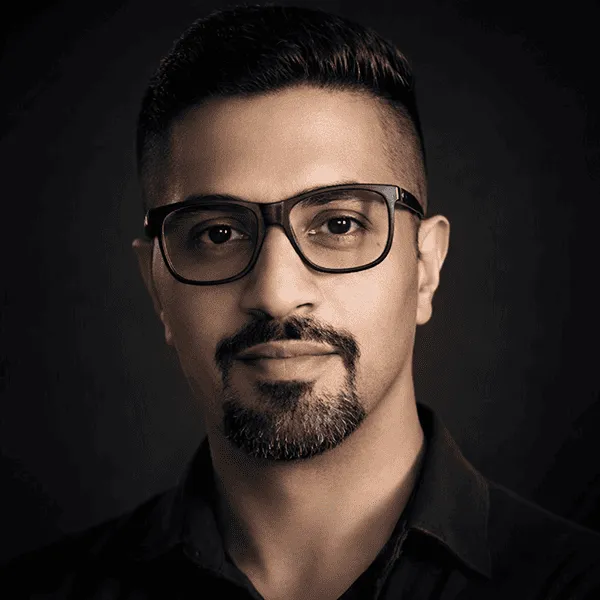
Varun Katyal is the Founder & CEO of Clapboard and a former Creative Director at Ogilvy, with 15+ years of experience across advertising, branded content, and film production. He built Clapboard after seeing firsthand that the industry’s traditional ways of sourcing talent, structuring teams, and delivering creative work were no longer built for the volume, velocity, and complexity of modern content. Clapboard is his answer — a video-first creative operating system that brings together a curated talent marketplace, managed production services, and an AI- and automation-powered layer into a single ecosystem for advertising, branded content, and film. It is designed for a market where brands need content at a scale, speed, and level of specialization that legacy agencies and generic freelance platforms were never built to deliver. The thinking, frameworks, and editorial perspective behind this blog are shaped by Varun’s experience across both the agency world and the emerging platform-led future of creative production. LinkedIn: https://www.linkedin.com/in/varun-katyal-clapboard/
The story of influencer marketing trends 2024 is written in numbers, not narratives. Adoption is no longer a question — it’s a baseline. The latest influencer marketing statistics 2024 show that over 85% of consumer-facing brands now integrate influencer campaigns as a standard line item. Agencies are following suit, with nearly three-quarters reporting influencer-driven work as a core revenue stream, not an experiment. This is not a peripheral tactic; it’s central to the modern marketing stack.
Influencer campaign budgets are expanding, but the growth isn’t uniform. The median annual spend per brand sits just north of $250,000, with a notable uptick among mid-market players and digital-first brands. Enterprise budgets routinely clear the seven-figure mark, but the real movement is among challenger brands—those reallocating spend from paid social and traditional digital into influencer-led creative. The driver is clear: measurable influencer marketing ROI, not vanity metrics.
Industry growth statistics reveal a sector approaching $24 billion in global value for 2024, up nearly 18% year-on-year. This isn’t just inflation or incremental creep. It reflects a structural shift: influencer marketing is now a mature, scalable channel. The most aggressive growth is concentrated in North America and APAC, with EMEA catching up as regulatory clarity improves. Notably, the fastest-growing slice isn’t celebrity macro-influencers but the long tail—micro and nano creators with niche, high-trust audiences.
The verticals driving expansion in influencer campaign budgets are not the usual suspects. Beauty and fashion remain dominant, but financial services, B2B SaaS, and healthcare are posting double-digit increases in influencer spend. These sectors are leveraging influencer credibility to cut through skepticism and regulatory complexity. Meanwhile, emerging categories—like climate tech, telehealth, and next-gen mobility—are using influencer partnerships to shortcut brand awareness cycles and accelerate adoption.
Economic uncertainty isn’t dampening influencer investment; it’s sharpening it. Brands are demanding clearer attribution and more granular reporting. AI-powered tools are enabling tighter creator-brand alignment and campaign optimization. The result: spend is flowing to creators and platforms that can prove incremental value, not just reach. The shift from “influencer as media buy” to “influencer as business driver” is visible in both budget allocation and boardroom conversations.
In summary, the data behind influencer marketing trends 2024 signals a sector that’s professionalized, performance-driven, and increasingly integral to brand strategy. Marketers allocating budget without a clear influencer play are now the exception, not the rule.
Influencer marketing trends 2024 aren’t just another round of recycled tactics. They represent a recalibration of how brands and creators operate at the intersection of content, commerce, and credibility. This isn’t about who’s trending or which platform is hot. It’s about understanding the structural shifts that will decide who stays relevant and who gets left behind. For brands and creators, tracking the latest influencer marketing developments is now a matter of commercial survival, not just creative flair.
2024 is a reset year. The influencer marketing playbook is being rewritten by changes in audience behavior, platform algorithms, and regulatory pressure. Audiences are more skeptical, demanding substance over sizzle. Algorithms are prioritizing authentic engagement and penalizing manufactured virality. Meanwhile, new compliance standards are forcing transparency and accountability. In short, what worked in 2023 will not cut it now—brands can’t afford to coast on inertia.
Failing to adapt to current digital marketing trends 2024 is a strategic risk. The cost of getting influencer campaigns wrong—misaligned messaging, wasted spend, reputational damage—has never been higher. Senior marketers know that effective influencer marketing strategy demands constant recalibration. This year, that means interrogating data, not just following the crowd. It means understanding which metrics matter, which platforms are evolving, and how creators are building trust at scale. Those who track and act on these shifts will outpace competitors and capture market share.
Last year, volume and reach still dominated campaign briefs. In 2024, the emphasis has shifted to measurable outcomes—conversion, retention, and long-term brand alignment. The latest influencer marketing tactics are less about mass exposure and more about precision: micro-communities, niche expertise, and content that drives action, not just awareness. Tech-driven solutions are enabling smarter creator-brand matching and more transparent ROI tracking. The result is a market that rewards those who can prove impact, not just promise it.
For both brands and creators, staying updated on influencer marketing trends 2024 is non-negotiable. The pace of change is unforgiving; what’s innovative today is table stakes tomorrow. That’s why this report takes a practitioner’s lens—examining not just what’s new, but what’s working in the real world. We cut through the noise, focusing on trends that are reshaping the economics and effectiveness of influencer marketing. If you want to build a future-proof influencer marketing strategy, this is where you start.
Influencer marketing trends 2024 are defined by platform dynamics, not blanket strategies. TikTok has seized the crown, commanding nearly 70% of brand preference and a projected $1.32 billion in influencer marketing spend—double its 2022 numbers (Modern Retail and The B2B House, 2024). Instagram, while still powerful, is ceding ground as its algorithm shifts toward pay-to-play, throttling organic reach and forcing brands to rethink how they activate talent. YouTube remains the stronghold for long-form, high-trust content, but its growth is incremental, not explosive.
Emerging players—BeReal, Lemon8, and even Twitch—are being tested by challenger brands, but their impact is niche. Their value lies in hyper-targeted verticals, not mass reach. Senior marketers are already recalibrating budgets to follow platform momentum, not legacy popularity. The result: resource allocation is becoming more surgical, with spend mapped directly to platform-specific audience behaviors and content consumption patterns.
TikTok’s dominance is not just a function of scale. Its algorithm rewards creative risk and rapid iteration, making it fertile ground for micro-influencers—those with 15k to 75k followers—who now deliver 11x higher ROI than traditional marketing (impact.com and BeautyMatter, 2024). The platform’s For You Page remains the best organic discovery engine in social, but volatility is high: what works today rarely works tomorrow. Marketers are responding by favoring agile, modular content strategies and shorter planning cycles.
Instagram, meanwhile, is doubling down on Reels and shopping integrations, but its edge is eroding. Brand campaigns must now work harder to cut through algorithmic noise. The shift toward nano- and micro-influencers is most apparent here, as brands seek authentic engagement over inflated reach. Instagram’s demographic is aging up, and Gen Z’s attention is fragmenting—forcing a rethink on creative tone, content pacing, and measurement.
The leading influencer platforms are rolling out new features at breakneck speed—shoppable video, native affiliate tools, and AI-powered content recommendations. Brands that win in 2024 are those that treat these not as add-ons but as core to campaign architecture. Sponsored digital ads featuring creators are now the most impactful strategy, with 56% of brands citing user-generated content as the top driver for influencer investment (CreatorIQ and Modern Retail, 2024).
Resource allocation is shifting accordingly. The best operators are moving budget away from high-fee celebrity partnerships and toward modular, scalable creator content—built for remixing across paid, owned, and earned channels. This approach leverages the full spectrum of content format trends, from short-form vertical to long-form explainers, mapped to each platform’s unique engagement mechanics.
In summary, social media trends 2024 demand a platform-first mindset. Brands that cling to legacy playbooks will see diminishing returns. The winners will be those who read platform signals early, adapt creative to fit evolving algorithms, and invest where real audience attention lives. The age of the generic influencer campaign is over—precision and platform fluency are now non-negotiable.
In 2024, the performance bar for influencer marketing is set by clarity and commercial impact, not vanity metrics. Brands serious about results are doubling down on influencer campaign KPIs that tie directly to business outcomes. Sales attribution has overtaken reach as the north star. Engagement rates and follower growth are now secondary—useful for diagnostics, not for boardroom reporting. Direct conversion metrics, such as unique promo codes, UTM parameters, affiliate links, and post-purchase surveys, are now standard for tracking sales back to individual influencers (Popular Pays, 2025). These KPIs cut through noise, giving brands a clear read on which creators drive measurable action and which are just filling the feed.
Earned Media Value (EMV) is another KPI gaining traction. It quantifies the value of influencer content compared to paid media, offering a single metric that resonates with finance teams. However, EMV is only as good as the benchmarks and context behind it. In 2024, the most effective brands are blending EMV with hard conversion data, refusing to let one-dimensional reporting shape strategy.
The definition of influencer marketing ROI has matured. It’s no longer a simple equation of spend versus impressions. With influencer marketing offering 11x higher ROI compared to traditional marketing (impact.com, 2024), the stakes for accurate measurement are higher than ever. Leading marketers are triangulating ROI using a mix of tracked sales, EMV, and lifetime value uplift.
Sales remain the primary metric—74% of brands now track them as the main indicator of influencer campaign ROI (Markerly, 2024). But sophisticated teams are layering in customer acquisition cost, retention rates, and even downstream metrics like referral volume. The focus has shifted: ROI is not just about immediate returns but about the compounding value of high-fit creator partnerships over multiple campaigns and cycles.
Performance measurement in influencer marketing trends 2024 is a technical discipline. Manual tracking is obsolete. Brands are deploying influencer analytics tools that integrate directly with ecommerce, CRM, and ad platforms. These tools enable granular attribution—tying each conversion to a specific creator, post, or even content format.
Automated dashboards pull in first-party data from UTM-tagged links, promo codes, and platform APIs. Real-time reporting is the new baseline; lagging, end-of-campaign summaries are no longer acceptable for decision-makers under pressure. The best teams use these analytics not just for reporting, but for active campaign optimisation—adjusting spend, content, and creator mix on the fly to maximise ROI.
Data-driven influencer selection is now the expectation, not a differentiator. Brands are using predictive analytics to forecast creator performance before committing budget. Historical ROI, audience overlap, and content resonance are all modelled in advance. This approach reduces risk and increases the odds of campaign success.
Ongoing optimisation is equally critical. The most effective marketers treat influencer campaigns as living systems: testing creative, swapping out underperformers, and reallocating spend based on real-time data. This is not about chasing every microtrend, but about disciplined, evidence-led iteration.
Despite progress, attribution in influencer marketing remains a battleground. Multi-touch journeys, dark social sharing, and offline conversions all muddy the waters.
Influencer marketing content formats have undergone a fundamental shift. The era of static posts and staged endorsements is over. Today, performance-driven brands are recalibrating their influencer creative strategy to prioritise dynamic, immersive, and above all, authentic content. The battleground is no longer just reach or aesthetic polish—it's relevance, resonance, and realness. Senior marketers who ignore these shifts risk irrelevance.
Short-form video trends are now the backbone of influencer marketing content formats. TikTok, Instagram Reels, and YouTube Shorts have made 15- to 60-second videos the default for discovery and engagement. The appeal is simple: snackable, fast-paced, and algorithm-friendly. But the economics matter just as much as the engagement. Short-form video allows for rapid iteration, A/B testing, and real-time optimisation—an advantage for multi-market campaigns where agility is non-negotiable.
Live video is also on the upswing. It’s unscripted, high-stakes, and demands audience attention in the moment. The result? Higher watch times, more comments, and a tangible sense of urgency. Marketers are leveraging these formats to drive not just awareness but measurable action.
Authentic influencer content is now the cost of entry. Audiences are hyper-attuned to inauthenticity; the days of overproduced ads masquerading as recommendations are numbered. The most effective influencer marketing content formats are those that expose real process—behind-the-scenes footage, honest product trials, and unfiltered opinions. This isn’t just a creative trend; it’s a commercial imperative. Authenticity drives trust, and trust drives conversion.
But this demands a recalibration of how brands collaborate with talent. Strict brand guidelines can stifle the very creativity and candour that make influencer partnerships valuable. The most forward-thinking brands are trading rigid scripts for guardrails, empowering influencers to interpret briefs in their own voice—while still aligning with broader content marketing trends and objectives.
Interactivity is reshaping what effective influencer content looks like. Polls, quizzes, and AR filters are no longer add-ons—they’re core to driving engagement. These formats invite participation, turning passive viewers into active contributors. The data generated offers immediate feedback loops, allowing marketers to refine messaging, segment audiences, and attribute impact more precisely.
Augmented reality deserves special mention. AR try-ons, branded filters, and interactive product demos are collapsing the gap between digital storytelling and real-world experience. For performance marketers, this isn’t a gimmick; it’s a lever for both upper- and lower-funnel results.
The tension between authenticity and brand control is not going away. The solution isn’t to relinquish oversight, but to redefine it. Set clear objectives, articulate non-negotiables, then get out of the way. The best influencer marketing content formats emerge when creators are trusted to adapt the brief to their audience’s expectations and platform norms. The reward: content that feels less like an ad and more like a recommendation from a trusted source.
Ultimately, the brands winning in 2024 are those who treat influencer creative strategy as a living discipline—one that adapts to shifting short-form video trends, prioritises authentic influencer content, and leverages interactivity for measurable business impact. Anything less is just noise.
Influencer collaboration trends in 2024 are defined by a clear shift away from transactional, one-off campaigns. The “one-and-done” model—brief, tactical, and often driven by short-term KPIs—has lost its edge. Brands now see diminishing returns from scattergun activations, especially as audiences grow wise to fleeting, insincere endorsements. Always-on partnerships, by contrast, allow brands and creators to build a shared narrative over time. The result: more authentic integration, higher creative output, and a stronger feedback loop between campaign performance and content evolution.
But this isn’t a simple binary. One-off campaigns can still have utility for product launches or tactical spikes. The real movement, though, is towards hybrid models—ongoing relationships punctuated by high-impact moments. The economics of influencer-brand relationship models are changing: retainer-based agreements replace piecemeal fees, and both parties invest in continuity rather than quick wins.
Long-term influencer partnerships demand a different mindset. Brands can’t treat creators as interchangeable media slots. The most effective relationships now start with mutual strategic planning: aligning on audience fit, messaging priorities, and content cadence. Co-creation becomes the default, not the exception. Influencers are brought in upstream, shaping briefs and contributing insights from their audience data—not just executing someone else’s vision.
The challenge is in balancing creative freedom with brand consistency. Brands that over-police messaging stifle authenticity, eroding trust with both influencer and audience. The best long-term partnerships are built on clear guardrails—brand values, non-negotiable claims, legal requirements—but leave room for the creator’s voice and style. This approach doesn’t just drive better work; it surfaces new creative territory that a brand’s in-house team might never have reached.
The commercial advantages of always-on partnerships are tangible. Consistency breeds audience trust: repeated, credible advocacy outperforms sporadic, unfamiliar endorsements. Campaign performance data from ongoing collaborations feeds directly into creative optimisation, enabling rapid iteration on content formats, messaging, and distribution tactics. Brands can test, learn, and scale in real time—an impossibility with one-off deals.
There are operational challenges. Long-term influencer partnerships require robust partnership strategies: clear contracts, transparent reporting, and agreed escalation paths for creative disputes. Brands must also manage risk—vetting partners for alignment and resilience, not just reach. But the payoff is clear: a well-managed, ongoing influencer-brand relationship model delivers more reliable ROI, deeper audience engagement, and a competitive edge in a crowded digital landscape.
In 2024, the brands winning with influencer collaboration trends are those treating creators as strategic partners, not just channels. The future is always-on, co-created, and built for sustained impact.
The narrative of influencer marketing trends 2024 is no longer one-size-fits-all. B2B and B2C sectors are moving on sharply divergent tracks, shaped by the fundamentals of their audiences, buying cycles, and commercial imperatives. For practitioners, understanding these differences isn’t academic—it’s operational. Get it wrong, and you waste budget on the wrong voices, wrong formats, and wrong metrics. Get it right, and influencer spend becomes a force multiplier for your brand’s credibility and pipeline.
B2B influencer strategies in 2024 are defined by selectivity and substance. The days of chasing reach for its own sake are over. B2B buyers expect expertise, not entertainment. The most effective campaigns now revolve around thought leaders—practitioners, analysts, and category experts who command trust within tight professional networks. Their content is rarely glossy; it’s educational, often long-form, and designed to shortcut research cycles or de-risk complex decisions.
Audience targeting in B2B is surgical. The goal is to influence small, high-value buying groups—think five-figure SaaS contracts or enterprise tech rollouts. This means influencer content must map to specific funnel stages, from awareness through to late-stage validation. Measurement follows suit. Metrics shift from impressions and likes to qualified leads, demo requests, and pipeline attribution. If you’re not tracking the commercial impact, you’re not running a B2B influencer program—you’re running a vanity project.
B2C influencer campaigns in 2024 are doubling down on agility and cultural relevance. The playbook is built on volume, speed, and emotional resonance. Micro and nano influencers are in demand for their perceived authenticity and niche audience access, but the creative bar is set higher. Formats are short, punchy, and optimised for mobile—think UGC-style videos, ephemeral stories, and reactive trend-jacking.
Decision-making in B2C is fast and emotionally charged. The influencer’s job is to spark desire and drive action, often within a single scroll. Measurement remains conversion-focused—sales lift, promo code redemptions, and share of voice. But brands are also tracking sentiment and community engagement as proxies for long-term brand lift. In B2C, scale is a weapon, but only if it’s paired with creative discipline and relentless optimisation.
The divergence between B2B and B2C isn’t just tactical—it’s structural. B2B influencer strategies demand depth, credibility, and a focus on business outcomes. B2C influencer campaigns prioritise cultural agility, creative innovation, and rapid-fire conversion. For marketers, the question is not “which influencer has the biggest following?” but “which model aligns with our audience’s decision journey and our commercial objectives?”
Practitioners who treat influencer marketing as a plug-and-play channel are missing the point. The mechanics of influence in 2024 are sector-specific. In B2B, you’re building trust over time with a select few. In B2C, you’re capturing attention in the moment at scale. The strategic split is only going to widen as both sectors mature. For those who want to go deeper, see our analysis of B2B marketing trends and industry-specific influencer tactics.
Trust in influencer marketing is no longer a given. In 2024, the audience is more discerning, and consumer trust influencer marketing is built on a knife-edge of authenticity and transparency. Followers are quick to spot inauthentic endorsements or forced partnerships. The influencers who command real authority are those who consistently align with their stated values and demonstrate genuine product use. The days of blanket trust are over; now, it’s about earned credibility, not just reach.
The influencer impact on purchase decisions remains significant, but it’s evolved. Audiences aren’t just buying because a creator says so—they’re buying because the recommendation fits their context, solves a real problem, or aligns with their aspirations. Influencer marketing trends 2024 show a pivot toward niche expertise and micro-communities, where creators wield targeted influence. Purchase decision drivers are now rooted in relevance, not just visibility. This means creators who understand their audience’s needs—and brands who select those creators wisely—see the strongest conversion.
The feedback loop has tightened. In 2024, brand-influencer-audience dynamics are more transparent and immediate. Social platforms amplify audience reactions, and brands can’t afford to ignore the signals. Smart marketers monitor sentiment in real time, using feedback to refine messaging, creative, and even product features. But this loop cuts both ways: misalignment or tone-deaf content can trigger backlash just as quickly as it can drive sales. The brands and creators who thrive are those who treat the audience as collaborators, not targets.
The risks of influencer marketing are more pronounced when authenticity is sacrificed for reach or when value alignment is ignored. Audiences punish inauthenticity with disengagement or public criticism, eroding both brand and influencer equity. The challenge for 2024 is to build audience trust not through spectacle, but through substance—by delivering relevant, transparent, and credible recommendations that stand up to scrutiny.
In the end, influencer marketing trends 2024 are forcing a recalibration. Trust and purchase behavior are shaped not by the volume of endorsements, but by the quality of the connection between creator, brand, and consumer. Those who get it right will set the pace for the next era of influence.
Influencer marketing trends 2024 have set the stage for a new era—one that will be defined by sharper technology, smarter data, and a decisive shift toward value-driven narratives. The days of spray-and-pray influencer campaigns are numbered. The next phase will reward brands that operate with discipline, agility, and a clear point of view on both platform mechanics and cultural relevance.
The future of influencer marketing will be governed by two forces: precision and authenticity. Audiences are more sophisticated; they can spot scripted endorsements in seconds. Trust will become the primary currency, making long-term creator partnerships more valuable than transient reach. Expect brands to move away from one-off activations and toward integrated, always-on influencer ecosystems that blur the lines between creator, brand, and community.
On the commercial side, performance accountability will tighten. Vanity metrics will fade. Brands will demand proof of incremental impact—be it new customer acquisition, brand lift, or direct conversion. As a result, influencer marketing predictions point toward a greater emphasis on closed-loop measurement and direct attribution, not just impressions and likes.
AI-driven content optimisation is already reshaping how brands brief, select, and evaluate creators. In the near future, expect AI to automate talent discovery, forecast campaign outcomes, and even generate synthetic influencer content at scale. This isn’t about replacing human creativity; it’s about removing friction and bias from the process, letting brands focus on strategic value rather than admin overhead.
AR and VR will move from novelty to necessity as platforms invest in immersive formats. Influencers will create shoppable experiences, host virtual events, and deliver interactive tutorials that collapse the gap between inspiration and transaction. Advanced analytics will underpin all of this, providing granular insights into audience behaviour, content resonance, and ROI in real time.
Algorithmic changes will continue to disrupt established playbooks. Platforms are prioritising original content and authentic engagement over recycled trends. Brands must adapt by empowering creators to experiment, iterate, and take risks. The era of rigid brand guidelines is over; flexibility and creative trust will be rewarded with deeper audience loyalty and sustained relevance.
Sustainability and social responsibility are no longer optional add-ons. Brands that ignore these imperatives risk irrelevance. Value-driven campaigns—those that align with cultural moments or champion social causes—will outperform transactional, product-first content. This is not about purpose-washing; it’s about building genuine connections that stand up to scrutiny.
To future-proof your influencer marketing strategy, invest in infrastructure that supports rapid learning and adaptation. Build modular campaign frameworks. Use advanced analytics to identify emerging talent before they peak. And above all, prioritise substance over spectacle—because in the next wave, only the brands that deliver real value will cut through.
The brands that will win are those that treat influencer marketing as a living discipline, not a static channel. Keep your finger on the pulse of platform innovation and audience behaviour. Test relentlessly, measure what matters, and refine your approach with every campaign cycle. The future of influencer marketing belongs to those who combine creative intuition with commercial discipline—and who never mistake movement for progress.
Influencer marketing in 2024 is not a game of surface-level reach or one-off partnerships. The trends are clear: brands and creators who thrive are those who treat influencer relationships as strategic assets, not tactical add-ons. The report underscores that the days of “spray and pray” are over—what’s winning now is precision, partnership, and proof.
Adapting to evolving influencer marketing trends is not optional. It’s fundamental. The marketplace is saturated, and audiences are more discerning than ever. Superficial tactics are filtered out quickly. Brands that succeed are those that embed influencer collaboration trends into their core influencer marketing strategy, building long-term value instead of chasing fleeting metrics. This is not about chasing the next shiny platform. It’s about understanding the shifting mechanics of influence, from micro-communities to cross-platform storytelling, and applying these insights with discipline.
Data is the backbone of effective influencer marketing predictions. The report makes it clear: intuition is no substitute for evidence. Performance measurement is no longer a post-campaign afterthought. It’s a continuous loop, shaping creative direction, spend allocation, and partnership selection in real time. Brands that operationalize data—at the briefing stage, during content creation, and throughout distribution—are the ones that turn influencer investment into business outcomes. This means going beyond vanity metrics, interrogating the numbers, and building feedback loops that inform every decision.
The through-line across all digital marketing trends 2024 is trust. Authenticity isn’t a buzzword; it’s a business requirement. Audiences are more skeptical and better informed. They spot inauthenticity instantly, and they punish it with indifference. The only way to build audience trust is through genuine creator partnerships, transparent messaging, and content that respects both the creator’s voice and the audience’s intelligence. Brands and creators who understand this dynamic—and operationalize it—will outperform the market.
In summary, influencer marketing in 2024 is defined by strategic alignment, data-driven decision making, and a relentless focus on authenticity. The landscape will keep shifting, but the fundamentals hold: adapt fast, measure what matters, and never compromise on trust. Those who internalize these lessons will set the pace for the year ahead.
Influencer marketing in 2024 is defined by three shifts: a move to performance-based partnerships, the rise of specialist micro-creators, and a pivot towards video-first content. Brands are demanding measurable ROI, prioritising creators with proven engagement in specific niches, and leveraging short-form and live video to cut through algorithmic noise.
Budgets for influencer campaigns are up, but spend is more scrutinised. Marketers are reallocating funds from broad, celebrity-driven activations to targeted, multi-creator programs. There’s a clear preference for always-on partnerships and campaign structures that tie compensation to concrete outcomes, not just reach or impressions.
Instagram and TikTok remain dominant, but YouTube Shorts and LinkedIn are gaining traction for different verticals. TikTok leads for reach and cultural impact, while Instagram delivers on commerce integrations. YouTube Shorts is attracting performance-driven campaigns, and LinkedIn is emerging for B2B influencer plays.
Effective measurement in 2024 goes beyond vanity metrics. Brands are tracking attributable conversions, content saves and shares, click-through rates, and retention from influencer-driven traffic. Engagement rate still matters, but only as part of a broader effectiveness stack tied to business objectives.
Video is now the default, not the exception. Short-form, vertical, and interactive formats—think live streams, polls, and Q&A—drive higher engagement and platform preference. Static posts are supplementary at best. The emphasis is on authentic, context-aware storytelling that feels native to each channel.
Long-term collaborations build credibility and consistency. They enable better creative alignment, deeper audience trust, and more reliable performance data. Brands see higher ROI as influencers become genuine advocates, not just paid promoters. The days of one-off, transactional campaigns are fading fast.
Consumer trust is the linchpin of influencer marketing effectiveness. Audiences are savvier and quick to spot inauthenticity. When trust is earned, influencers can drive consideration and purchase intent far more efficiently than traditional ads. The right partnership directly shapes buying behaviour.



Clapboard at a Glance – A Video-First Creative EcosystemAt its core, Clapboard is a video-first creative platform and creative services marketplace that supports end-to-end production. It is built specifically for advertising, branded content, and film—where stakes are high, teams are complex, and outcomes need to be predictable.Traditional platforms treat creative work as isolated tasks. Clapboard is designed as an ecosystem: a managed marketplace where discovery, collaboration, production workflows, and delivery coexist in one environment. This structure better reflects the reality of modern creative production, where strategy, creative, production, post-production, and performance are tightly interlinked.As an advertising and film production platform, Clapboard supports:Brand campaigns and integrated advertisingBranded content and social videoProduct, launch, and explainer videosFilm, episodic content, and long-form storytellingInstead of forcing marketers or producers to choose between agencies, in-house teams, or scattered freelancers, Clapboard operates as a hybrid ecosystem. It combines a curated talent marketplace, managed creative services, and an AI + automation layer that accelerates workflows while preserving creative judgment.In other words: Clapboard is infrastructure for modern creative production, not just another place to post a brief. The Problem Clapboard Solves in Modern Creative ProductionThe creative industry has evolved faster than its infrastructure. Media channels have multiplied, content volume has exploded, and expectations for speed and personalization keep rising. Yet most systems for hiring creatives, running campaigns, and producing video remain stuck in legacy models.Clapboard exists to address four core creative production challenges that consistently slow down serious marketing and storytelling work.Fragmentation Between Freelancers, Agencies, and Production HousesCreative production today is fragmented acro

The Problem for Marketers & Brand TeamsFinding Reliable Creative Talent Is Slow and UncertainFor marketers and brand teams, the first visible friction is simply trying to hire creative talent that can consistently deliver. The internet is full of portfolios, reels, and profiles. Yet discovering reliable advertising creatives remains slow and uncertain.Discovery itself takes time. Marketers scroll through platforms, ask for referrals, post briefs, and sift through applications. Even with sophisticated search filters, there is no simple way to understand who has the right experience, who works well in teams, or who can operate at the pace and rigor modern campaigns demand.Quality is inconsistent, not because talent is lacking, but because the context around that talent is missing. A beautiful case study says little about how smoothly the project ran, how many revisions it required, or how the creative collaboration actually felt. Past work is not a guaranteed indicator of future delivery, especially when that work was produced under different conditions, with different teammates, or with heavy agency support in the background.Marketers are forced to rely on proxies—visual polish, brand logos on portfolios, testimonials written once in a different context. These signals are weak predictors when you need a specific output, at a specific quality level, with clear constraints on time and budget.The reality is that most marketing leaders don’t just need to hire creative talent. They need access to reliable creative teams that can handle complex scopes and adapt to evolving briefs. Yet the market still presents talent as individuals, leaving brand teams to stitch together their own ad hoc groups with uncertain outcomes.Traditional Agencies Are Expensive, Slow, and OpaqueIn response to this uncertainty, many marketers fall back on traditional agencies. Agencies promise full-service coverage: strategy, creative, production, and account management under one roof. But READ FULL ARTICLE

Video Is No Longer “One Service” — It Is the Spine of Brand CommunicationHistorically, “video” appeared as a single line in a scope of work or rate card: one of many services alongside design, copywriting, or social media management. That framing is now obsolete.Today, a single film can power an entire video content ecosystem:A hero brand film becomes TV, OTT, and digital ads.Those ads are cut down into short-form social content, stories, and reels.Behind-the-scenes footage becomes recruitment films and culture assets.Still frames pulled from footage become campaign photography.Scripts and narratives are re-used across web, CRM, and sales decks.Integrated video campaigns are now the default. Brand teams increasingly build backwards from a core film concept: first define what the main piece of video must achieve, then derive all other forms from that spine.In this model, video influences how the brand is perceived at every touchpoint. The look, sound, and rhythm of the film define what “on-brand” means. Visual identity systems, tone of voice, and even product storytelling often follow decisions first made in video.Thinking of video as a single deliverable hides its true role: it is the structural backbone of brand communication, not just another asset. How Most Marketplaces Get Video WrongVideo Treated as a Line Item, Not a SystemMost freelance and creative marketplaces were not built for video. They were originally optimized for graphic design, static content, or one-to-one gigs. Video was added later as another category in a long list of services.That leads to predictable freelance marketplace limitations when it comes to film and content production:“Video” buried in service menusVideo is often just one checkbox among dozens. There is little recognition that an ad film is fundamentally different from a logo design or blog post in terms of complexity, risk, and orchestration.Same workflow assumed for design, copy, and filmMost platforms apply the same chatREAD FULL ARTICLE
What “Human + Agent Orchestration” Means at ClapboardClapboard is built on a simple but important shift in mental model: stop thinking in terms of “features” and “tools,” and start thinking in terms of teams and pipelines.In this model, AI agents and humans work as one system. Every project is a flow of decisions and tasks. The question at each step is: Who is the right entity to handle this—human or agent—and when?This is what we mean by AI agent orchestration:Tasks are routed to the right actor at the right moment—sometimes a specialized agent, sometimes a producer, sometimes a creative director.Agents handle the structured, repeatable, data-heavy work, such as breakdowns, metadata, estimation, and workflow automation.Humans handle the subjective, contextual, and relational work, such as direction, negotiation, and final calls.Clapboard is the conductor of this system. Rather than being “an AI tool,” it functions as a creative operating system that coordinates human and agent participation end-to-end—from idea and script all the way to production and post.In practice, that means:Every brief, script, or campaign that enters Clapboard is immediately interpreted by agents for structure and intent.Those interpretations inform cost ranges, team shapes, timelines, and risk signals.Humans see the right information at the right time to make better decisions, instead of digging through fragmented files and messages.Workflow automations, powered by platforms like Make.com and n8n, take over the repetitive coordination so producers and creatives can stay focused on the work.Human + agent orchestration at Clapboard is not about cherry-picking tasks to “AI-ify.” It’s about designing the entire creative pipeline so that humans and agents function as a super-team. What AI Agents Handle on ClapboardOn Clapboard, AI agents are not generic chatbots; they are embedded workers with specific responsibilities across the creative lifecycREAD FULL ARTICLE

Why Traditional Freelance Marketplaces Fall Short for Creative ProductionTraditional freelance platforms were built around the gig economy, not around creative production. That distinction matters. Production is not “a series of tasks” — it is a pipeline where every decision upstream affects what’s possible downstream.Most of the common problems with freelance platforms in creative work come from this structural mismatch.Built for transactional gigs, not collaborative projectsGig platforms are optimised for one-to-one engagements: a logo, a banner, an edit, a script. They assume work is atomised and independent. But film and video production is collaborative by default: strategy, creative, pre-production, production, and post are all tightly connected.On generalist marketplaces, you typically have to:Source each role separately (director, editor, animator, colorist, etc.)Manually manage handovers between freelancersResolve conflicts in style, timelines, and expectations yourselfThe result is friction and inconsistency. What looks like a saving on day rates turns into higher project cost in coordination, rework, and lost time.Individual-first, not team-firstThe core unit on most freelance sites is the individual freelancer. That works for isolated tasks; it breaks for productions that require cohesive creative direction, shared context, and aligned standards.Individual-first systems create gig economy limitations for creatives and clients alike:Freelancers are incentivised to optimise for their own scope, not the entire project outcomeClients must “play producer” without internal production expertiseThere is no reliable way to hire intact, proven teams that already collaborate wellCreative production works best when you build creative teams, not disconnected individuals. Team dynamics and shared history matter as much as individual portfolios.Little accountability beyond task completionTypical freelance marketplaces define success as task delivery: the file was uploaREAD FULL ARTICLE



LEAVE A COMMENT
Your email address will not be published.