- HOME
- FOR CLIENTS
- FOR FREELANCERS
- LOGIN
BLOG
New user? Create account

Varun Katyal is the Founder & CEO of Clapboard and a former Creative Director at Ogilvy, with 15+ years of experience across advertising, branded content, and film production. He built Clapboard after seeing firsthand that the industry’s traditional ways of sourcing talent, structuring teams, and delivering creative work were no longer built for the volume, velocity, and complexity of modern content. Clapboard is his answer — a video-first creative operating system that brings together a curated talent marketplace, managed production services, and an AI- and automation-powered layer into a single ecosystem for advertising, branded content, and film. It is designed for a market where brands need content at a scale, speed, and level of specialization that legacy agencies and generic freelance platforms were never built to deliver. The thinking, frameworks, and editorial perspective behind this blog are shaped by Varun’s experience across both the agency world and the emerging platform-led future of creative production. LinkedIn: https://www.linkedin.com/in/varun-katyal-clapboard/
In our relentless pursuit of brand perfection and impeccable communication, it's easy to overlook the tools that help us bring visions to life. One such unsung hero is the Creative Brief—a document, a dialogue, and a direction. Let's embark on a journey to truly comprehend its essence and its unparalleled significance in the grand tapestry of advertising and marketing.
At its most basic, a Creative Brief is a written document that outlines the objectives and expectations of a marketing or advertising campaign. But this description barely scratches the surface. Beneath its structured facade lies a narrative, waiting to be unraveled—a story of the brand, its aspirations, its audience, and the world it seeks to impact.
While many view it as a mere formality, an effective Creative Brief goes beyond just ticking boxes. It encapsulates the heartbeat of a campaign. Think of it as the DNA, containing all the necessary information to birth an idea that's not just creative but also strategically aligned with the brand's ethos.
Drawing insights from a detailed guide by Visme, it's evident that the Creative Brief isn't just about what the brand wants to convey, but also about how it wishes to be perceived, ensuring that the messaging resonates with the intended audience.
To truly grasp the significance of the Creative Brief, we must view it through the lens of the challenges it addresses and the bridges it builds.
One of the quintessential challenges in the advertising world is ensuring seamless communication between clients and creative teams. The client, rightfully so, is deeply attached to their brand and has a vision for it. The creative team, bursting with ideas, seeks to translate this vision into tangible campaigns. The Creative Brief serves as the bridge, ensuring both parties are in sync, speaking the same language, and aligned in purpose.
As highlighted in the Visme article, without this critical bridge, projects are prone to extended timelines, incessant reviews, and a potential disconnect between the envisioned and executed idea.
Contrary to popular belief, creativity doesn't always stem from ambiguity. More often than not, it thrives on clarity. By clearly defining the problem, the target audience, the brand's unique selling proposition, and other essential elements, the Creative Brief offers a clear playing field. This clarity becomes the springboard from which ideas leap, ensuring they're not just creative but also relevant.
Time, in the marketing world, is often of the essence. With rapidly changing trends and fleeting consumer attention spans, speed is crucial. A well-crafted Creative Brief, by offering clarity, ensures that the creative process is streamlined. It reduces the back-and-forth, minimizes the need for multiple revisions, and ensures that the final output aligns closely with the brand's expectations, thus accelerating the project's lifecycle.
At the end of the day, every brand seeks a creative solution that stands out, resonates, and delivers results. A clear and concise Creative Brief serves as the catalyst, inspiring creative teams to ideate solutions that are not just out-of-the-box but also strategically aligned, ensuring the perfect blend of creativity and effectiveness.
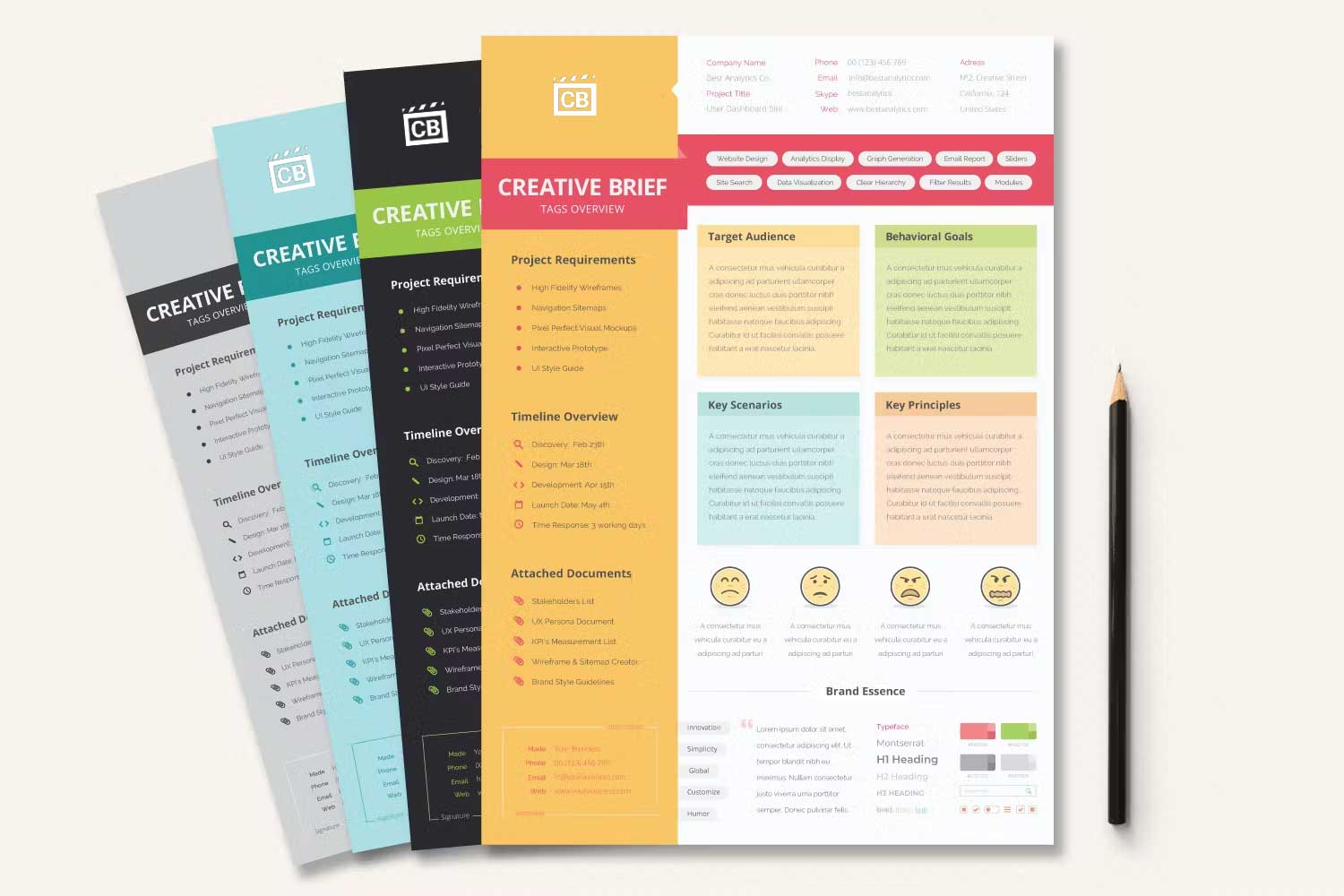
The art of penning an impeccable Creative Brief rests on the backbone of pertinent questions. These questions not only pave the path for clarity but also encapsulate the essence of the brand's needs, expectations, and objectives. While the process might seem daunting, approaching it with a systematic mindset can transform it from an administrative chore to a strategic brainstorming session.
Drawing inspiration from the insights shared on Hubspot, the crux of a Creative Brief lies in its ability to set clear objectives and goals based on initial dialogues. Let's delve deeper into these guiding questions that serve as the fulcrum of any effective Creative Brief.
Before we venture into solutions, it's paramount to have a crystal clear understanding of the problem. What challenges is the brand facing? Is it a dwindling market share, a changing consumer perception, or perhaps a need to break into a new market segment? Clearly articulating the problem sets the stage for everything that follows.
Understanding whom you're speaking to is half the battle won. Dive deep into the psyche of your audience. Who are they? What are their aspirations, fears, and needs? By profiling your target demographic, you ensure that your messaging resonates with the very heart of your audience.
While the initial problem statement offers a bird's eye view, it's essential to delve deeper. Why does this problem exist? Are there underlying market trends, shifts in consumer behavior, or competitive dynamics at play? By understanding the root cause, you position yourself to craft solutions that are not just topical but transformational.
Every brand, product, or service has a unique selling proposition (USP). How do you wish your offering to be perceived vis-à-vis competitors? Is it the premium choice, the value-for-money option, or perhaps the innovative disruptor? Positioning your offering dictates the tonality of the entire campaign.
While emotions play a pivotal role in decision-making, rational reasons underpin the choice. List down tangible benefits, features, or differentiators that make your offering compelling. These form the bedrock of your messaging, ensuring credibility and trustworthiness.
Language is more than just words; it's the embodiment of brand ethos. Whether it's youthful and vibrant, formal and authoritative, or quirky and offbeat, the language sets the mood. Ensure that the language resonates with the target audience and is consistent with the brand's voice.
Every communication seeks a response. Whether it's making a purchase, signing up for a newsletter, or simply driving awareness, your CTA should be compelling and clear. It should inspire action while being seamlessly woven into the narrative.
From awareness to consideration, preference, purchase, and advocacy, mapping the buyer's journey offers insights into their mindset at each stage. Tailoring your communication to resonate with these stages ensures effectiveness and relevance.
In today's fragmented media landscape, the choice of medium is as crucial as the message itself. Whether it's a viral video for social media, a poignant print ad, or a podcast, understanding where your audience spends their time enhances reach and impact.
Every campaign should have clear, Specific, Measurable, Achievable, Relevant, and Time-bound goals. Whether it's driving a certain number of leads, achieving a specific click-through rate, or simply generating buzz, SMART goals offer clarity and a metric for success.
Every brand has certain tenets—values, ethos, or guidelines—that are sacrosanct. Whether it's a particular color palette, a tagline, or a brand mascot, listing these non-negotiables ensures that the creative output remains true to the brand's identity.
Crafting a compelling Creative Brief is both an art and a science. By addressing these critical questions, not only do we pave the path for creative brilliance but also ensure alignment with the brand's vision, ensuring campaigns that resonate, captivate, and drive results.
Dive into any significant endeavor without a roadmap, and the journey becomes fraught with detours, misunderstandings, and missed landmarks. Creative projects, with their multifaceted intricacies, are no different. As delineated by Hubspot, a creative brief acts as this indispensable roadmap, steering a project seamlessly from inception to fruition. Yet, it's vital to note that not all projects are identical. Different endeavors necessitate specialized creative briefs tailored to their unique demands. Let's navigate through the various types of creative briefs, each tailored for specific domains.
Marketing is the linchpin that connects a brand to its audience. With shifting landscapes and dynamic markets, marketing creative briefs often cater to a wide spectrum of campaigns - from product launches to brand revamps.
Key Elements:
Objective: Whether it's driving sales, building brand recall, or carving a niche, this brief begins by outlining a clear goal.
Target Audience: Detailing out the demographic and psychographic profiles ensures precision in communication.
Tone & Voice: The personality of the brand shines through, be it playful, formal, or avant-garde.
Channels of Distribution: Whether it's a social media blitz or a guerrilla marketing tactic, this specifies the platforms to target.
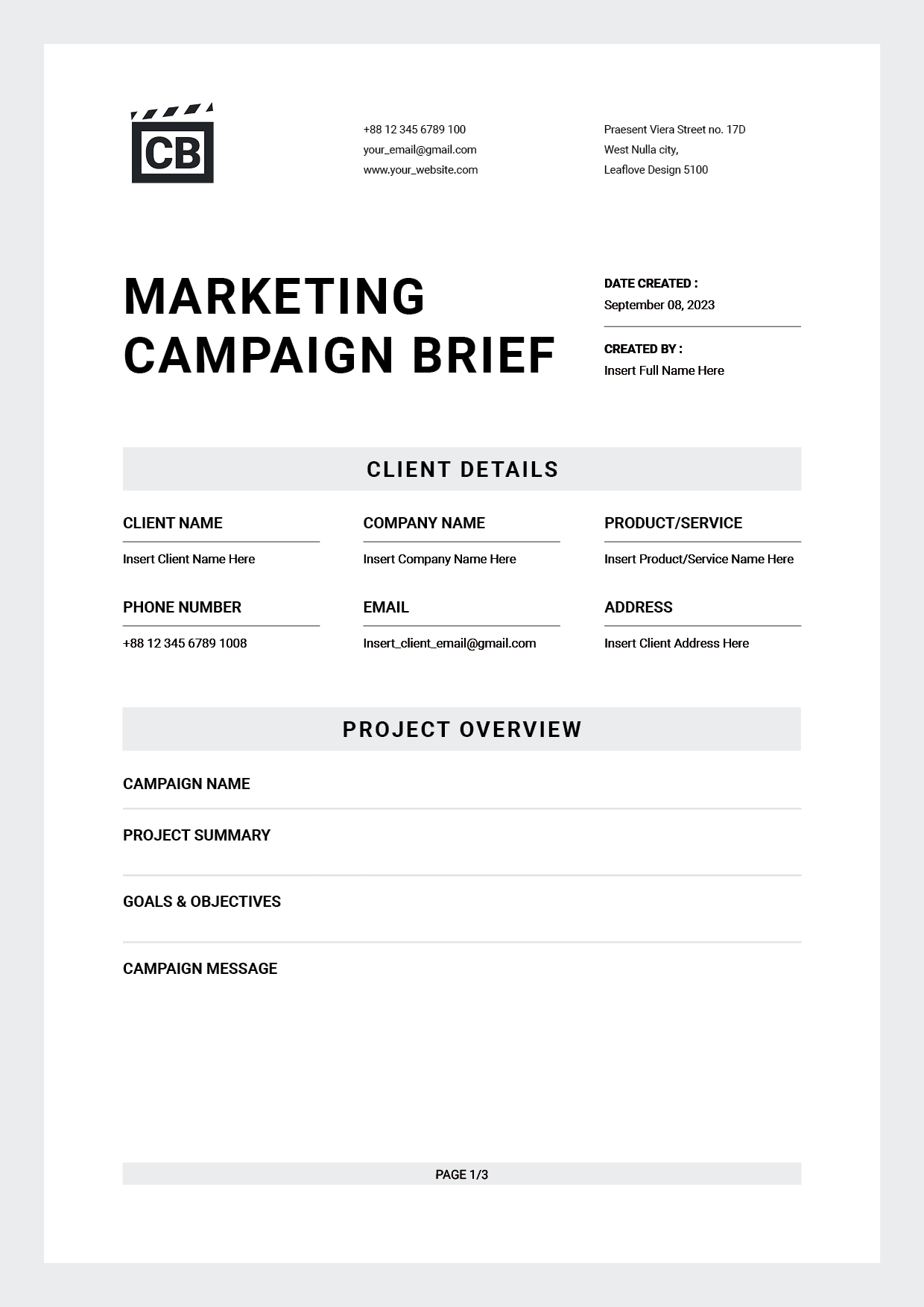
When design meets functionality, products that redefine markets are born. These briefs are the blueprint for innovation, detailing out features, aesthetics, and user experiences.
Key Elements:
Product Vision: The overarching idea or the problem the product intends to solve.
User Personas: Detailed descriptions of potential users, ensuring the product meets their needs and expectations.
Design Aesthetics: Color schemes, forms, and ergonomic details come alive here.
Functionality: A breakdown of features, specifications, and user interactions.
Advertising has the power to captivate, resonate, and drive action. These briefs are the crux of campaigns, be it for television, print, or digital mediums.
Key Elements:
Campaign Goal: Whether it's brand awareness, lead generation, or sales conversions, the desired outcome is clearly laid out.
Creative Concept: The core idea that forms the backbone of the campaign.
Message & Tone: What the campaign intends to communicate and the tonality it adopts.
Media Mix: Deciphering the perfect blend of media channels to maximize reach and impact.
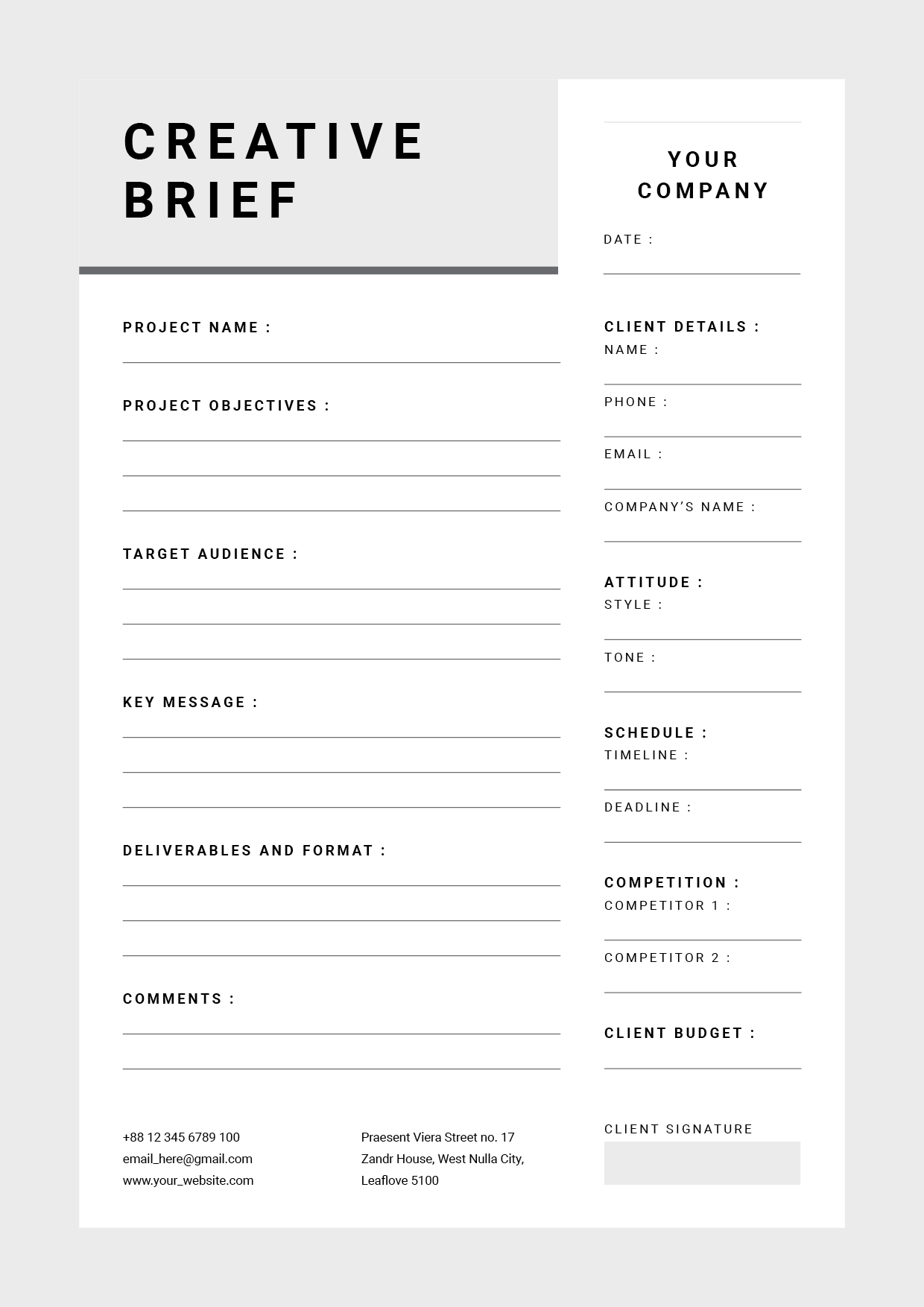
In a world dominated by screens, video content reigns supreme. From explainer videos to cinematic commercials, these briefs guide the visual and auditory narrative.
Key Elements:
Purpose & Objective: The primary intent behind the video, be it educating, entertaining, or persuading.
Storyboard & Script: The narrative arc, capturing scenes, dialogues, and transitions.
Visual & Auditory Elements: Decisions on animations, characters, background scores, and voiceovers.
Distribution Channels: Platforms where the video will be hosted or promoted, from YouTube to television or OTT platforms.
In an era of digitization, a brand's website is its digital storefront. These briefs are instrumental in crafting websites that are not only visually appealing but also user-friendly and functional.
Key Elements:
Website Purpose: Clearly outlining whether it's an e-commerce platform, a blog, a portfolio, or an informational site.
User Experience (UX) & User Interface (UI): Crafting seamless navigation paths and intuitive interfaces.
Design Elements: Typography, color palettes, and visual hierarchies that align with the brand's identity.
Content & Structure: Deciding on content types, page structures, and interactive elements.
The diversity of creative briefs, as we see, is a testament to the multifaceted nature of the creative world. Each brief, tailor-made for its domain, ensures alignment of vision, objectives, and execution. It serves as a compass, guiding all stakeholders from the haze of ideation to the clarity of a finished project. Whether you're an advertiser, a marketer, a designer, or a digital maven, the right creative brief is your beacon to success.
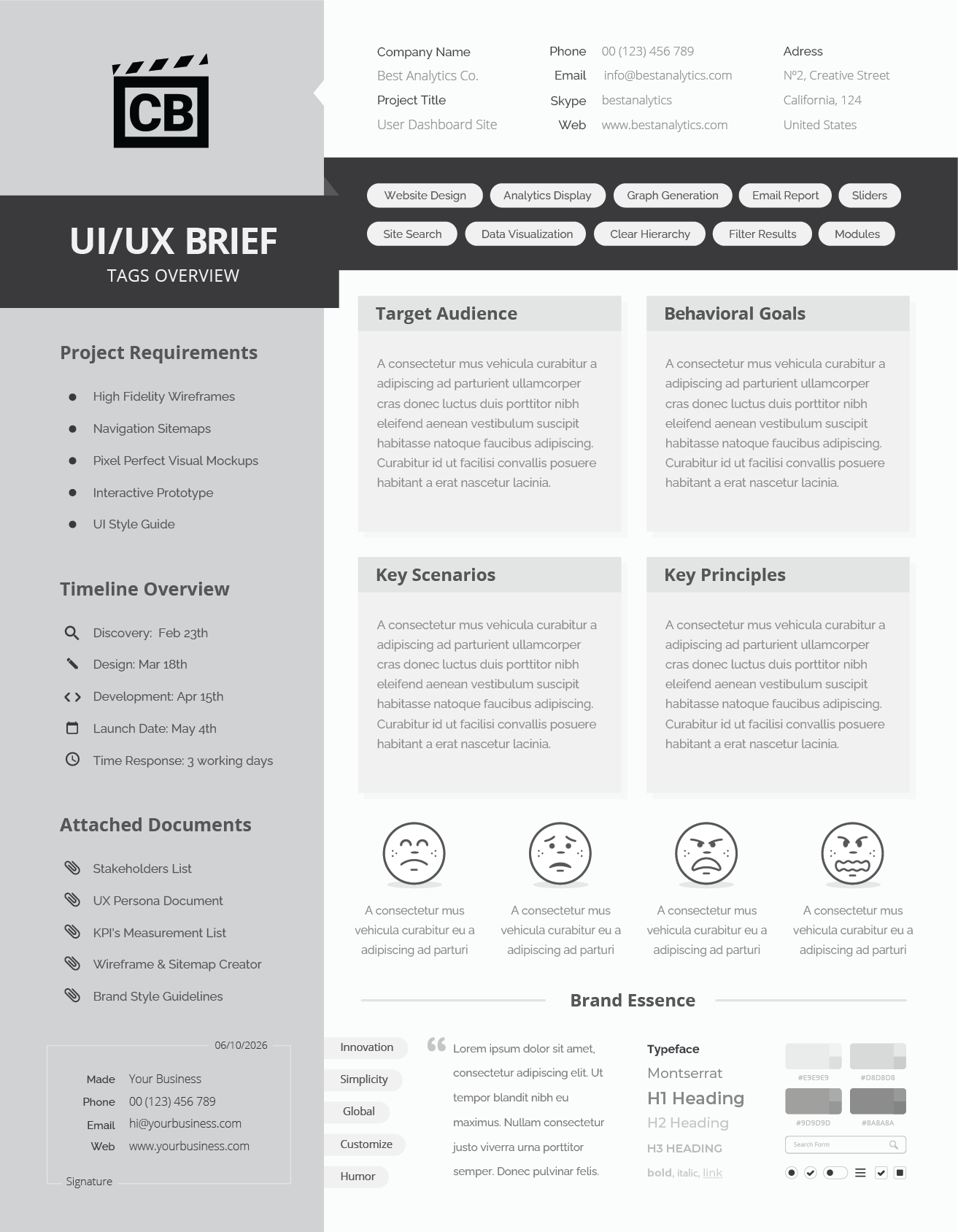
Navigating the maze of creativity often requires a clear-cut pathway, and that's precisely what a well-crafted creative brief provides. But how do you ensure that this document, designed to guide, inspire, and inform, is at its absolute best? As we delve into the world of creative briefs, understanding and employing the best practices can make a world of difference. Here's a trifecta of principles to ensure your creative brief is nothing short of exceptional.
In an age of information overload, the power of concise content cannot be overstated. A creative brief is not a novella but a guide - sharp, to the point, and easily comprehensible.
Clarity: A concise brief reduces ambiguities, ensuring all stakeholders are aligned with the project's vision.
Engagement: In the fast-paced world of advertising and marketing, time is of the essence. A brief that captures essence without verbosity is more likely to be read and remembered.
Efficiency: Removing the fluff and focusing on the essentials means quicker decision-making and a streamlined execution process.
Bullet Points & Subheaders: Organize information in a structured manner, making it easier to skim and grasp.
Avoid Jargon: Use simple language that's universally understood, avoiding industry-specific terminologies that might alienate some stakeholders.
Edit & Revise: Once the first draft is complete, revisit to remove redundancies and tighten the narrative.
While a brief needs to be concise, it shouldn't be vague. The key is to provide clear, specific information that paints a vivid picture without overwhelming the reader.
Avoid Misunderstandings: Ambiguities can lead to errors, misaligned visions, and wasted resources. Being specific ensures everyone is on the same page.
Sets Clear Expectations: With defined boundaries and clear directives, the creative team knows exactly what's expected, fostering efficiency.
Facilitates Measurement: Specific goals and directives allow for better tracking and evaluation of the project's success post-completion.
Use Real Examples: Instead of saying "make it visually appealing", perhaps reference a particular style or provide samples.
Define Terminologies: If you need to use technical terms, ensure there's a brief definition accompanying them.
Use Numbers: Instead of saying "increase engagement", specify "aim for a 15% increase in user engagement over the next quarter".
We're in a digital age, and the way we craft, share, and revise creative briefs should reflect that. Making your creative brief digital ensures accessibility, ease of updates, and fosters collaboration.
Accessibility: With cloud storage, team members can access the brief anytime, anywhere, ensuring continuity in work, even remotely.
Collaboration: Platforms like Google Docs or Trello allow multiple stakeholders to view, comment, and edit in real-time, fostering collaborative efforts.
Environmentally Friendly: Going digital reduces the need for paper, playing a small part in conserving our environment.
Use Collaborative Platforms: Tools like Notion, Asana, or Slack can help organize the creative process, with the brief acting as the central document.
Maintain Version Control: Ensure that as updates are made, older versions are archived, avoiding confusion.
Integrate Multimedia: One of the perks of digital briefs is the ability to embed videos, graphics, or hyperlinks, providing richer context and clarity.
Embarking on a creative journey without a well-crafted brief is akin to setting sail without a compass. It might seem exciting initially, but the risk of getting lost is all too real. With these best practices in hand, your creative brief can act as a robust beacon, guiding the ship safely to its destination, ensuring the journey is as rewarding as the outcome.
Navigating through the dense jungle of marketing and advertising can be daunting, and it's only natural to have questions about one of the most crucial tools in the process: the creative brief. Here's a distilled compilation of frequently asked questions, aimed at providing clarity and insight.
A strategic document that bridges the gap between the client's vision and the creative team's execution. It outlines the project's goals, objectives, and direction.
It aligns all stakeholders, ensures clarity of purpose, and acts as the reference point throughout the project.
Begin by defining the problem the project aims to solve, understanding the target audience, and setting clear objectives.
It should cover:
It needs to strike a balance - be specific to avoid ambiguities, but concise enough to ensure engagement and clarity.
Yes, they vary based on their application, including:
Keep it concise, be specific in your directives, and consider making it digital for better accessibility and collaboration.
Digital briefs offer accessibility, facilitate real-time collaboration, and are environmentally friendlier than paper-based briefs.
Tools like Google Docs, Notion, Asana, or Slack facilitate digital collaboration and organization.









LEAVE A COMMENT
Your email address will not be published.