- HOME
- FOR CLIENTS
- FOR FREELANCERS
- LOGIN
BLOG
New user? Create account

Varun Katyal is the Founder & CEO of Clapboard and a former Creative Director at Ogilvy, with 15+ years of experience across advertising, branded content, and film production. He built Clapboard after seeing firsthand that the industry’s traditional ways of sourcing talent, structuring teams, and delivering creative work were no longer built for the volume, velocity, and complexity of modern content. Clapboard is his answer — a video-first creative operating system that brings together a curated talent marketplace, managed production services, and an AI- and automation-powered layer into a single ecosystem for advertising, branded content, and film. It is designed for a market where brands need content at a scale, speed, and level of specialization that legacy agencies and generic freelance platforms were never built to deliver. The thinking, frameworks, and editorial perspective behind this blog are shaped by Varun’s experience across both the agency world and the emerging platform-led future of creative production. LinkedIn: https://www.linkedin.com/in/varun-katyal-clapboard/

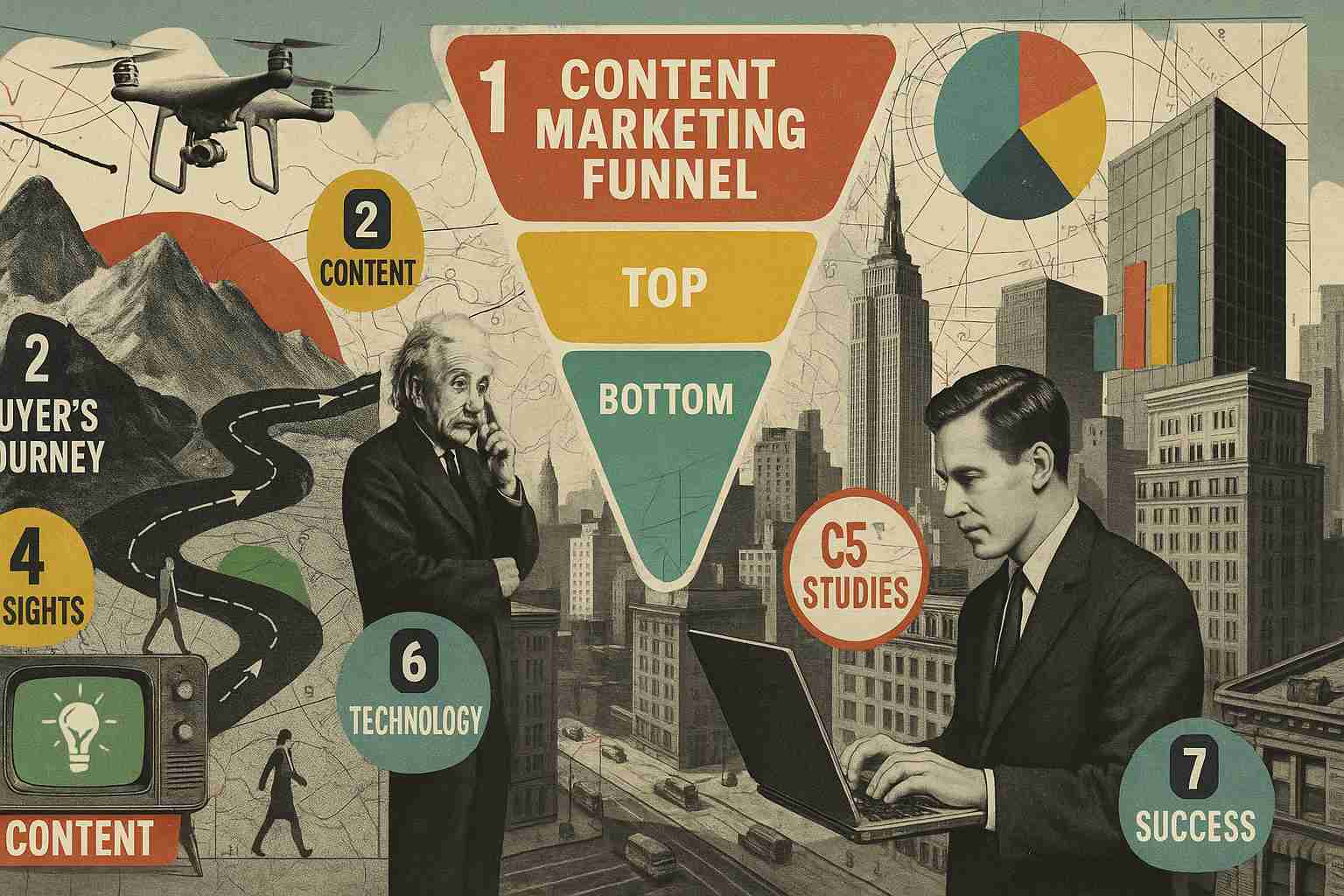
Before we can begin crafting a tailored content strategy, we first need to understand the path that potential customers take from initial discovery to final purchase. This path is often referred to as the buyer's journey and it is critical to successful marketing efforts.
Traditionally, we may think of the buyer's journey as a linear path, where the buyer moves from the awareness stage to consideration, and finally, to the decision stage. However, in today's digital age, this journey is far from linear. It's an iterative process where buyers may loop back and forth between stages before finally making a purchase decision.
Key Stages of the Buyer's Journey
It's important to note that the duration of each stage can vary significantly depending on the product or service, the individual buyer, and the market context. A buyer might spend weeks or even months in the consideration stage for a major purchase like a car or a house, while the entire journey for a smaller purchase like a book or a kitchen gadget might only take a few hours or days.
Content Strategies for Each Stage
Understanding the buyer's journey allows marketers to create targeted content strategies for each stage. For example, during the awareness stage, educational content like blog posts, eBooks, and how-to videos can help buyers understand their problem or need better. In the consideration stage, comparison guides, case studies, and webinars can provide valuable insights into different solutions. And finally, in the decision stage, detailed product descriptions, customer testimonials, and free trials can give buyers the confidence they need to make a purchase.
To wrap up, understanding the buyer's journey in marketing is key to creating a successful content strategy. By knowing what information buyers are looking for at each stage, you can provide them with valuable and relevant content that helps guide them towards making a purchase decision.

Understanding the buyer's journey and aligning your content strategy to it is a powerful way to engage potential customers. By tailoring your content to the specific needs and interests of buyers at each stage, you can guide them towards making a purchase decision. This section will delve into how to create impactful content for each stage of the buyer's journey.
As the buyer progresses through the stages of their journey, their needs and interests change. During the awareness stage, they are looking for information to understand their problem. At this stage, educational blog posts, infographics, and social media posts can be effective. As they move into the consideration stage, they start exploring potential solutions. Here, comparison guides, webinars, and whitepapers can provide the in-depth insights they need. Finally, during the decision stage, they are ready to choose a solution. Case studies, product demos, and customer testimonials can help convince them that your product or service is the right choice.
There are many types of content you can create to cater to buyers at different stages of their journey. Let's explore a few.
Remember, the key to successful content marketing is understanding your audience. By aligning your content with their needs and interests at each stage of their journey, you can effectively guide them towards making a purchase decision.
As we delve deeper into the world of content marketing, it becomes increasingly evident that the key to success lies in understanding and aligning with the buyer's journey. This is especially true when crafting content for each stage of the journey. Let's explore why this is so critical and how it can enhance customer relationships and conversions.
Matching content with the buyer's journey is essential for a few reasons. Firstly, it allows you to provide value to your audience at the right time. If you're offering solution-oriented content at the awareness stage, it might not resonate because the audience is just starting to understand their problem. Conversely, providing general information at the decision stage might not be sufficient as the audience is seeking specific solutions.
Secondly, tailored content helps build trust and credibility. By offering valuable content that aligns with the buyer's journey, you demonstrate your understanding of their needs and challenges. This can foster trust and position your brand as a reliable resource, which can greatly enhance the likelihood of conversions.
Content marketing is not just about attracting potential customers; it's also about nurturing relationships to foster loyalty and repeat business. By providing relevant content at each stage of the buyer's journey, you can effectively guide your audience towards making a purchase decision.
Moreover, this can help improve conversions. When your content addresses the specific needs and questions of your audience at each stage, it can help remove barriers to purchase and guide them towards a decision. This targeted approach can significantly boost your conversion rates.
Lastly, it's important to remember that not all channels are created equal. Different platforms have different audience demographics and engagement patterns. Therefore, it's crucial to customize your content according to the channel and the stage of the buyer's journey.
For example, social media is often used at the awareness stage to attract potential customers, while email marketing can be highly effective at the decision stage to deliver personalized offers and incentives. Understanding these nuances can help you deliver the right content at the right time, on the right platform.
In conclusion, aligning your content with the buyer's journey can yield significant benefits. It can help build trust, improve customer relationships, enhance conversions, and maximize the effectiveness of your content marketing efforts. So, ensure your content strategy is in sync with the journey of your buyers for a successful marketing outcome.
Looking at real-life examples can provide a clearer understanding of how companies successfully utilize the content marketing funnel. Let's explore three case studies: Buffer's Free Trial Strategy, Blueleadz's Case Study Approach, and VistaPrint's Free Sample Kit Campaign.
Buffer, a social media management tool, leveraged a free trial strategy to attract potential customers. The company created informative blog posts and shared them on various social media platforms to raise awareness about their product. This top-of-the-funnel content generated interest and drew people to their website.
Once on the site, visitors were offered a free trial of Buffer's premium features. This middle-of-the-funnel strategy worked as a consideration stage, allowing potential customers to explore and understand the benefits of their product. The free trial's end nudged users to the decision stage, prompting them to purchase the full version. Buffer's strategy is a prime example of a complete content marketing funnel in action.
Blueleadz, a digital marketing agency, used an innovative approach by creating case studies for each of their services. These case studies were used as middle and bottom-of-the-funnel content. At the awareness stage, Blueleadz used blog posts, ebooks, and webinars to attract and educate potential customers.
As prospects moved down the funnel, the case studies offered a deep dive into how Blueleadz's services could solve specific problems. These case studies served as powerful decision-making tools, showcasing the company's expertise and demonstrating real-world results to potential customers.
VistaPrint, an online print shop, implemented a successful campaign by offering free sample kits to potential customers. This approach served as both top and middle-of-the-funnel content. The free samples raised awareness about their product range and quality, attracting potential customers to their website.
After receiving the free samples, potential customers were nurtured through the middle of the funnel with follow-up emails containing product information and special offers. These emails prompted the move to the decision stage, increasing the likelihood of a purchase. VistaPrint's free sample kit campaign demonstrates the power of giving something of value to potential customers to guide them through the content marketing funnel.
These case studies illustrate how different strategies can be effective in guiding potential customers through the buyer's journey. The key is to create and distribute content that resonates with your audience at each stage of the funnel.
In the digital age, technology has become an invaluable tool for content marketers. By integrating technology into your content marketing strategy, you can significantly improve your content creation, delivery, and personalization efforts. Let's delve into how automation tools, data analytics, and artificial intelligence can enhance your content marketing efforts.
Automation tools can be a game-changer for content personalization. These tools allow you to deliver personalized content to your audience based on their interests, behaviors, and previous interactions with your brand. For instance, email marketing automation tools can help you segment your audience and send personalized emails to each segment. This can lead to increased engagement and conversions. Additionally, social media automation tools can schedule posts at optimal times when your audience is most active, ensuring maximum visibility for your content.
Data analytics can provide insights into your audience's preferences, behaviors, and buying habits, enabling you to deliver targeted content that resonates with them. By analyzing data such as website traffic, social media engagement, and email open rates, you can identify what type of content performs best and optimize your content strategy accordingly. Moreover, data analytics can also help you understand the best channels to reach your audience, allowing you to deliver your content where it's most likely to be seen and engaged with.
Artificial Intelligence (AI) is revolutionizing the field of content marketing. AI can aid in content creation by generating ideas for blog posts, social media updates, and more. It can also optimize your content by suggesting improvements in areas such as SEO, readability, and keyword usage. Some AI tools even have the ability to create content entirely on their own, freeing up time for you to focus on other aspects of your content marketing strategy. Furthermore, AI can also analyze your content's performance and provide actionable insights to improve your future content.
In conclusion, leveraging technology in content marketing can help you create personalized, targeted content more efficiently and effectively. Whether it's through automation tools, data analytics, or AI, technology can greatly enhance your content marketing efforts and help you achieve your business goals.
Once you've created and deployed your content marketing strategy, the next crucial step is to measure its effectiveness. Understanding how to gauge the success of your content marketing efforts can help you refine your strategy, allocate resources more efficiently, and ultimately drive more conversions.
Key Performance Indicators, or KPIs, are quantifiable metrics that can help you track the performance of your content. The KPIs you choose to track will depend on your specific goals, but some common ones include:
There are many tools available that can help you track and analyze your content's performance. Some of the most popular ones include:
Once you've collected and analyzed your data, it's time to put those insights to use. This could involve making tweaks to your content, adjusting your distribution strategy, or even reevaluating your target audience. Remember, content marketing is an iterative process. It's all about testing, learning, and refining your approach based on what the data tells you.
In conclusion, measuring the success of your content marketing is not just about looking at numbers. It's about understanding what those numbers mean and using those insights to continuously improve your strategy. By doing so, you can ensure your content marketing efforts are as effective as possible, ultimately driving more conversions and boosting your bottom line.
In an increasingly digital world, integrating SEO (Search Engine Optimization) into your content strategy is vital. SEO is the practice of increasing the quantity and quality of traffic to your website through organic search engine results. It's more than just incorporating keywords—it's about understanding your audience's intent and providing content that meets their needs. In this section, we'll explore SEO best practices for different funnel stages, how to optimize content for search intent, and link building strategies for content visibility.
SEO is not a one-size-fits-all strategy. It's important to tailor your SEO efforts to each stage of the funnel. At the awareness stage, your goal is to attract potential customers. You should focus on creating high-quality, informative content that targets broad, industry-related keywords. In the consideration stage, your potential customers are evaluating their options. Your content should provide in-depth information and target long-tail keywords that are specific to your products or services. Lastly, at the decision stage, your content should persuade the potential customer to make a purchase. At this stage, your SEO strategy should focus on transactional keywords and creating a seamless user experience.
Understanding and optimizing for search intent is a crucial part of any SEO strategy. Search intent refers to the reason why someone conducts a specific search. Are they looking to make a purchase? Are they searching for a solution to a problem? By understanding the intent behind searches, you can create content that meets the needs of your audience. For instance, if the search intent is informational, your content should aim to educate and provide value. If the search intent is transactional, your content should focus on persuading the user to make a purchase.
Link building is another key aspect of SEO. When other reputable websites link back to your content, it signals to search engines that your content is valuable and trustworthy. There are many strategies for building links, including guest posting on other blogs, creating shareable infographics, and conducting original research that others will want to cite. It's also important to include internal links in your content to keep users on your website longer and improve the visibility of your other content.
In conclusion, integrating SEO into your content strategy is a powerful way to increase your visibility, reach your target audience, and guide them through the marketing funnel. By tailoring your SEO strategy to each stage of the funnel, optimizing for search intent, and implementing effective link building strategies, you can create a robust and effective content strategy that drives results.
Interactive content is a powerful tool that can significantly boost customer engagement and drive conversions. This type of content encourages active participation from users, making it more memorable and impactful than static content. In this section, we'll delve into the various types of interactive content, their benefits, and some tools you can use to create them.
Interactive content comes in various forms, each with its unique strengths and use cases. Here are some popular types:
Interactive content can play a pivotal role in driving conversions. Here are some reasons why:
Creating interactive content may sound daunting, but several tools can simplify the process. Here are a few to consider:
In conclusion, interactive content can significantly boost user engagement and drive conversions by providing a memorable, personalized experience. By using the right tools, you can effortlessly incorporate interactive elements into your content strategy and take your marketing efforts to the next level.
In wrapping up, it's crucial to underscore the significance of aligning content marketing strategies with the buyer's journey. As we've explored throughout this blog, this alignment is the key to successful conversions and customer retention. The content marketing funnel isn't just a conceptual model; it's a practical, actionable tool that can guide your content creation and distribution efforts, leading to more targeted, effective marketing.
Remember, the buyer's journey is not a straight line, but a winding path filled with moments of discovery, contemplation, and decision. Your content should be there to guide, inform, and reassure potential customers every step of the way. From blog posts and social media updates to whitepapers and case studies, each piece of content you produce should serve a purpose in this journey.
And let's not forget about the power of technology in this process. Automation, data analytics, and AI can take your content marketing efforts to a new level, allowing for increased personalization and optimization. Meanwhile, measuring your content's performance and integrating SEO into your strategy can ensure that your content is not only reaching the right audiences but also making the desired impact.
As we've seen from the case studies, businesses that understand and leverage the content marketing funnel can achieve remarkable results. Whether it's Buffer's free trial strategy, Blueleadz's case study approach, or VistaPrint's free sample kit campaign, these examples illustrate the power of well-crafted content strategies that align with the buyer's journey.
Finally, don't underestimate the potential of interactive content to boost engagement and conversions. Whether it's quizzes, calculators, or polls, interactive content can provide a unique, engaging experience that sets your brand apart and leaves a lasting impression on potential customers.
As we step into the future of content marketing, it's clear that the most successful brands will be those that understand and cater to the buyer's journey. So, as you refine your content marketing strategies, keep the content marketing funnel at the forefront of your thinking. The journey might be complex, but with the right content, you can guide your customers smoothly from awareness to conversion.
So, are you ready to transform your content marketing strategy and drive more conversions? It's time to dive in, understand your audience's journey, and create content that truly resonates. Your customers - and your bottom line - will thank you.
The Content Marketing Funnel is a model that helps guide potential customers through various stages of the buying process. It's essential as it aids marketers in creating targeted content that nurtures leads, driving them towards making a purchase decision.
The buyer's journey in marketing is the process that a potential customer goes through before making a purchase. It's typically non-linear and includes three key stages: Awareness, Consideration, and Decision. Each stage requires different content strategies.
Aligning content with the buyer's progression involves creating specific content for each stage of the buyer's journey. For instance, blog posts and social media content may be used for awareness, while whitepapers and case studies can be used during the consideration and decision stages.
Matching content with the buyer's journey means tailoring your content to the needs and interests of the buyer at each stage of their journey. For example, you might provide educational content during the awareness stage, product comparisons in the consideration stage, and customer testimonials in the decision stage.
Successful content marketing strategies can be seen in case studies such as Buffer's Free Trial Strategy and VistaPrint's Free Sample Kit Campaign. These businesses used targeted content strategies to engage potential customers and drive conversions.
Technology can greatly enhance content marketing through automation tools for content personalization, data analytics for targeted content delivery, and AI for content creation and optimization. These technologies help marketers tailor their content more effectively and efficiently.
Measuring content marketing success is crucial as it helps marketers understand what's working and what's not. Key Performance Indicators (KPIs) and analytics tools can provide insights into content performance, enabling marketers to refine their strategies based on data.
SEO integrates with content strategy by ensuring that the content is optimized for search intent, making it more discoverable to potential customers. SEO practices like link building can also increase content visibility, attracting more traffic to the content.
Interactive content involves elements like quizzes, calculators, and polls that actively engage the audience. This type of content can drive conversions by providing a more engaging and personalized experience for potential customers.
Personalized content can improve customer engagement by addressing the specific needs and interests of the customer. By leveraging technology for content personalization, marketers can deliver more relevant and engaging content, enhancing customer relationships and conversions.









LEAVE A COMMENT
Your email address will not be published.