- HOME
- FOR CLIENTS
- FOR FREELANCERS
- LOGIN
BLOG
New user? Create account

Varun Katyal is the Founder & CEO of Clapboard and a former Creative Director at Ogilvy, with 15+ years of experience across advertising, branded content, and film production. He built Clapboard after seeing firsthand that the industry’s traditional ways of sourcing talent, structuring teams, and delivering creative work were no longer built for the volume, velocity, and complexity of modern content. Clapboard is his answer — a video-first creative operating system that brings together a curated talent marketplace, managed production services, and an AI- and automation-powered layer into a single ecosystem for advertising, branded content, and film. It is designed for a market where brands need content at a scale, speed, and level of specialization that legacy agencies and generic freelance platforms were never built to deliver. The thinking, frameworks, and editorial perspective behind this blog are shaped by Varun’s experience across both the agency world and the emerging platform-led future of creative production. LinkedIn: https://www.linkedin.com/in/varun-katyal-clapboard/

Generative AI is making a significant impact across various business sectors, playing a pivotal role in transforming traditional operations and offering innovative solutions. By automating and optimizing workflows, GenAI is helping businesses increase productivity and efficiency while reducing operational costs.
One of the most common uses of GenAI is in the generation of business reports. Companies have vast amounts of data to sift through, and GenAI can help encode this information into an understandable format. This means that instead of spending hours or even days compiling reports, businesses can have a comprehensive overview of their operations at their fingertips in a fraction of the time.
GenAI is also revolutionizing the marketing sector. By analyzing customer data, GenAI can help businesses create personalized marketing campaigns. This means businesses can target their marketing efforts more accurately, leading to increased customer engagement and improved sales. Moreover, GenAI can generate unique content for these campaigns, making them more appealing and effective.
The entertainment industry is also benefiting from GenAI. It can create commercial films by generating scripts, dialogues, and even visual elements. This not only speeds up the production process but also opens up new possibilities for creativity and innovation. Filmmakers can leverage GenAI to generate new ideas or enhance existing ones, leading to more engaging and captivating content.
In the software development sector, GenAI is being used to enhance code. By analyzing existing code, GenAI can suggest improvements, identify bugs, and even write new code. This can significantly speed up the development process and improve the quality of the software. In addition, it frees up developers to focus on more complex tasks, boosting productivity and efficiency.
These are just a few examples of how GenAI is being used in business. The applications of GenAI are virtually limitless, and we can expect to see even more innovative uses of this technology in the future. As businesses continue to adopt GenAI, we will likely see a significant transformation in the way they operate, leading to improved efficiency, increased productivity, and enhanced customer satisfaction.

The field of generative artificial intelligence (AI) has come a long way since its inception. The evolution of this technology can be traced back to the debut of ChatGPT in 2022. However, the field has evolved tremendously since then, with advancements in transformers, language models, and a host of other technologies.
The introduction of ChatGPT was a significant milestone in the history of generative AI. This model was capable of generating human-like text responses, opening up a whole new world of possibilities. It was an early example of how AI could generate new, coherent, and contextually relevant content, paving the way for more advanced models.
Over the years, the development of transformers and language models has significantly accelerated the evolution of generative AI. Transformers, a type of neural network architecture, have played a vital role in improving the capabilities of generative models. Their ability to handle long-range dependencies in data, combined with their scalability, has made them a popular choice for many generative AI applications.
Language models, on the other hand, have been instrumental in enhancing the text generation capabilities of AI. They have evolved to understand context, interpret nuances, and generate text that is not only coherent but also contextually accurate. Modern language models can generate text that closely resembles human writing, making them ideal for a variety of applications ranging from drafting emails to creating articles.
Generative AI has also seen advancements in the form of Generative Adversarial Networks (GANs). GANs consist of two neural networks, a generator, and a discriminator, that work together to create new, synthetic instances of data that can pass for real data. They have been particularly effective in fields such as image and voice generation.
Other notable advancements include the development of variational autoencoders (VAEs) and reinforcement learning. VAEs are a type of generative model that allows for the generation of complex data like images, while reinforcement learning has been used to train AI to perform tasks by learning from its mistakes.
In summary, the evolution of generative AI has been driven by advancements in technologies such as transformers, language models, GANs, VAEs, and reinforcement learning. These technologies have expanded the potential applications of generative AI, making it a vital tool in a wide range of fields.
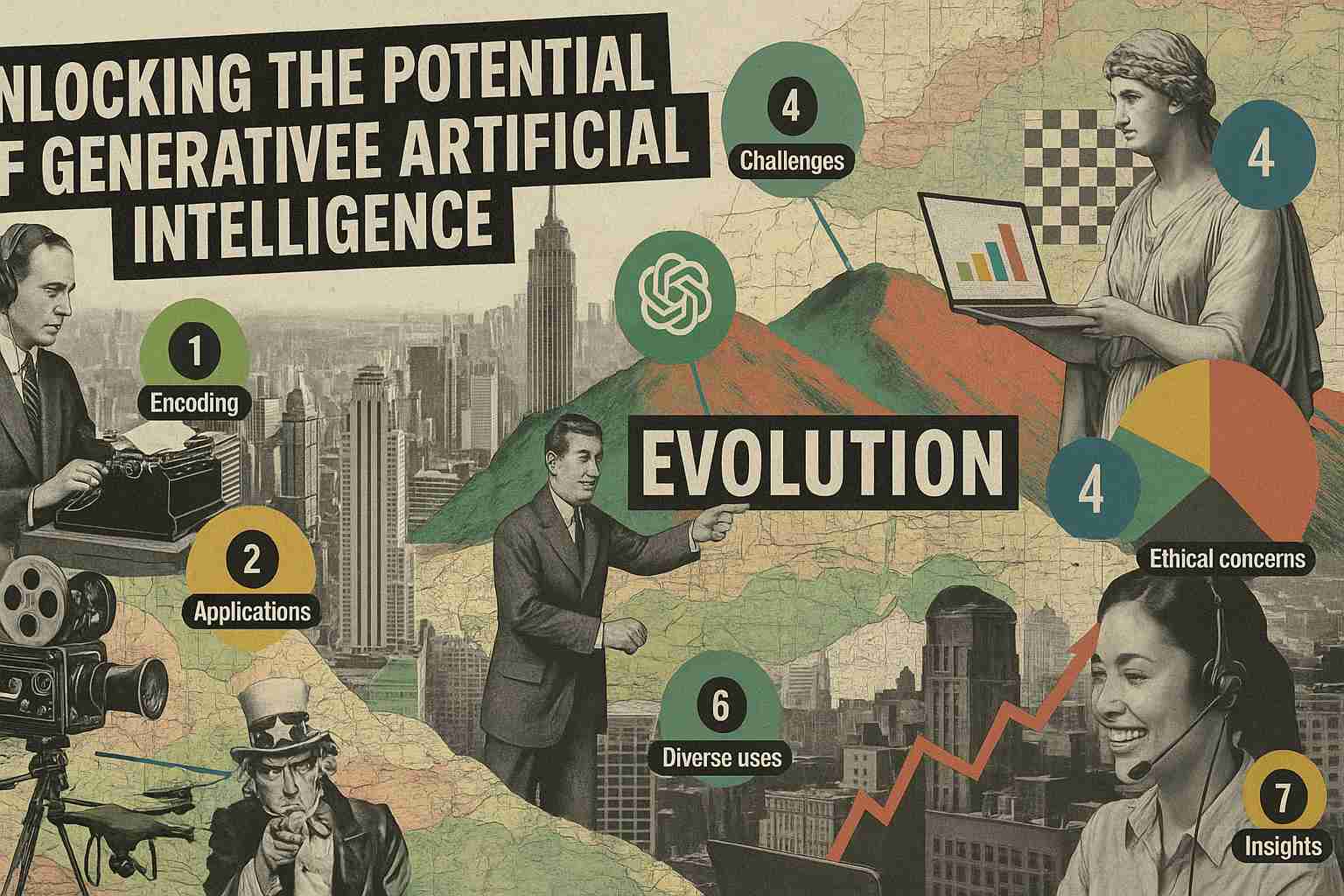
As with any emerging technology, GenAI isn't without its challenges. Although it holds immense potential, there are several hurdles that need to be addressed to ensure its successful implementation and widespread adoption.
The first major challenge is accuracy. GenAI, by its nature, involves the generation of new content, which means there's always a risk of the output not being entirely accurate. This is especially problematic in areas where precision is vital, such as medical diagnosis or financial forecasting. Developers need to ensure that the AI models they create can generate reliable and accurate content, which often involves extensive testing and refinement.
The second issue is bias. AI models learn from the data they're trained on. If this data contains biases, the AI model will likely replicate them. This can lead to skewed and unfair outcomes, which can be particularly harmful in areas like recruitment or loan approval. Mitigating bias involves careful data selection and rigorous testing to ensure fair and unbiased AI outcomes.
Another challenge is hallucinations — when the AI model generates content that doesn't make sense or isn't grounded in reality. This can lead to erroneous outputs that can be confusing or misleading. To avoid this, AI models need to be trained on high-quality data and regularly updated to maintain their relevance and accuracy.
Lastly, there's the issue of deepfakes. GenAI technologies can be used to create realistic yet entirely artificial images, videos, and audio recordings. This raises serious concerns about misinformation, identity theft, and fraud. To address this, developers and policymakers are working on ways to detect and prevent the misuse of GenAI for creating deepfakes.
Overcoming these challenges is a complex task that requires a multifaceted approach. It involves not only technical solutions but also ethical considerations and regulatory oversight. By addressing these issues, we can harness the full potential of GenAI while minimizing its risks.
While the advancements in Generative AI (GenAI) have brought numerous benefits to businesses, they have also introduced a slew of ethical and business model concerns. These issues can significantly affect the efficiency, integrity, and overall public perception of organizations that adopt GenAI technologies.
One of the most pressing ethical issues revolves around bias in AI. GenAI models learn from the data they are fed. If this data contains inherent biases, the AI models could reproduce and even amplify these biases, leading to unfair outcomes. For instance, an AI model trained on biased data might produce discriminatory content or make biased decisions, which can harm certain demographic groups.
Another ethical concern involves the potential misuse of GenAI. This technology can generate realistic content, such as deepfakes, which can be used to manipulate public opinion, perpetrate fraud, or commit other malicious acts. This misuse of AI has raised concerns about privacy, consent, and the authenticity of online content.
Moreover, there's the issue of accountability. When AI systems generate content or make decisions, who is responsible if something goes wrong? The lack of clear accountability mechanisms in GenAI can lead to ethical dilemmas and legal challenges.
Turning to business model concerns, the rise of GenAI has disrupted traditional business models in various industries. For instance, in the content creation industry, AI can now generate articles, scripts, and even songs, potentially displacing human creators. This disruption raises questions about job security and the value of human creativity in the face of advanced AI technologies.
Furthermore, businesses need to consider the implications of GenAI on their data privacy practices. GenAI models often require large amounts of data to function effectively. Businesses must ensure they collect, store, and use this data in ways that comply with privacy laws and respect user consent. Failing to do so can lead to legal repercussions and damage the business's reputation.
In conclusion, while GenAI presents significant opportunities for businesses, it also introduces ethical and business model concerns that need careful consideration. Businesses must proactively address these issues, ensuring they use GenAI in a manner that is ethical, legal, and respectful of all stakeholders. This may involve investing in bias detection and mitigation measures, establishing clear accountability mechanisms, adapting to new business models, and implementing robust data privacy practices.
The potential applications of Generative Artificial Intelligence (GenAI) are vast and incredibly diverse. This section will explore a few key areas where GenAI is already making significant strides in transforming processes and creating new opportunities across various industries.
In the customer service industry, GenAI can be used to develop intelligent virtual assistants and chatbots that can respond to customer queries in real-time. By learning from past interactions, these AI tools can generate personalized responses, offering an improved customer experience. Additionally, they can operate 24/7, thus ensuring constant customer support.
GenAI can also be employed in analyzing IT logs, a typically time-consuming and complex task. The AI system can learn from historical data to predict potential issues and automate the resolution process, thereby enhancing operational efficiency and minimizing downtime.
The entertainment industry is another sector that can benefit from GenAI. It can be used for automatic movie dubbing, where the AI learns from the original actors' voices and generates the dialogue in a different language, maintaining the same tone and emotion. This process can significantly reduce the time and cost associated with traditional dubbing.
GenAI can also assist in code writing. By learning from a vast database of codes, AI can generate code snippets or even entire programs, reducing the workload of developers and increasing productivity. Additionally, it can help in detecting coding errors and suggesting fixes in real-time.
In the financial sector, GenAI can be used for risk management. It can analyze patterns in historical data and generate predictions about potential risks, thereby enabling organizations to make proactive decisions and mitigate potential losses.
These are just a few examples of how GenAI is being utilized across various sectors. The applications are boundless, limited only by our creativity and willingness to integrate AI into our processes. As technology continues to evolve, we can expect to see even more innovative uses of GenAI in the future.
However, it's worth noting that despite its potential, the adoption of GenAI is not without challenges. Concerns around data privacy, the risk of bias in AI-generated content, and the need for a clear regulatory framework are all issues that need to be addressed. Nonetheless, the potential benefits of GenAI are enormous, and with careful planning and ethical considerations, it can serve as a powerful tool for businesses and organizations worldwide.
Generative Artificial Intelligence (GenAI) is continuously evolving, and we're seeing this transformative technology make inroads into domains that were once considered the exclusive domain of human creativity and ingenuity. In the past, GenAI models have been primarily used for text generation, but now they're expanding their capabilities to new frontiers such as 3D modeling, product design, drug development, digital twins, and supply chains. These advancements are not only increasing the applicability of GenAI but also transforming the way businesses operate.
One of the most exciting developments in GenAI is its application in 3D modeling. Advanced GenAI models are now capable of creating realistic, high-definition 3D models that can be used in a variety of industries, from gaming and entertainment to architecture and real estate. The ability of GenAI to generate 3D models quickly and accurately not only saves time but also reduces the cost associated with manual 3D modeling.
GenAI is also making waves in the field of product design. By analyzing existing designs and learning from them, GenAI models can generate innovative new product designs that meet specific requirements. This capability can significantly speed up the product design process and allow businesses to bring new products to market faster.
In the pharmaceutical industry, GenAI is being used to expedite drug development. By simulating the interactions between molecules, GenAI can predict the effectiveness of potential drugs, significantly reducing the time and cost of drug discovery and development.
Digital twins, a virtual replica of a physical product, system, or process, are another area where GenAI models are being employed. GenAI can generate and update digital twins in real-time, providing businesses with a powerful tool for monitoring, diagnosing, and predicting issues before they occur.
The supply chain, a critical component of any business, is also benefitting from the evolution of GenAI models. By analyzing and learning from historical supply chain data, GenAI can predict future demand and supply trends, enabling businesses to optimize their supply chain operations and avoid costly disruptions.
In conclusion, the evolution of GenAI models is opening up new possibilities and transforming various industries. As GenAI continues to evolve and improve, we can expect it to play an increasingly important role in business operations and decision-making.
Imagine a world where your business operations are streamlined and your workflows are efficient, where you have the ability to generate content on-demand and process data at lightning speed. This is the promise of Generative AI (GenAI) – a technology that has the potential to revolutionize the way businesses operate.
GenAI, in essence, is an AI model that learns from existing data and uses it to generate new data. In the context of business, this means that it can take in large amounts of information, such as market trends, customer behavior, and other relevant metrics, and use this data to generate actionable insights that can help in decision-making and strategy formulation.
But how exactly does GenAI transform business processes? Let's take a look.
One of the significant areas where GenAI is making a difference is in content generation. Whether it's drafting reports, creating marketing campaigns, or even writing code, GenAI can automate these processes, freeing up valuable time for your team to focus on more strategic tasks. This not only increases productivity but also ensures a high level of accuracy and consistency in the content produced.
Data is the lifeblood of any organization. But processing large amounts of data can be time-consuming and prone to errors. GenAI can help here by automating the data processing workflow. It can sift through large datasets, identify patterns, and provide valuable insights in a fraction of the time it would take a human to do the same task. This allows businesses to make data-driven decisions quickly and efficiently.
GenAI isn't just limited to content generation and data processing. It can also be used to automate various other business processes. For instance, in customer service, GenAI can be used to handle routine queries, freeing up customer service reps to handle more complex issues. In risk management, GenAI can analyze vast amounts of data to identify potential risks and suggest mitigation strategies.
Similarly, in IT, GenAI can analyze logs to identify issues and suggest fixes. It can even be used in creative fields like film making, where it can help with tasks like dubbing and scriptwriting. The possibilities are endless.
In conclusion, GenAI is a powerful tool that has the potential to transform business processes across various domains. By automating routine tasks and enhancing data processing capabilities, it can help businesses become more efficient and agile, providing them with a competitive edge in today's fast-paced business environment.
While GenAI holds incredible potential for revolutionizing various aspects of business, its adoption isn't without significant considerations. From ethical concerns to data leakage and compliance risks, organizations need to navigate a complex landscape when implementing generative AI technologies.
One of the most pressing issues in the use of GenAI is the ethical implications. GenAI's ability to generate new content based on existing information raises questions about intellectual property rights, consent, and accountability. For instance, if a GenAI model creates a piece of content that infringes on someone's copyright, who is held responsible? Or if GenAI is used to create deepfakes, how do we ensure it is not misused for malicious purposes?
GenAI models learn from the data they are trained on. Consequently, if the training data contains biases, the AI models are likely to reproduce and amplify those biases in their outputs. This could lead to unfair or discriminatory outcomes, which is particularly problematic when GenAI is used in decision-making processes, like hiring or loan approval. Therefore, it is crucial to ensure the fairness and equity of AI systems by using unbiased training data and regularly auditing the algorithms for bias.
Another critical consideration is the potential for data leakage. GenAI models can inadvertently reveal sensitive information present in their training data. For example, if a model is trained on confidential business documents, it might generate content that discloses trade secrets or private customer information. To mitigate this risk, organizations should use robust data anonymization techniques and implement stringent data governance policies.
Compliance with data protection and privacy regulations is another major concern for businesses deploying GenAI. Different jurisdictions have varying rules about data use, storage, and sharing. Non-compliance can result in hefty fines and reputational damage. Therefore, businesses need to stay abreast of the relevant laws and ensure their AI practices are compliant.
In conclusion, while GenAI can offer significant benefits, businesses must carefully consider these factors to responsibly and ethically implement such technologies. It is essential to have robust policies in place to address ethical concerns, mitigate biases, prevent data leakage, and ensure regulatory compliance.
As we wrap up this exploration of Generative AI, it is clear that we're standing at the brink of a transformative era in technology and business. GenAI, with its potential to create new content, can revolutionize various sectors, making it an indispensable tool in the digital age. However, like any powerful technology, it comes with its own set of challenges and ethical considerations that we must navigate with care.
GenAI's ability to encode information and generate new content is indeed fascinating. It opens up a realm of possibilities, from drafting reports and personalizing marketing campaigns to creating commercial films and enhancing code. The applications are diverse and far-reaching, spanning customer service, IT, entertainment, and risk management, to name just a few.
Yet, as we celebrate these advancements, it is equally important to acknowledge the challenges that GenAI faces. Issues related to accuracy, bias, and the potential for misuse are real and must be addressed. The specter of deepfakes and the disruption of traditional business models also loom large. As we continue to harness the power of GenAI, we must also commit to fostering a culture of ethical use and responsible innovation.
Looking ahead, the evolution of GenAI models is exciting. The potential for GenAI to support 3D modeling, product design, drug development, and digital twins speaks to a future where AI is deeply integrated into our everyday lives and business operations. It is a future that promises enhanced user experiences and streamlined workflows, but also demands vigilance and proactive risk management.
In conclusion, the journey of understanding and implementing GenAI is just as important as the destination. It is a journey that requires continuous learning, adaptation, and a commitment to ethical and responsible use. As we move forward, let's embrace the potential of GenAI while also acknowledging and addressing the challenges it presents.
Remember, the future of Generative AI isn't something that will happen to us—it's something we will create together. Let's make it a future we can all be proud of.
Generative AI, or GenAI, is a type of artificial intelligence that uses algorithms to create new content from vast datasets. It works by encoding existing information into a vector space and then producing new content based on established dependencies. This technology is revolutionizing various industries by automating and enhancing processes.
Generative AI has numerous applications in business. It can draft reports, personalize marketing campaigns, create commercial films, and even enhance code. It's also used in customer service, IT logs analysis, movie dubbing, risk management, and more, making it a versatile tool in various industries.
The debut of ChatGPT in 2022 significantly sparked interest in generative AI. This led to advancements in transformers and language models, which played a crucial role in the evolution and development of generative AI technologies and their applications in various sectors.
Despite its potential, Generative AI does face some challenges. These include issues with accuracy, bias, and the creation of hallucinations or deepfakes. These challenges need to be addressed to ensure the responsible and effective use of GenAI technology.
Yes, there are several ethical concerns associated with Generative AI. These include issues of bias, misuse of the technology, and disruptions to traditional business models. Additionally, data leakage and compliance risks can be critical considerations in the adoption of GenAI technologies.
Generative AI models are expected to evolve to support a variety of applications, including 3D modeling, product design, drug development, digital twins, and supply chains. This evolution will further expand the possibilities for businesses to leverage GenAI.
Generative AI is transforming business processes by streamlining content generation workflows and enhancing data processing. This technology can automate and optimize various aspects of business operations, making it a powerful tool for companies looking to innovate and improve efficiency.
Generative AI has diverse applications across various industries. Apart from drafting reports and personalizing marketing campaigns, it's also used in customer service, IT logs analysis, movie dubbing, code writing, risk management, and much more.
The future of Generative AI involves enhancing user experiences, fostering trust in AI outcomes, and integrating advanced technologies into business operations. It's poised to revolutionize many aspects of our lives, from how we work to how we interact with digital technology.
Several factors play a crucial role in the adoption of Generative AI technologies. These include concerns regarding AI ethics, bias, data leakage, and compliance risks. Businesses need to consider these factors carefully when planning to implement GenAI in their operations.









LEAVE A COMMENT
Your email address will not be published.